Waking Up Congested: Causes, Symptoms, and Effective Remedies
You go to bed breathing normally—then wake up with a blocked nose, sinus pressure, or a throat that feels coated with mucus. If this sounds familiar, you’re not alone. Waking up congested can affect sleep quality, energy, mouth breathing, dry mouth, morning headaches, and a groggy start that lingers into the afternoon.
The good news: many cases are tied to fixable patterns—bedroom allergens, humidity or dry-air problems, and sleep position. In other cases, ongoing inflammation, reflux, or chronic sinus/nasal conditions play a role. Healthline highlights common triggers like allergies, dry air, and non-allergic causes such as reflux. Source: https://www.healthline.com/health/waking-up-with-stuffy-nose
Below, you’ll find what morning congestion typically feels like, common causes, practical at-home steps that may help, and when it makes sense to get evaluated.

What Does “Waking Up Congested” Feel Like?
Common morning symptoms include nasal blockage on one or both sides; postnasal drip with throat clearing or a phlegmy feeling; sneezing and watery eyes (often allergy-leaning); sinus pressure or a dull morning headache; dry mouth from overnight mouth breathing; and a reduced sense of smell that improves later in the day.
Overnight, being horizontal can slow drainage and increase irritation from the air you’re breathing, so things back up by morning—then improve once you’re upright and moving.
When It Might Be More Than “Normal Morning Stuffiness”
Occasional morning stuffiness happens, but pay closer attention if symptoms last most of the day, recur most days of the week, or you notice facial pain, thick or discolored mucus, fever, or persistent smell changes. Ongoing or recurrent symptoms may point toward allergic triggers or other conditions that need targeted treatment. Source: https://www.healthline.com/health/morning-allergies
In short: occasional morning stuffiness is common; persistent, worsening, or more severe symptoms deserve a closer look.
Why Morning Congestion Happens (The Overnight Build-Up Effect)
Mucus pooling while you sleep: lying flat changes how mucus moves. A flat position can encourage mucus to collect in the nasal passages and sinuses, so congestion often feels worse right when you wake up. Source: https://ubiehealth.com/doctors-note/waking-congestion-stuffiness-allergies-sleep-env2342e1
If one nostril feels plugged then flips sides when you roll over, that often reflects posture-related pooling plus the natural nasal cycle.
Overnight exposure is long exposure: you breathe the same air for hours and your face contacts pillows and bedding, so even mild triggers can feel amplified by morning.
Bottom line: lying flat plus hours of the same air and bedding can magnify swelling and mucus build-up by morning.
Top Causes of Waking Up Congested

Indoor Allergens in the Bedroom (Especially Bedding)
Bedroom allergens are a top driver of allergy-related morning symptoms: dust mites in pillows, mattresses, and comforters; pet dander that travels on clothing and through HVAC; and mold spores tied to leaks, bathrooms, closets, or high humidity. Your nose is close to the source for hours, so symptoms can spike quickly once you lie down. Sources: https://www.healthline.com/health/morning-allergies https://ubiehealth.com/doctors-note/waking-congestion-stuffiness-allergies-sleep-env2342e1
If symptoms seem tied to your bedroom setup, consider allergy testing: https://sleepandsinuscenters.com/allergy-testing
Dry Indoor Air (Low Humidity)
Dry air can irritate the nasal lining, causing swelling and a stuffy sensation—especially after a full night of heated or air-conditioned air. Sources: https://www.healthline.com/health/waking-up-with-stuffy-nose https://www.benadryl.com/allergies/nasal-congestion-tips
A common clue: you wake up congested with a dry mouth or throat, reach for water right away, or notice worse symptoms in winter. Not sure if you need moisture added or removed? Start here: https://sleepandsinuscenters.com/blog/humidifier-vs-dehumidifier-for-allergies-which-is-better
Too Much Humidity (Mold and Dust Mite Growth)
Humidity that’s too high can encourage dust mites and mold, worsening symptoms over time. Musty smells, visible mold, window condensation, or damp-feeling air are clues. Source: https://ubiehealth.com/doctors-note/waking-congestion-stuffiness-allergies-sleep-env2342e1
If a humidifier makes you feel worse, causes may include excessive humidity, a unit that needs cleaning, or growth of mites or mold in the environment.
Sleep Posture (Lying Flat)
Sleeping flat can worsen blockage due to pooling and tissue swelling; one-sided congestion may flip with your sleeping side. If you clear up 20–30 minutes after getting upright, posture is likely part of the puzzle. Source: https://ubiehealth.com/doctors-note/waking-congestion-stuffiness-allergies-sleep-env2342e1
For position ideas that support drainage: https://sleepandsinuscenters.com/blog/sleeping-positions-that-help-sinus-drainage
Non-Allergic Rhinitis (Irritant-Triggered Congestion)
Not all congestion is allergy-driven. Triggers can include smoke (including wildfire smoke), strong scents and perfumes, cleaning chemicals, and weather or temperature shifts. This often looks like blockage without itchiness or watery eyes. Learn more: https://sleepandsinuscenters.com/treating-chronic-rhinitis
Acid Reflux / GERD (Including LPR, “Silent Reflux”)
Reflux can irritate the throat and upper airway, contributing to morning throat symptoms and congestion. Clues: nighttime cough, throat clearing, sour taste, or morning hoarseness. Source: https://www.healthline.com/health/waking-up-with-stuffy-nose
Chronic Sinus Issues or Structural Contributors
Persistent congestion not responding to routine changes may reflect chronic rhinosinusitis, chronic rhinitis, a deviated septum, or turbinate enlargement. Clues: long-lasting blockage, facial pressure, reduced smell, recurrent sinus symptoms. More: https://sleepandsinuscenters.com/chronic-sinusitis
Hormonal Changes
Pregnancy, menstrual cycle changes, and some thyroid shifts can affect nasal tissues. If persistent or disruptive, discuss with a clinician.
Takeaway: allergens, air quality, and posture explain many morning symptoms; reflux, chronic inflammation, and structural issues are other important possibilities.
At-Home Remedies That Actually Help

Quick Relief When You Wake Up (10–15 Minutes)
Try this short routine: hydrate (warm fluids can soothe), take a warm shower or brief steam exposure, and use a saline spray or rinse to gently flush and add moisture.
The aim is to add moisture, mobilize mucus, and reduce irritation—without overdoing it. Safe irrigation tips: https://sleepandsinuscenters.com/blog/neti-pot-safety-tips-essential-steps-for-safe-nasal-irrigation
Supportive home measures are also covered here: https://www.benadryl.com/allergies/nasal-congestion-tips For a focused morning walkthrough: https://sleepandsinuscenters.com/blog/woke-up-with-a-blocked-nose-fast-relief-guide
Bedtime Fixes to Help Prevent Waking Up Congested

Elevate Your Head
A wedge pillow or slight bed elevation may reduce pooling and support drainage overnight; stacking multiple pillows can bend the neck, so many people prefer a wedge. Source: https://ubiehealth.com/doctors-note/waking-congestion-stuffiness-allergies-sleep-env2342e1

Optimize Humidity (Aim for a Balanced Range)
A commonly recommended indoor range is about 30–50% humidity. If air is too dry, a humidifier may help; if humidity is high, reduce moisture to limit mold and dust mites. If you use a humidifier, clean it regularly to prevent buildup. Targets vary by climate and home. Source: https://www.healthline.com/health/waking-up-with-stuffy-nose
Bedroom Allergen Reduction Checklist (High-Impact)
Try a bedroom reset: wash sheets weekly (hot water if fabric allows); use allergen-proof pillow and mattress covers; replace older pillows that seem to trigger symptoms; keep pets out of the bedroom or off the bed; vacuum with a HEPA filter and dust with a damp cloth; reduce clutter that collects dust. Source: https://www.healthline.com/health/morning-allergies
Simple morning routines plus smart bedtime fixes can reduce swelling, improve drainage, and lower exposure while you sleep.
Medication Options (OTC) — What to Consider and What to Avoid
This section is educational—not a recommendation for any specific product. Always follow label directions.
Antihistamines are best when allergies drive symptoms; they help sneezing, itching, and runny nose more than pure blockage. Some options cause drowsiness or next-day grogginess. Source: https://www.benadryl.com/allergies/nasal-congestion-tips
Nasal steroid sprays help with inflammation, especially allergic rhinitis; benefit is usually seen with consistent use over time.
Decongestants may provide short-term relief but aren’t for everyone. Rebound congestion can occur with topical nasal sprays used too often or too long (often more than 3 days). Seek guidance if you have high blood pressure, heart disease, thyroid disease, are pregnant, or take other medications.
When to See a Doctor (and What an ENT/Allergy Workup Might Include)
Red flags needing prompt care include trouble breathing, swelling around the face or eyes, severe headache, high fever, or rapidly worsening symptoms.
Consider evaluation if you wake congested most days for weeks or months, have symptoms tightly tied to bedroom exposure, or have poor response to consistent home steps (humidity, cleaning, positioning). Explore allergy testing: https://sleepandsinuscenters.com/allergy-testing
If symptoms are frequent, severe, or unresponsive to basics, an evaluation can clarify the cause and guide effective treatment.
Longer-Term Treatments (If Morning Congestion Keeps Coming Back)
Treat the source, not just the symptoms: identify drivers, control triggers, use targeted medications, and consider immunotherapy for confirmed allergies when appropriate. Source: https://www.healthline.com/health/morning-allergies
If chronic inflammation or structural blockage is suspected, longer-term management may include a structured rhinitis or rhinosinusitis care plan and evaluation for obstruction that doesn’t resolve. https://sleepandsinuscenters.com/chronic-sinusitis
Sustainable relief often requires addressing root causes—environmental controls, consistent treatment, and, when indicated, specialist care.
Lifestyle Tips for Clearer Mornings
Clean-air sleep routine: shower before bed during high allergen seasons; change pillowcases more often during flares; keep bedroom doors closed; consider an air purifier near the bed and maintain filters.
Reflux-friendly nighttime habits: avoid large late meals; reduce alcohol near bedtime; consider left-side sleeping plus gentle head elevation.
Small, repeatable habits add up—cleaner air and reflux-aware routines can make mornings easier.
FAQs
Why am I only congested in the morning but fine later? Often it’s the combination of overnight exposure (bedding and air) plus lying down, which can increase pooling and swelling. Source: https://www.healthline.com/health/waking-up-with-stuffy-nose
Can dust mites really cause waking up congested? Yes—bedding is a major reservoir, and close, prolonged exposure overnight can make morning symptoms more noticeable. Source: https://www.healthline.com/health/morning-allergies
Is a humidifier always a good idea for congestion? Not always; too much humidity can worsen mold and dust mites. Balance is key and depends on your home and climate. Source: https://ubiehealth.com/doctors-note/waking-congestion-stuffiness-allergies-sleep-env2342e1
What sleep position is best for congestion? Head elevation and avoiding a fully flat position may reduce pooling and support drainage. Source: https://ubiehealth.com/doctors-note/waking-congestion-stuffiness-allergies-sleep-env2342e1
When should I worry that it’s a sinus infection? Concerning patterns include worsening symptoms, fever, facial pain or pressure, thick discolored mucus, or symptoms that don’t improve. Source: https://www.healthline.com/health/waking-up-with-stuffy-nose
FAQs in brief: balanced humidity, cleaner bedding, and head elevation help many people; seek care if symptoms persist or worsen.
Conclusion: A Practical Plan for Better Mornings
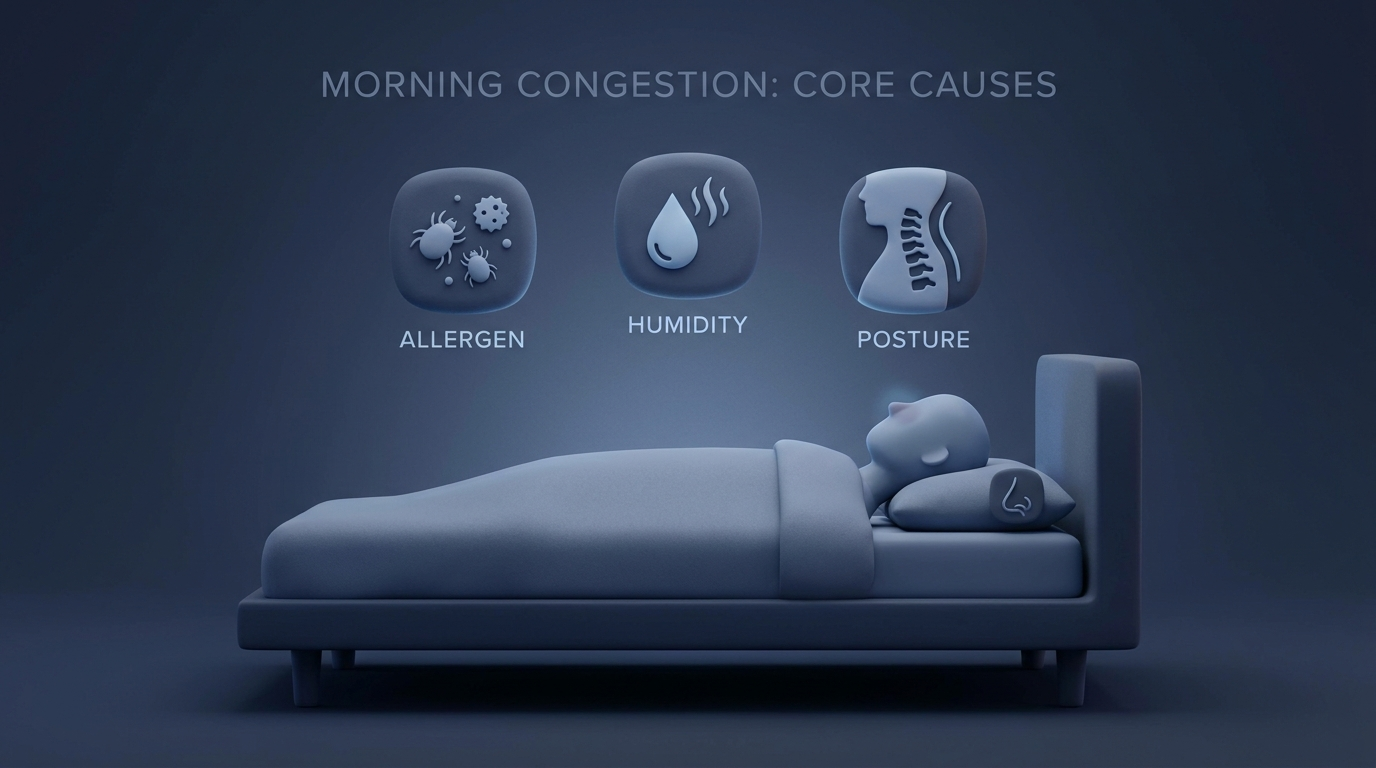
For many people, waking up congested comes down to a short list: allergens in the bedroom, humidity issues (too dry or too humid), and sleep posture—with some cases related to reflux or chronic sinus or nasal conditions.
As a general educational suggestion, try a 1–2 week trial of the basics: bedroom allergen reduction, balanced humidity, and gentle head elevation. If congestion continues, consider allergy testing or an ENT evaluation. To get to the root cause, book with Sleep and Sinus Centers of Georgia: https://www.sleepandsinuscenters.com/
References
Healthline — Waking up with a stuffy nose: https://www.healthline.com/health/waking-up-with-stuffy-nose
Healthline — Morning allergies: https://www.healthline.com/health/morning-allergies
Ubie Health — Waking congestion causes/solutions: https://ubiehealth.com/doctors-note/waking-congestion-stuffiness-allergies-sleep-env2342e1
Benadryl — Nasal congestion tips: https://www.benadryl.com/allergies/nasal-congestion-tips
This article is for educational purposes only and is not medical advice. Please consult a qualified healthcare provider for diagnosis and treatment.
Don’t let allergies slow you down. Schedule a comprehensive ENT and allergy evaluation at Sleep and Sinus Centers of Georgia. We’re here to find your triggers and guide you toward lasting relief.