Sleep Study Test: What to Expect, Results, and Benefits
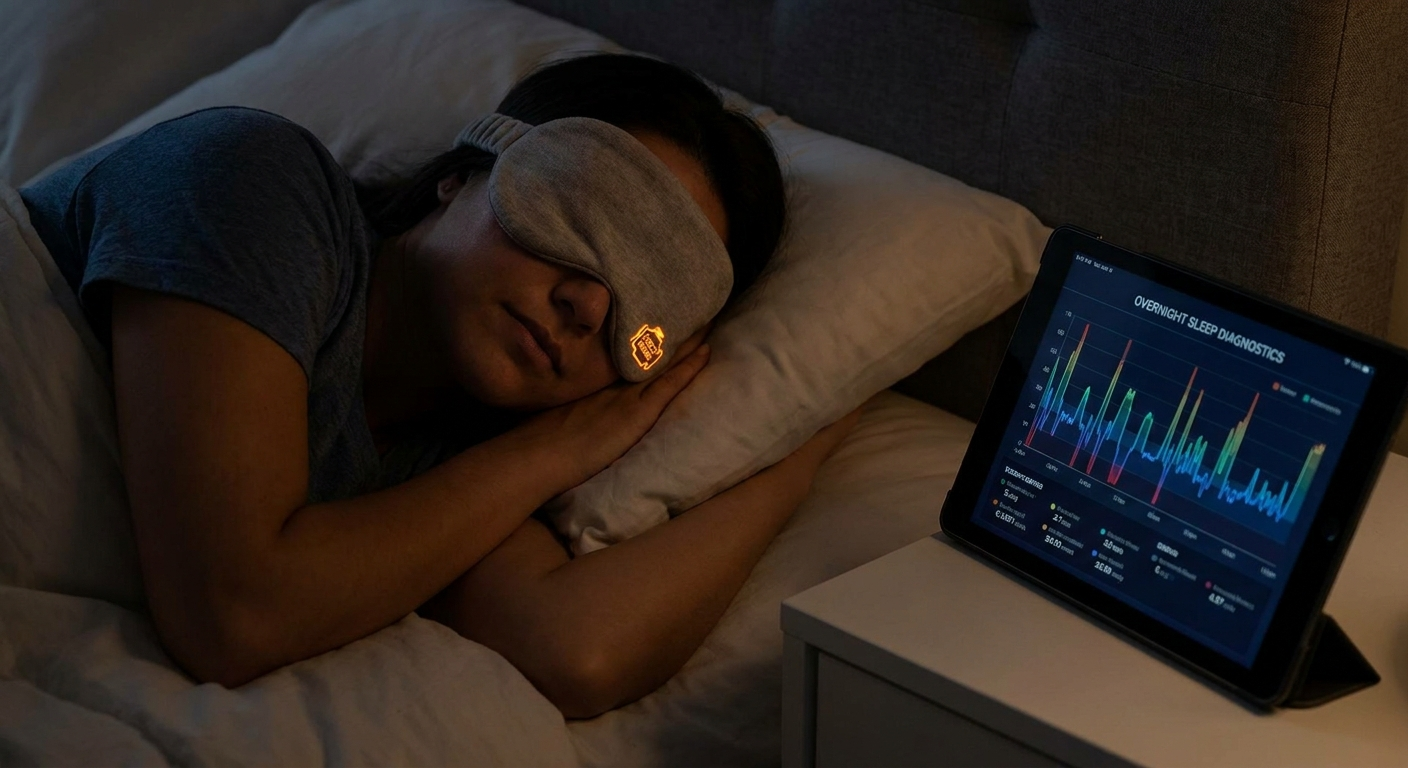
If you’re dealing with loud snoring, daytime sleepiness, or restless nights, a sleep study can provide important information. Depending on the type of test, sleep testing may capture breathing, oxygen levels, heart rhythm, and sleep stages so your provider can identify (or rule out) treatable sleep disorders and explain next steps. Think of it like an “overnight check‑engine scan” for sleep: instead of relying on symptoms alone, your care team gets objective data on when sleep is disrupted and why.
Bottom line: the right sleep test can help clarify what’s happening at night so you can make informed decisions during the day.
What Is a Sleep Study (Polysomnography)?
A sleep study—often called polysomnography (PSG)—is an overnight test that records multiple body signals while you sleep. The goal is to help diagnose sleep disorders using measured data rather than symptoms alone. PSG is widely used to evaluate suspected sleep apnea and other conditions that disrupt sleep.
What a sleep study measures (typical in‑lab PSG):
- Brain waves (EEG)
- Eye movements and muscle tone (for sleep staging)
- Breathing and airflow
- Oxygen levels
- Heart rate and rhythm
- Limb movements
- Snoring and body position
Note: Many home sleep tests focus on breathing and oxygen signals and usually do not measure sleep stages or heart rhythm. In short, in‑lab studies provide the most complete picture, while home tests focus on breathing-related issues in appropriate patients.

Who Should Get a Sleep Study? Symptoms That Shouldn’t Be Ignored
Sleep apnea warning signs may include:
- Loud, frequent snoring
- Pauses in breathing witnessed by a bed partner
- Gasping or choking during sleep
- Morning headaches or dry mouth
- Frequent nighttime urination
- Excessive daytime sleepiness or brain fog
A common example: someone sleeps 7–8 hours but still feels unrefreshed, dozes off during meetings, or struggles with drowsy driving.
Symptoms linked to other sleep disorders:
- Trouble falling or staying asleep (possible insomnia)
- Uncomfortable leg sensations with an urge to move (possible restless legs syndrome)
- Repetitive kicking or jerking movements (possible periodic limb movements)
If your main complaint is insomnia, a provider may still ask whether breathing or movement is waking you up. A study helps answer that.
When symptoms become urgent: seek prompt medical evaluation for drowsy driving, severe daytime fatigue, or waking with chest pain or shortness of breath—especially if you have a high‑risk heart history. If sleep symptoms are affecting safety or daily function, don’t delay getting evaluated.
Common Causes and Risk Factors Behind Sleep Problems
Airway and anatomy factors: nasal obstruction, enlarged tonsils, jaw structure, or larger neck circumference can narrow the airway during sleep when muscles relax.
Lifestyle and health-related factors: weight changes, alcohol or sedative use, smoking, and untreated allergies or congestion can affect sleep quality and breathing stability. Alcohol near bedtime can worsen snoring and airway collapsibility.
Medical conditions: sleep‑disordered breathing often coexists with high blood pressure and metabolic risks. A sleep test clarifies whether sleep is a contributing factor. Understanding personal risk factors guides the right test and treatment plan.
Types of Sleep Studies: Home Sleep Test vs In‑Lab Study
Home sleep test (HST): typically used for suspected obstructive sleep apnea in appropriate patients. Fewer sensors, less data, convenient, done in your own bed. For more, see: https://sleepandsinuscenters.com/blog/home-sleep-test-vs-lab-study-which-sleep-test-is-best-for-you
In‑lab polysomnography (PSG): more comprehensive; often recommended for complex situations—suspected central sleep apnea, unusual movements, significant insomnia with sleepiness, possible narcolepsy, or inconclusive home tests. HST answers “Is this likely obstructive sleep apnea?” while PSG can answer several questions at once.
Quick comparison at a glance:
- Where you sleep: HST at home; PSG in a private lab room
- Best for: HST for suspected OSA in appropriate patients; PSG for complex or unclear cases
- Sensors/data depth: HST limited; PSG most comprehensive
- Limitations: HST may miss non‑breathing sleep disorders or be inconclusive; PSG is less convenient and involves more setup
Choose the simplest test that can reliably answer your clinical question—your clinician can help you decide.

What to Expect Before Your Sleep Study (How to Prepare)
The week/day before: keep your schedule typical; avoid naps if advised; some clinics ask for a sleep diary. Confirm medications so the test reflects the right context.
What to avoid (if advised): alcohol, heavy late meals, excess caffeine, and starting new sleep supplements right before testing.
What to bring: comfortable pajamas, toiletries, phone charger, medication list, insurance information; optional personal pillow. A little preparation goes a long way toward a smooth testing experience.

What Happens During an In‑Lab Sleep Study (Step‑by‑Step)
Check‑in and setup: a technologist places sensors on the scalp/face, chest, and legs, plus a finger oxygen monitor, breathing belts, and an airflow sensor. You can still move and turn.
Overnight monitoring: rooms feel like a quiet hotel room. Staff can help disconnect/reconnect for restroom breaks. Even imperfect sleep often yields enough data.
Split‑night study: if significant sleep apnea appears early, CPAP may be tried in the second part of the night to speed diagnosis-to-treatment.
Most people find the process easier than expected and still get usable results, even with a “not‑my‑best” night.

What Happens During a Home Sleep Test (Step‑by‑Step)
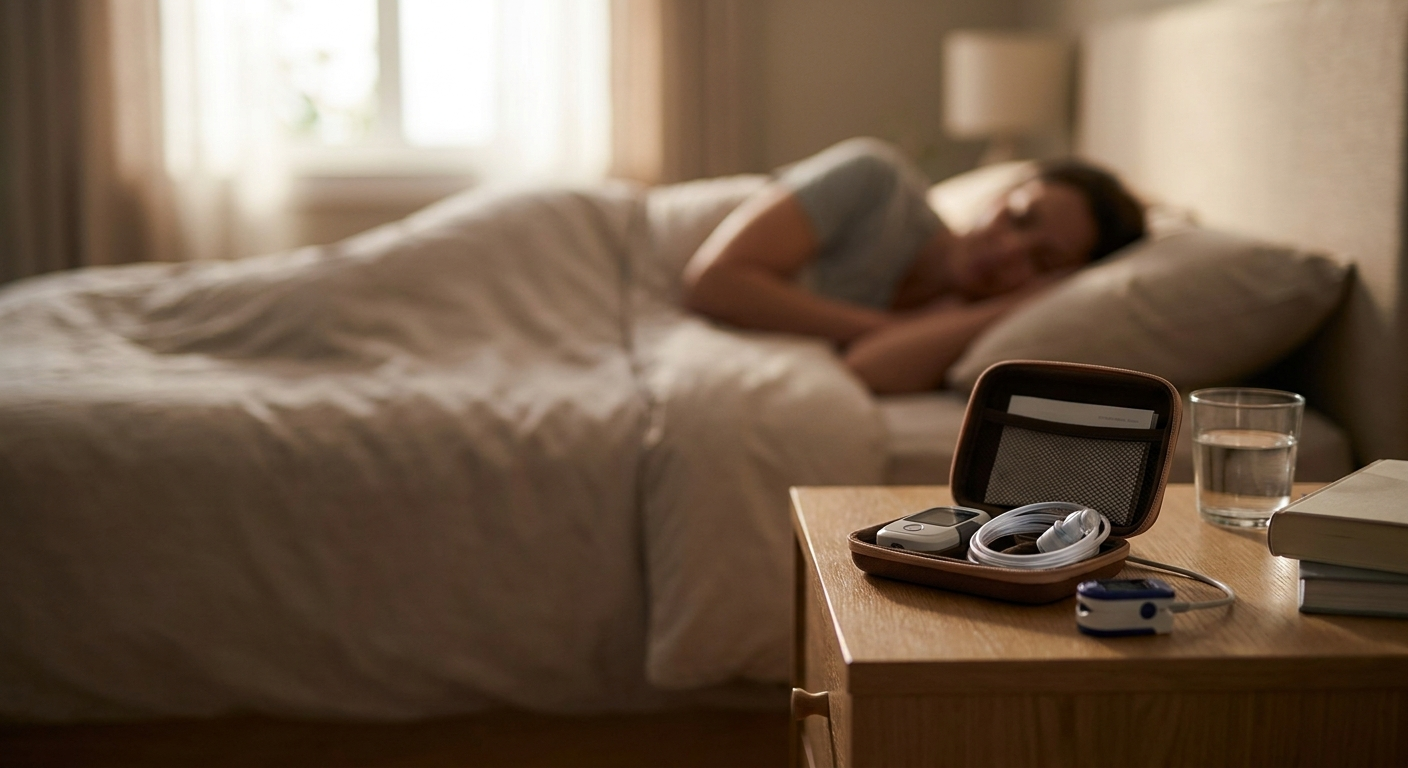
Device: you’ll receive a device with instructions or a brief demo (picked up or shipped).
Setup at home: typically a nasal cannula (breathing), finger oxygen probe, and a chest belt. Set up a bit before bedtime.
Return and next steps: return the device as instructed. A qualified clinician reviews the data and discusses results and next steps. Home testing is designed to be simple, focused, and convenient for the right patients.
Sleep Study Results Explained (Patient‑Friendly)
Timing: results are scored and interpreted by a sleep physician, then discussed at follow‑up. Timing varies by test type and clinic.
Key terms you may see:
- AHI (Apnea‑Hypopnea Index)
- Oxygen desaturation
- Sleep stages and sleep efficiency (PSG only)
- Arousal index
- Snoring data and body position
- Limb movement index
For a walkthrough: https://sleepandsinuscenters.com/blog/ahi-score-explained-understanding-your-sleep-apnea-severity
Understanding AHI severity:
- AHI < 5: Normal range
- AHI 5–14: Mild sleep apnea
- AHI 15–29: Moderate sleep apnea
- AHI ≥ 30: Severe sleep apnea
Notes: in‑lab AHI is based on sleep time; most home tests use recording time, which can differ. A clear explanation of your report helps connect nighttime patterns to daytime symptoms and treatment choices.

Why a “Normal” Study Can Still Be Helpful
A normal study can rule out sleep apnea and redirect attention to other causes of fatigue or disrupted sleep—such as insomnia, circadian rhythm issues, reflux, anxiety, or nasal obstruction. Sometimes ruling one thing out is the key to the right next step.
What Conditions Can a Sleep Study Diagnose?
Sleep apnea (obstructive and central): PSG is the gold standard and helps distinguish obstructive from central events.
Movement‑related disorders: restless legs is a clinical diagnosis, but periodic limb movement disorder (PLMD) is recorded via leg sensors on PSG.
Insomnia and sleep fragmentation: PSG can reveal whether breathing or movements are disrupting sleep.
Additional daytime testing: some patients may need specialized daytime tests (e.g., for narcolepsy). Your clinician will advise.
Treatment Options After a Sleep Study (What Happens Next)
If obstructive sleep apnea is diagnosed: options include CPAP/APAP, oral appliance therapy (selected patients), positional therapy, weight management, addressing nasal obstruction, and selected surgical options. Matching treatment to your pattern improves results.
If central sleep apnea is suspected: evaluation for contributing factors; treatment depends on cause and is specialist‑guided.
If limb movement disorder is found: assess contributing factors (e.g., iron status when indicated), consider medications, and optimize sleep routines.
If insomnia is primary: CBT‑I is first‑line for chronic insomnia; medication choices are individualized. For RDI vs AHI details: https://sleepandsinuscenters.com/blog/rdi-vs-ahi-key-differences-explained-for-sleep-apnea-diagnosis
Benefits of a Sleep Study (Beyond “Stopping Snoring”)
Better sleep quality and daytime function: many notice improvements in energy, mood, concentration, and morning headaches after targeted treatment.
Cardiovascular and metabolic considerations: treating sleep‑disordered breathing may reduce physiologic strain and support overall health; outcomes vary.
Preventive care is evolving: early research suggests AI may identify risk patterns from sleep data, but this is not standard diagnostic practice. Improving sleep can enhance daily life now, with potential long‑term benefits as part of comprehensive care.
Sleep Regularity Matters (A New Focus in Sleep Health)
Regularity vs duration: newer research links consistent sleep/wake timing with health outcomes—sometimes more informative than duration alone. Two people might both “get 7 hours,” but highly variable bedtimes can stress the body clock.
Practical tips to improve regularity:
- Keep a consistent wake time (even on weekends when possible)
- Get bright morning light
- Reduce late‑night screen time
- Keep weekends within about an hour of weekdays
- Limit alcohol close to bedtime
- Build a short nightly wind‑down routine
FAQs About Sleep Studies
Can I sleep normally with all the wires? Many sleep differently at first, but most get enough data—especially in‑lab with multiple signals.
Does a sleep study hurt? No. Sensors use adhesive or soft wraps.
How many hours do I need for it to count? There’s no single number; partial‑night data can be informative.
What if my home sleep test is negative but I’m exhausted? A negative home test doesn’t rule out every sleep problem. Some need an in‑lab study or further evaluation. Comparison guide: https://sleepandsinuscenters.com/blog/home-sleep-test-vs-lab-study-which-sleep-test-is-best-for-you
What’s the difference between AHI and RDI? AHI counts apneas and hypopneas; RDI may include additional breathing‑related arousals depending on scoring. More detail: https://sleepandsinuscenters.com/blog/rdi-vs-ahi-key-differences-explained-for-sleep-apnea-diagnosis
Will insurance cover a sleep study? Coverage varies by plan and criteria; many offices help verify benefits and pre‑authorization.
Can a sleep study detect dementia or Parkinson’s? Today, PSG and home testing diagnose sleep disorders (like sleep apnea). AI‑based disease prediction is research‑focused and not standard practice.
When to Book an Appointment (Next Steps)
If you have ongoing snoring plus daytime sleepiness, witnessed breathing pauses, or persistent fatigue despite better habits, consider scheduling an evaluation. A brief sleep diary and bed‑partner observations can help. To take the next step with Sleep and Sinus Centers of Georgia, schedule here: https://sleepandsinuscenters.com/appointments
Sources
Mayo Clinic — Polysomnography: https://www.mayoclinic.org/tests-procedures/polysomnography/about/pac-20394877
NCBI StatPearls — Sleep testing and disorders: https://www.ncbi.nlm.nih.gov/books/
American Academy of Sleep Medicine (AASM): https://aasm.org/
Stanford Medicine / Stanford News — AI and sleep research: https://med.stanford.edu/news/all-news/2026/01/ai-sleep-disease.html
Stanford News — Sleep model and disease risk (research): https://news.stanford.edu/stories/2026/01/ai-model-sleep-disease-risk-research-sleepfm
Nature — Sleep regularity and health outcomes: https://www.nature.com/articles/s41591-025-04133-4
Background reading — Home vs lab testing: https://www.uhhospitals.org/blog/articles/2022/09/sleep-lab-or-home-sleep-test
Internal resources — Home Sleep Test vs Lab Study: https://sleepandsinuscenters.com/blog/home-sleep-test-vs-lab-study-which-sleep-test-is-best-for-you
Internal resources — AHI Score Explained: https://sleepandsinuscenters.com/blog/ahi-score-explained-understanding-your-sleep-apnea-severity
Internal resources — RDI vs AHI: https://sleepandsinuscenters.com/blog/rdi-vs-ahi-key-differences-explained-for-sleep-apnea-diagnosis
This article is for educational purposes only and is not medical advice. Please consult a qualified healthcare provider for diagnosis and treatment.
Don’t let allergies slow you down. Schedule a comprehensive ENT and allergy evaluation at Sleep and Sinus Centers of Georgia. We’re here to find your triggers and guide you toward lasting relief.