Why Does My Nose Get Congested at Night? Causes and Treatments for Nighttime Nasal Congestion
If you feel like your breathing is fine during the day but your nose gets congested at night, you’re not alone. Nighttime nasal stuffiness is common—and it is often associated with a few common triggers that can be identified and managed.
A helpful way to think about this: your nose is “quietly working” all day, filtering, humidifying, and moving mucus. At night, small changes—like lying flat, breathing drier air, or being surrounded by bedroom allergens—can tip the balance and make your nasal lining swell.
Below is a patient-friendly guide to what typically causes nighttime nasal congestion, how it can affect sleep, what you can try at home, and when it makes sense to get evaluated at Sleep and Sinus Centers of Georgia.
Quick Answer—Why Nighttime Congestion Happens
A stuffy nose at night usually comes from a mix of factors:
- Bedroom allergens (dust mites, pet dander, mold)
- Positional changes from lying down (fluid shifts and reduced drainage)
- Air and irritant triggers (dry air, fragrances, smoke)
- Reflux that can irritate the upper airway
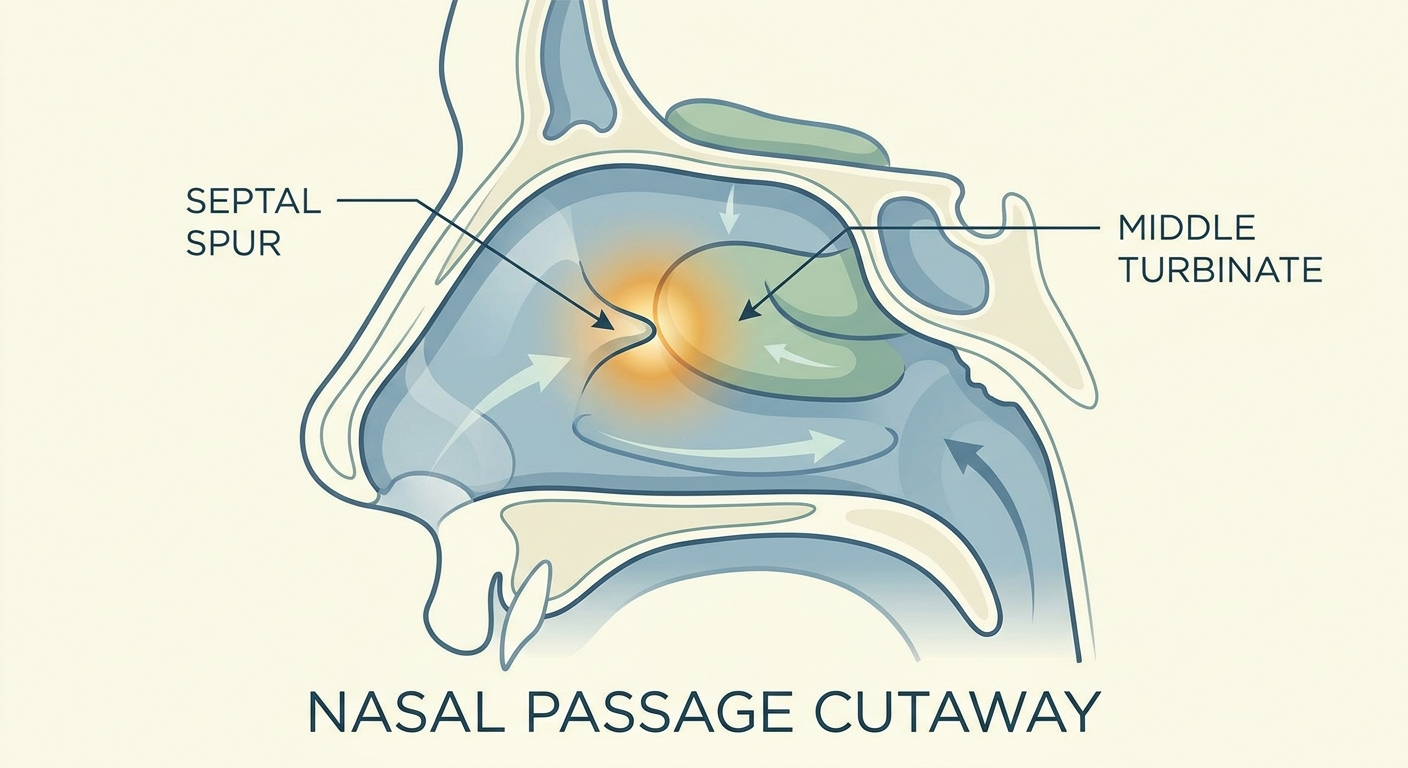
- Structural nasal issues (like a deviated septum or nasal polyps)
The good news: this is common and often treatable. If symptoms are frequent, persistent, or disrupting sleep, a targeted evaluation can help clarify what’s driving your nighttime nasal congestion. [1][2]
• Most nighttime congestion stems from a few common triggers and is treatable once you identify your pattern.
Common Symptoms of Nighttime Nasal Congestion (and How It Affects Sleep)
Nighttime congestion isn’t just annoying. When your nose is blocked, your body often compensates with mouth breathing, lighter sleep, and more awakenings—especially if you’re already prone to snoring or reflux.
Nasal symptoms you may notice
- A blocked or stuffy nose at night that worsens after you lie down
- One nostril feeling more blocked than the other (alternating congestion can also be normal due to the nasal cycle, but inflammation can make it more noticeable)
- Postnasal drip, frequent throat clearing, or cough
- Sneezing and/or an itchy nose (often an allergic pattern)
Sleep-related symptoms
- Mouth breathing with dry mouth or sore throat in the morning
- Snoring or poorer sleep quality
- Frequent awakenings or trouble falling asleep
If you have loud snoring, gasping/choking sounds, or significant daytime sleepiness, consider asking about sleep apnea screening. Nasal blockage isn’t the only cause of those symptoms, but it can contribute to sleep disruption.
• Nasal blockage at night can fragment sleep and amplify snoring or mouth breathing.
Why Your Nose Gets Congested at Night: The Most Common Causes
1) Bedroom allergens (especially dust mites, pets, and mold)

Allergies often feel worse in the bedroom because exposure is long and close-range—your face is near pillows, sheets, and mattresses that can trap allergens. Dust mites are a particularly common trigger, and pet dander can linger even in “clean” homes.
Think of bedding like a “soft reservoir”: it’s great at holding onto tiny particles you can’t see, and you’re breathing inches away from it for hours.
Typical clues:
- Sneezing, itchy nose, watery/itchy eyes
- Symptoms that flare mostly at home or in bed
- Nightly congestion that may improve when traveling
A common patient comment is: “I’m okay all day, then the moment I get into bed, I plug up.” That pattern can suggest the sleep environment may be contributing. If you suspect this, it can help to learn where allergens hide most often—see our guide on dust mite hot spots in bedrooms: https://sleepandsinuscenters.com/blog/top-dust-mite-hot-spots-in-bedrooms-how-to-identify-and-eliminate-them. For individuals who may benefit from formal testing, learn more about Allergy Testing: https://sleepandsinuscenters.com/allergy-testing. Environmental controls are a mainstay of allergic rhinitis management. [3][1]
2) Lying down changes your nasal airflow and drainage
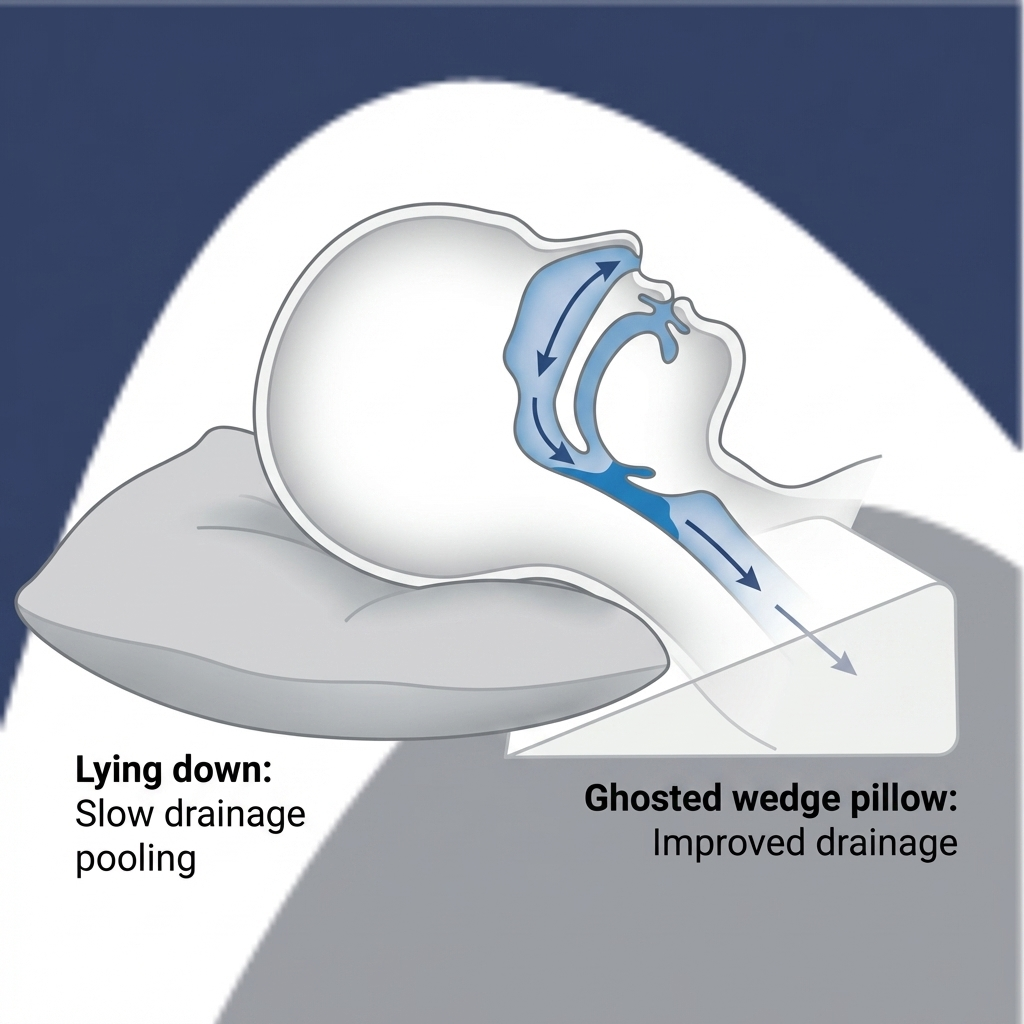
If you notice nasal congestion when lying down, position may be a major factor. When you go from upright to flat:
- Gravity changes how mucus drains
- Blood flow and pressure in the nasal tissues can shift
- Swollen nasal lining can feel more obstructive
An easy analogy: your nasal passages are like narrow hallways. If the lining swells even a little, that hallway can feel dramatically tighter—especially when you’re lying down and everything is less “drained” than it is during the day. [1]
3) Non-allergic rhinitis (irritants and weather/air changes)
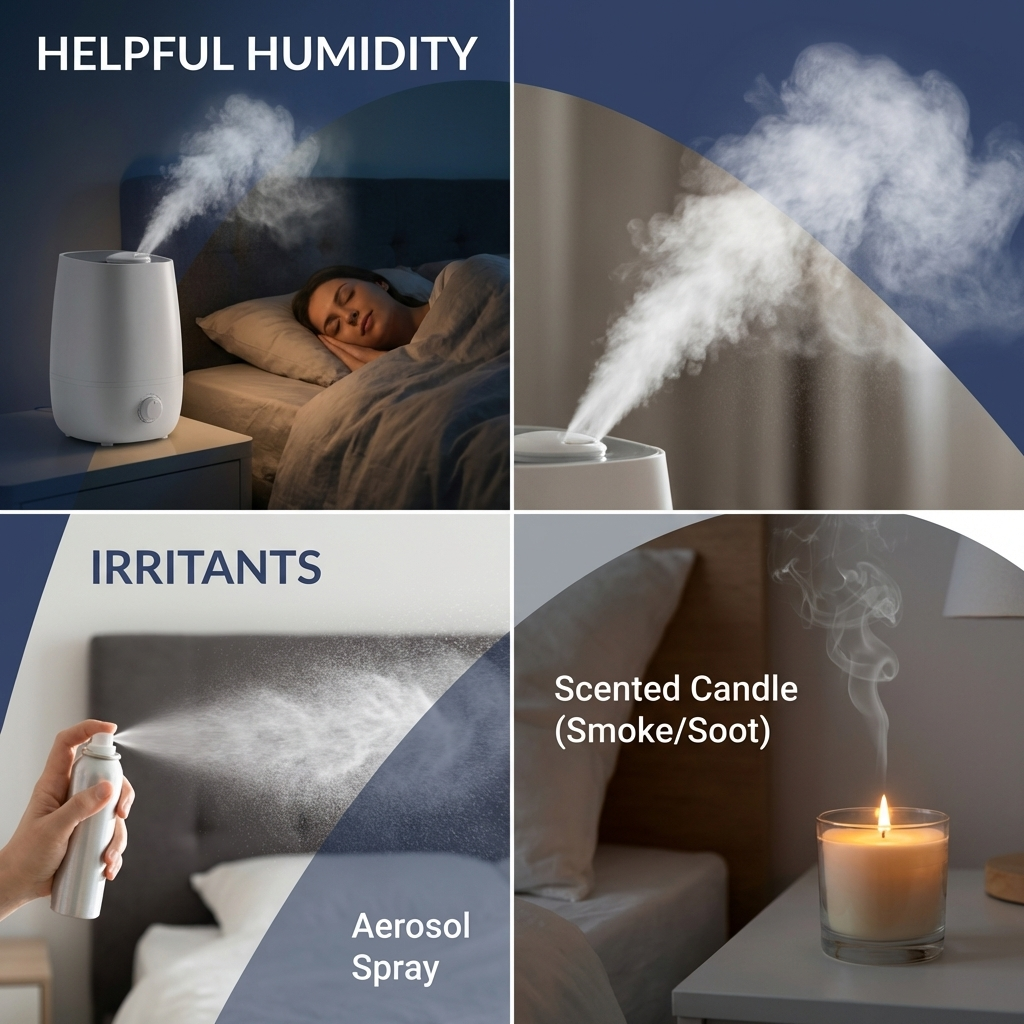
Not all nighttime congestion is allergies. Nonallergic rhinitis can cause chronic or recurring stuffiness without the classic itch-and-sneeze pattern.
Common triggers include:
- Dry indoor air or sudden humidity changes
- Strong fragrances, smoke, candles, cleaning sprays, and fumes
- Temperature shifts (hot-to-cold environments)
Typical clues:
- Congestion is the main symptom
- Minimal itching/sneezing
- Symptoms flare with odors or air changes
For example, you may notice you can breathe fine—until someone lights a scented candle, you run the heater for the first cold night of the year, or you use a strong cleaning spray in a small bathroom. Nonallergic rhinitis is recognized as a distinct condition and is often managed with trigger control and consistent nasal care. Learn more about options in Treating Chronic Rhinitis: https://sleepandsinuscenters.com/treating-chronic-rhinitis. [4]
4) Acid reflux (GERD/LPR) may contribute by irritating the upper airway
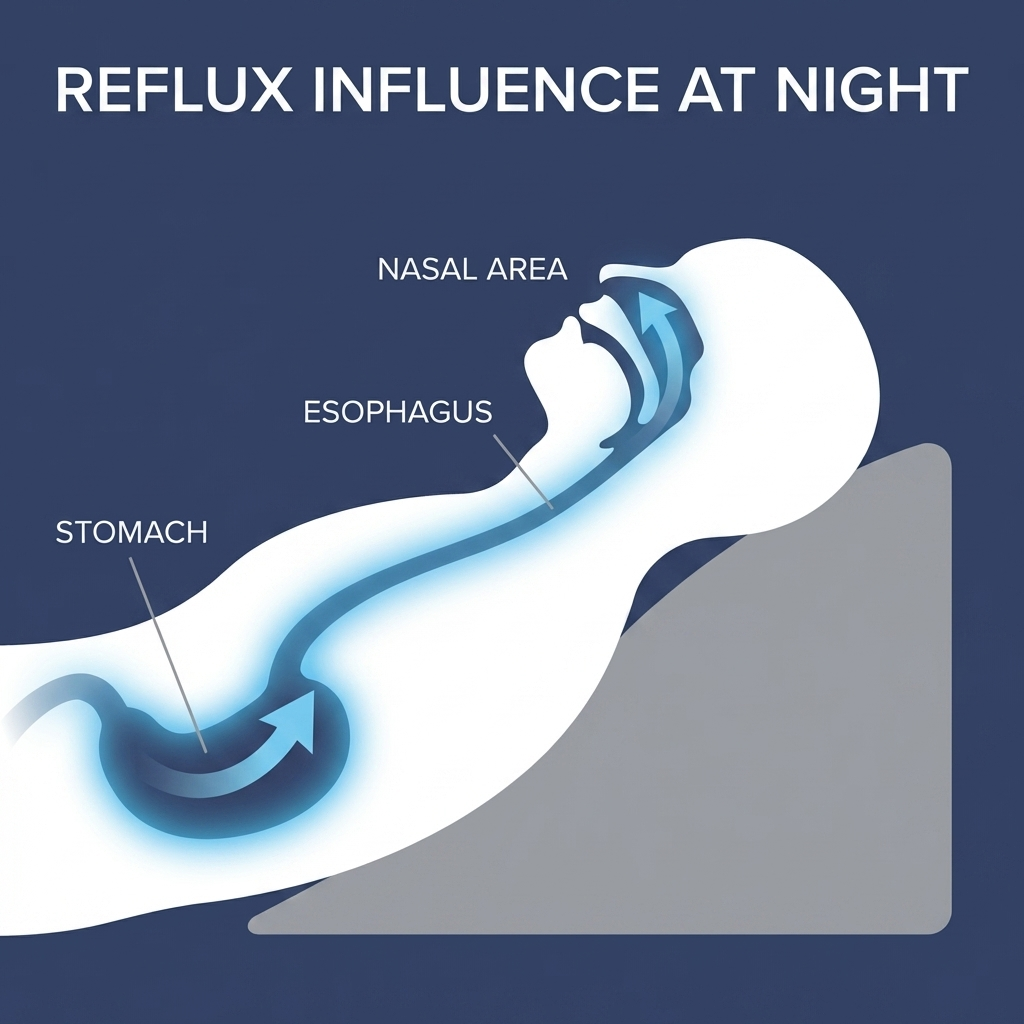
Reflux can sometimes irritate the throat and upper airway, which may contribute to nighttime congestion or a stuffy feeling for some people.
Clues reflux may be involved:
- Heartburn, sour taste, or symptoms after late/heavy meals
- Chronic throat clearing, hoarseness, or a “lump in the throat” sensation
- Symptoms that feel worse when lying down
People often describe this as, “My nose feels stuffed and my throat feels irritated when I wake up,” especially after late dinners. Position can matter a lot here. For practical sleep setup ideas, see best sleep positions for acid reflux: https://sleepandsinuscenters.com/blog/best-sleep-positions-for-acid-reflux-relief-tips-to-stop-heartburn. [1][2]
5) Structural or chronic inflammatory conditions
Sometimes the issue isn’t exposure or irritation—it’s anatomy or a longer-term inflammatory condition. In these cases, nighttime makes the problem more obvious because you have less drainage and more tissue swelling.
Common examples:
- Deviated septum: can contribute to deviated septum nighttime congestion, often felt as one-sided blockage that worsens in certain positions
- Nasal polyps: may cause ongoing blockage and reduced sense of smell
- Chronic sinusitis: congestion with facial pressure and thicker drainage
If you’ve consistently felt that one side is worse for years, or you’re getting frequent sinus infections, a structural contributor becomes more likely. Learn more about deviated septum relief options: https://sleepandsinuscenters.com/deviated-septum-relief. [2][1]
6) Medication effects (sometimes overlooked)
Some medications, including certain blood pressure medications and sedatives in some cases, may contribute to nasal congestion. Another important (and common) medication-related cause is rebound congestion from overusing topical decongestant sprays.
Rebound congestion can occur when topical decongestant sprays, such as oxymetazoline, are used too often or for too long. A common “trap” is using a spray for quick relief at bedtime, then needing it earlier and earlier each night. If you’re needing a decongestant spray frequently to get through the night, it may help to understand the rebound cycle—see Afrin (oxymetazoline) rebound guidance: https://sleepandsinuscenters.com/blog/afrin-rebound-how-long-does-nasal-congestion-last-after-use. It’s also reasonable to ask a clinician or pharmacist whether timing or a specific medication could be playing a role. [2]
• More than one factor can be at play, so track patterns rather than assuming a single cause.
How to Figure Out Your Likely Cause (Simple At-Home Clues)
You don’t need to “solve” this perfectly at home—but noticing patterns can help you choose the most effective next step (and make a doctor visit more productive).
Pattern check (allergy vs non-allergy vs structural)
- Allergies more likely if you have itching/sneezing, seasonal flares, pets in the bedroom, or symptoms that worsen with dust exposure.
- Nonallergic rhinitis more likely if symptoms are triggered by odors, weather/air changes, or indoor irritants—with little itching.
- Reflux more likely if symptoms worsen after late meals and you also have throat clearing, sour taste, or heartburn.
- Structural causes more likely if symptoms are year-round, mostly one-sided, and not strongly tied to sneezing/runny nose.
Bedroom “trigger audit” checklist
- Pillow age and mattress age (older bedding can hold more allergens)
- Carpeting vs. hard flooring
- Humidifier cleanliness and filter changes
- Pet access (especially on the bed)
- Musty odor, water stains, or visible mold
- Visible dust on fan blades, vents, baseboards
• A brief pattern check makes treatment choices more targeted and effective.
Treatments That Work (Stepwise, Patient-Friendly Plan)
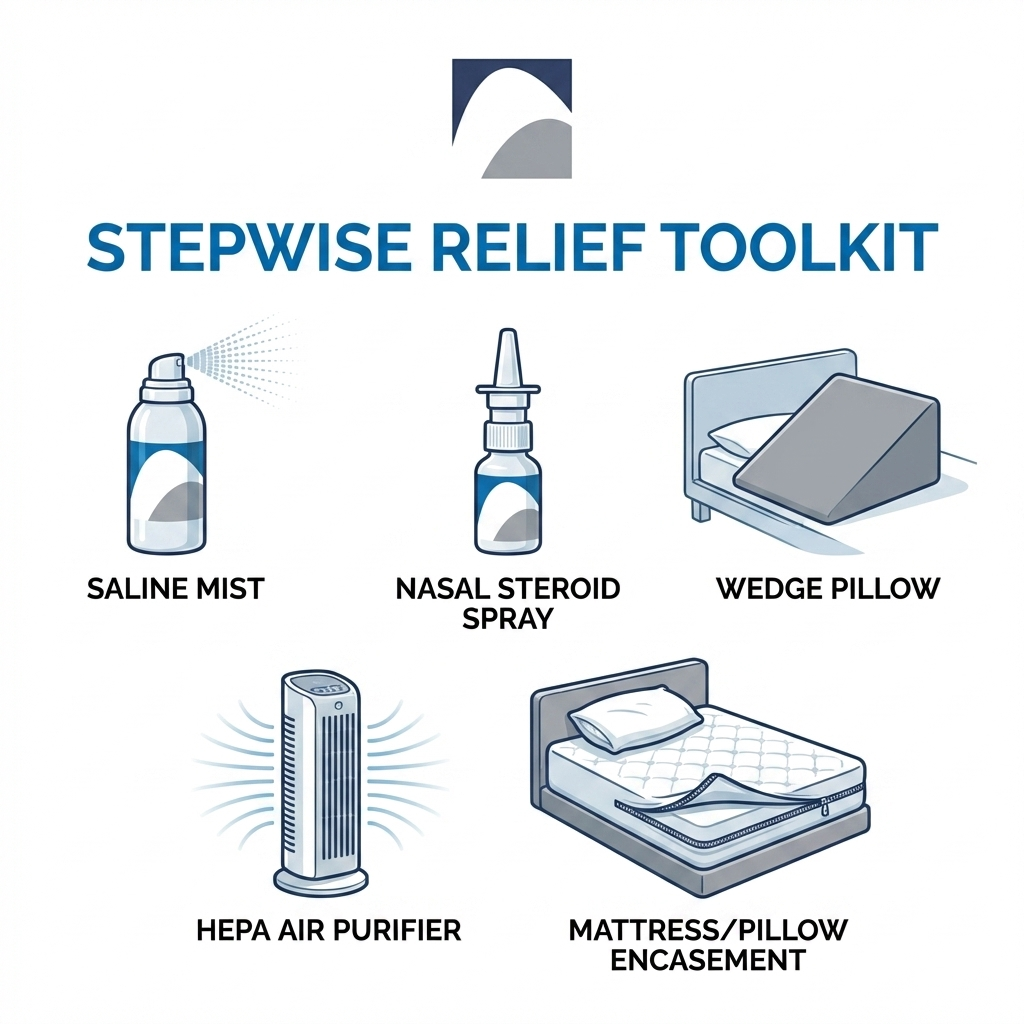
A practical way to think about treatment is: start with low-risk steps, then escalate based on what pattern you’re seeing and how persistent symptoms are.
First-line, low-risk options (most people can try)
- Saline spray or saline rinse before bed to clear irritants and thin mucus
- Showering before bed during allergy seasons to remove pollen from skin and hair
- Hydration and gentle humidification if your air is dry (excess humidity can encourage mold growth and dust mites)
If saline rinses feel intimidating, you can start with a simple saline mist and work up from there. These are commonly recommended comfort measures for congestion and rhinitis. [2][4]
Reduce allergens in the bedroom (especially for dust mites/pets)
- Wash bedding weekly (follow fabric guidance; hot water can help when safe)
- Use allergen-proof mattress and pillow encasements
- Keep pets out of the bedroom (or at least off the bed)
- Consider a HEPA air purifier in the bedroom; vacuum with a HEPA-filter vacuum if possible
These environmental control strategies are widely recommended for allergic rhinitis. For testing and targeted plans, see Allergy Testing: https://sleepandsinuscenters.com/allergy-testing. [3]
Sleep-position strategies (helpful when lying down worsens congestion)
- Elevate the head of the bed or use a wedge pillow
- Try side sleeping if one side tends to feel worse
- Avoid alcohol close to bedtime, as it can worsen snoring and may contribute to nasal congestion in some people
Over-the-counter (OTC) options (when appropriate)
- Intranasal corticosteroid sprays are often used for ongoing allergic or nonallergic inflammation (they don’t provide instant relief, but can be effective with consistent use).
- Antihistamines can be useful when allergy symptoms (itching/sneezing/runny nose) are clear.
- Decongestants (oral or topical) may provide short-term relief for some people, but may be inappropriate with certain health conditions—and topical sprays can cause rebound congestion if used too often or for too long.
If you’re unsure which category fits your symptoms, a clinician can help match the medication type to the cause. [3][4][2]
Prescription and specialist-directed treatments
- Prescription nasal sprays (including combination sprays)
- Targeted allergy management (including testing when appropriate)
- A reflux-focused plan when symptoms fit a reflux pattern
- Evaluation for structural issues (deviated septum, polyps) or chronic sinusitis, with discussion of procedural options when indicated
Specialty evaluation can be especially helpful when nighttime nasal congestion is affecting sleep quality and daytime functioning. [1][2]
• Start with low-risk basics, then step up based on your pattern and persistence of symptoms.
Lifestyle Tips to Prevent Nighttime Nasal Congestion Long-Term
Build a “sinus-friendly” bedtime routine
- Consider saline at night to clear irritants
- Use prescribed medications as directed and timed appropriately
- Keep bedroom air comfortable, and change HVAC filters regularly
- Reduce exposure to smoke/fragrances in the evening
Reflux-prevention habits (if symptoms fit)
- Finish meals 2–3+ hours before bed
- Note trigger foods and avoid late-night snacking when possible
When travel or seasons worsen symptoms
- During pollen season: keep windows closed, shower after outdoor time, and consider more frequent pillowcase changes
- In humid/mold-prone months: monitor indoor humidity and address leaks promptly
• Small, consistent habits often outperform one-off fixes.
When to See a Doctor (and When It’s More Urgent)
Make an appointment if:
- Symptoms last more than 10–14 days repeatedly, or occur most nights
- You’re relying on decongestant sprays frequently
- You have frequent sinus infections, reduced smell, or major sleep disruption
If your symptoms are persistent or sleep quality is being affected, you can book an appointment with Sleep and Sinus Centers of Georgia here: https://www.sleepandsinuscenters.com/
Seek urgent care if:
- High fever, severe facial swelling, severe headache, or vision changes
- Trouble breathing, chest pain, or signs of a severe allergic reaction
• If congestion persists or sleep quality is being affected, evaluation can clarify the cause and speed relief.
FAQs About Nighttime Nasal Congestion
Why is my nose only congested at night but fine during the day?
This is often due to bedroom exposures (like dust mites or pet dander) plus the effects of lying down on nasal blood flow and drainage. Reflux and dry indoor air can also contribute. [1][3]
Why does one nostril get blocked when I lie down?
Some alternating congestion can be normal (the nasal cycle). Inflammation, allergies, or structural narrowing can make it feel much more noticeable—especially when you’re on one side. [1]
Is it okay to use nasal spray every night?
It depends on the type. Some sprays (like steroid sprays) are often used daily for inflammation, while decongestant sprays can lead to rebound congestion if used too often or for too long. If you’re using any spray nightly, it’s reasonable to confirm you’re using the right type for the right duration. [2]
Can acid reflux really cause a stuffy nose at night?
In some people, reflux can irritate the upper airway and contribute to inflammation and extra mucus, which may worsen nighttime congestion. [1]
What’s the best way to reduce dust mites in my bed?
A combination approach tends to work best: allergen-proof encasements, consistent bedding washes, and humidity control. [3]
• If your questions aren’t answered here, a brief visit can personalize your plan.
Related Reading from Sleep and Sinus Centers of Georgia
- Can’t Breathe Through Nose at Night: https://sleepandsinuscenters.com/blog/cant-breathe-through-nose-at-night
- Treating Chronic Rhinitis: https://sleepandsinuscenters.com/treating-chronic-rhinitis
- Allergy Testing: https://sleepandsinuscenters.com/allergy-testing
References
1. Cleveland Clinic. “Why does my nose get stuffy at night?” https://health.clevelandclinic.org/why-does-my-nose-get-stuffy-at-night
2. Mayo Clinic. “Nasal congestion (definition/basics).” https://www.mayoclinic.org/symptoms/nasal-congestion/basics/definition/sym-20050644
3. American Academy of Allergy, Asthma & Immunology (AAAAI). “Hay fever (allergic rhinitis).” https://www.aaaai.org/conditions-treatments/allergies/hay-fever-rhinitis
4. NHS. “Non-allergic rhinitis.” https://www.nhs.uk/conditions/non-allergic-rhinitis/
This article is for educational purposes only and is not medical advice. Please consult a qualified healthcare provider for diagnosis and treatment.
Don’t let allergies slow you down. Schedule a comprehensive ENT and allergy evaluation at Sleep and Sinus Centers of Georgia. We’re here to find your triggers and guide you toward lasting relief.