“Breatherite” Nasal Strips (Breathe Right–type): Benefits, Uses, and How They May Improve Nasal Breathing
If you’ve searched for Breatherite strips, you’re probably looking for something that helps you breathe through your nose more easily—especially at night. The tricky part: that exact name is easy to mix up with other products, and not all of them are nasal strips. This guide clarifies what people usually mean, how nasal strips for breathing work, who they may help, and what research says about snoring and sleep outcomes.
Medical note: This article is for general education and isn’t a substitute for personal medical advice, diagnosis, or treatment.
Quick clarification—what are “Breatherite strips”?
A search for “Breatherite strips” doesn’t reliably point to a clearly defined nasal-strip product or manufacturer under that exact name. In real life, it’s often used as a “sound-alike” term for other items, including:
- Breathe Right nasal strips (an external nasal dilator you wear on the outside of the nose to improve airflow)
- BreatheRite rigid valved holding chamber (a device used with inhalers—not a nasal strip and not intended to open the nose): https://myairlife.com/product/breatherite-rigid-valved-holding-chamber/
Because of this overlap, it’s worth double-checking the packaging and intended use before you buy—or before you repeat product claims online. In practice, people sometimes purchase the wrong item simply because the names look nearly identical at a glance.

What this article covers (and what it doesn’t)
This post focuses on nasal dilator strips—the Breathe Right–type products most people mean when they say “Breatherite strips.” We’ll cover how they work, realistic expectations, and when to consider other options. We won’t review every brand or make medical recommendations for a specific person.
If you want help comparing versions and features, see: https://sleepandsinuscenters.com/blog/best-breathe-right-strips-what-actually-works
If you see “Breatherite” online, double-check the product—most people mean external nasal strips, not inhaler accessories.
What nasal strips are—and how they work
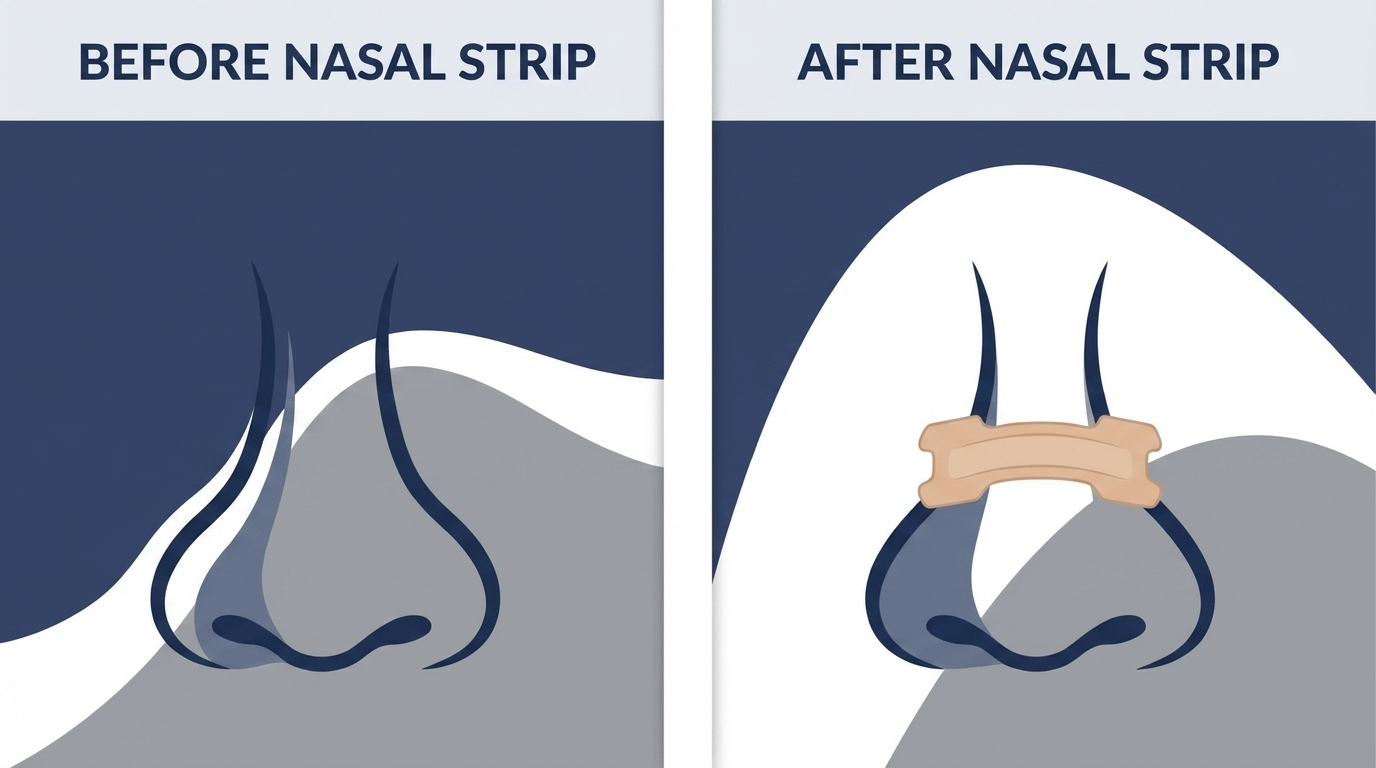
External nasal dilators are adhesive bands with flexible, spring-like supports. When applied correctly, they gently lift outward on the sides of the nose to widen the narrowest front part of the nasal airway (often the nasal valve area), which can reduce airflow resistance.
Simple analogy: like a small brace that supports the soft outer sidewalls so they’re less likely to narrow when you inhale.
Product overview and intended mechanism: https://www.breatheright.com/
What nasal strips can and can’t do
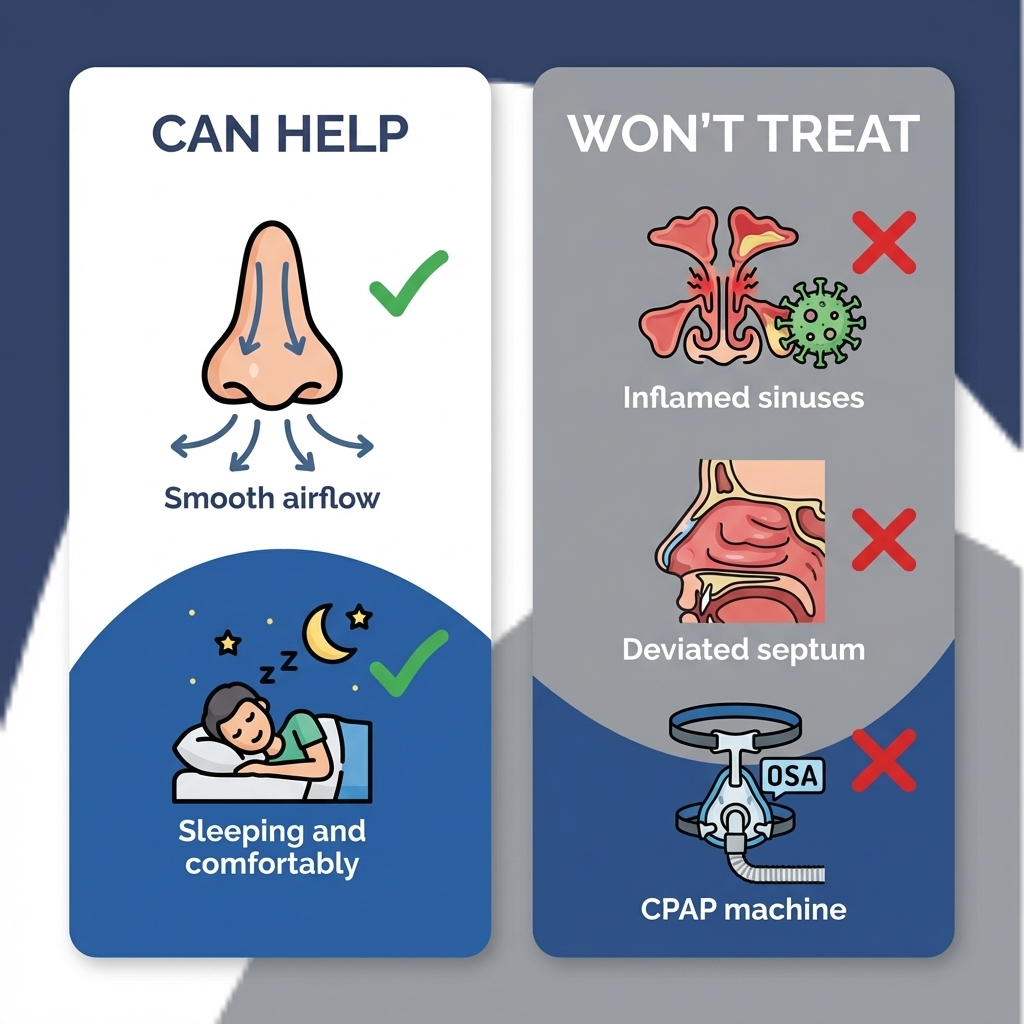
Nasal strips can:
- Support the outer nasal sidewalls and reduce some front-of-nose narrowing or collapse
- Improve the feeling of airflow for certain users, especially at bedtime or during exercise
Nasal strips can’t:
- Treat infections (like sinus or upper respiratory infections); they do not treat the cause, though some people notice temporary breathing comfort while recovering
- Reduce swollen nasal tissues over the long term (such as chronically enlarged turbinates)
- Correct structural problems like a deviated septum (they may help a little, but won’t “fix” anatomy)
- Treat obstructive sleep apnea (OSA), which involves repeated airway collapse during sleep
Think of strips as gently widening the “front door” of the nose; they don’t directly change deeper swelling or inflammation inside the nasal passages.
Symptoms that may improve with “Breatherite” (nasal) strips
Common symptoms people try strips for:
- A “blocked” or restricted feeling when breathing through the nose (often worse at night)
- Mouth breathing during sleep
- Short-term congestion from colds or allergies (relief varies by person and cause)
- Snoring that seems worse when the nose is stuffy (not all snoring comes from the nose)
Example: someone who can breathe “okay” during the day but feels more plugged up once they lie down may be a better candidate for a strip trial than someone whose main symptom is wheezing or chest tightness.
Signs nasal strips may be a good trial:
- The issue feels mainly nasal (not chest tightness or wheezing)
- Symptoms are worse when lying down
- Widening the nostril area with gentle finger pressure feels helpful
A brief trial can make sense when symptoms feel primarily nasal and get worse when you lie down.
Common causes of nasal blockage (and where strips fit)
Temporary/inflammatory causes:
- Colds and viral upper respiratory infections
- Seasonal or year-round allergies
- Irritants (smoke, strong odors, pollution)
Strips may help some people feel less restricted—though they don’t treat the underlying inflammation.
Structural/mechanical causes (where strips may help some):
- Narrow nasal valves or mild nasal valve collapse
- Deviated septum (possible small comfort benefit; not a correction)
- Turbinate enlargement (strips don’t shrink turbinates, but some users still feel better airflow)
If the pinch point is at the front, an external dilator has a better chance of helping. If the pinch point is deeper inside, strips may be less noticeable.
When the cause is not nasal:
- Snoring driven by throat/tongue vibration
- Obstructive sleep apnea (OSA), where the airway collapses repeatedly during sleep
Nasal strips may add comfort but are unlikely to be a complete solution. For patterns and next steps: https://sleepandsinuscenters.com/blog/cant-breathe-through-nose-at-night
Strips tend to help most when the airflow bottleneck is at the very front of the nose.
Benefits of nasal strips (what patients may notice)
Potential day-to-day benefits:
- Easier nasal breathing at bedtime
- Less “stuffy nose” sensation in certain situations
- Less mouth breathing during sleep (for some users)
A realistic win: “I still have some congestion, but I don’t feel like I’m fighting for air through my nose when I’m trying to fall asleep.”
Potential snoring-related benefits (with realistic expectations): Breathe Right–type strips may help if nasal blockage is a major driver. But snoring has many causes, and strips often have limited impact if snoring is related to throat anatomy, sleep position, alcohol, or untreated sleep apnea. Overview: https://www.sleepapnea.org/snoring/do-snoring-strips-really-work/
Expect comfort gains more than cure-level changes, especially for snoring.

What the research says (evidence overview)
Clinical trials show mixed results. Some studies report modest improvements in perceived congestion and sleep-related comfort, while others show minimal changes depending on the users and measures. Examples:
- https://pmc.ncbi.nlm.nih.gov/articles/PMC6822978/
- https://pubmed.ncbi.nlm.nih.gov/31209698/
Systematic reviews generally find inconsistent or minimal effects on objective sleep-disordered breathing (like apnea-hypopnea index), though some users report subjective airflow benefits. Example: Camacho M et al., Sleep & Breathing, 2016.
Bottom line: reasonable, low-risk trial for airflow comfort—unlikely to solve snoring or suspected sleep apnea by itself.
How to use Breatherite/Breathe Right–type strips correctly
Correct placement matters more than many expect. Visual guide and tips: https://sleepandsinuscenters.com/blog/where-to-place-nasal-strips-for-best-results
Step-by-step:
- Start with clean, dry skin (oil or lotion reduces stickiness)
- Place the strip across the bridge/sidewalls of the nose (not too high)
- Press firmly to seal the adhesive
- Remove gently; warm water or removal after a shower may help
If the strip is too high (on the bony bridge), it may feel like it’s doing nothing. Too low or crooked may tug skin without widening the valve area.
Tips:
- Try different sizes/strengths if available
- Use during sleep, exercise, or short-term congestion as tolerated
- Avoid irritated, sunburned, or broken skin
Placement over the flexible sidewalls—rather than the bony bridge—often matters more than brand or style.

Side effects, safety, and who should avoid nasal strips
Common side effects:
- Redness, itching, or mild irritation
- Acne/follicle irritation under the adhesive
- Discomfort if the strip is too tight or placed poorly
If you have sensitive skin, limit wear time at first and remove slowly rather than ripping it off.
When to skip or stop:
- Rash, blistering, or significant pain
- Known adhesive allergy reaction
- Open sores or active dermatitis on the nose
Special situations:
- Kids: follow package age guidance
- CPAP users: ensure the strip doesn’t interfere with mask fit or seal; persistent blockage warrants evaluation
Most problems are mild skin issues and improve with adjustment or stopping use.
Treatments that may work better (or alongside strips)
At-home/lifestyle tips:
- Saline spray or rinse (use sterile/distilled water for rinses)
- Humidifier if indoor air is dry (clean regularly)
- Allergy trigger control (dust reduction, pollen strategies, pet plans)
- Sleep-position changes (side sleeping helps some snoring drivers)
OTC and prescription options:
- Intranasal steroid sprays for allergic/inflammatory congestion (as directed)
- Antihistamines for allergy symptoms (when appropriate)
- Caution with topical decongestant sprays to avoid rebound congestion
ENT evaluation and procedures: If blockage is frequent or persistent, evaluation can identify septal deviation, turbinate hypertrophy, nasal valve collapse, chronic rhinitis, or sinus issues. Nighttime focus: https://sleepandsinuscenters.com/blog/cant-breathe-through-nose-at-night
Simple at-home steps can help, but persistent blockage is a reason to seek evaluation.
When snoring is a warning sign (don’t miss sleep apnea)
Red flags that deserve evaluation:
- Loud snoring plus choking/gasping
- Witnessed pauses in breathing during sleep
- Excessive daytime sleepiness or morning headaches
- High blood pressure or other cardiovascular risk factors
Nasal strips vs sleep apnea treatment: strips may improve nasal comfort, but they do not treat the repeated airway collapse that defines OSA. If you suspect OSA, seek appropriate testing.
FAQs about Breatherite (nasal) strips
Do Breatherite strips really work? They can help some people feel less restricted nasal airflow, but research results on sleep and snoring outcomes are inconsistent overall. Source: Camacho et al., Sleep & Breathing (2016).
Can they stop snoring? Sometimes—mainly when nasal blockage is a major contributor. If snoring is driven by throat anatomy, sleep position, alcohol, or OSA, benefit is often limited. https://www.sleepapnea.org/snoring/do-snoring-strips-really-work/
Can I use them every night? Many people do. Monitor for skin irritation and adjust use if redness or rash appears.
Are these the same as the BreatheRite device used with inhalers? No. BreatheRite is a valved holding chamber for inhaled medications and is unrelated to nasal strip products. https://myairlife.com/product/breatherite-rigid-valved-holding-chamber/
What if my nose is still blocked even with strips? That may suggest inflammation, anatomy (septum/turbinates/valve collapse), or another cause that strips don’t address well. Identifying the cause is the key next step.
Key takeaways
- “Breatherite strips” is not a clearly defined product name; many people mean Breathe Right–type nasal dilator strips, but it’s easy to confuse with the BreatheRite inhaler chamber—verify packaging.
- Nasal strips are drug-free and may improve airflow comfort for some people by gently widening the front of the nose.
- Evidence for snoring and sleep-disordered breathing improvement is mixed; reviews show limited or inconsistent benefits on objective outcomes.
- Persistent congestion or loud snoring with red flags deserves clinical evaluation rather than relying on strips alone.
Need help or next steps
If you’re dealing with ongoing nighttime nasal blockage, chronic snoring concerns, or you’re not sure what’s driving your symptoms, you can book an appointment: https://www.sleepandsinuscenters.com/
Sources / References
- Breathe Right official website: https://www.breatheright.com/
- Noss MJ et al. (2019) trial (PMC): https://pmc.ncbi.nlm.nih.gov/articles/PMC6822978/
- PubMed record: https://pubmed.ncbi.nlm.nih.gov/31209698/
- Systematic review example: Camacho M, Zaghi S, Certal V, et al. Sleep & Breathing. 2016.
- SleepApnea.org patient resource: https://www.sleepapnea.org/snoring/do-snoring-strips-really-work/
- BreatheRite valved holding chamber (not nasal strips): https://myairlife.com/product/breatherite-rigid-valved-holding-chamber/
- Placement tips for nasal strips: https://sleepandsinuscenters.com/blog/where-to-place-nasal-strips-for-best-results
- Nighttime nasal blockage overview: https://sleepandsinuscenters.com/blog/cant-breathe-through-nose-at-night
- Product comparisons and features: https://sleepandsinuscenters.com/blog/best-breathe-right-strips-what-actually-works
This article is for educational purposes only and is not medical advice. Please consult a qualified healthcare provider for diagnosis and treatment.
Don’t let allergies slow you down. Schedule a comprehensive ENT and allergy evaluation at Sleep and Sinus Centers of Georgia. We’re here to find your triggers and guide you toward lasting relief.