Nasal Valve Stenosis After Rhinoplasty: Causes, Symptoms, and Treatment Options
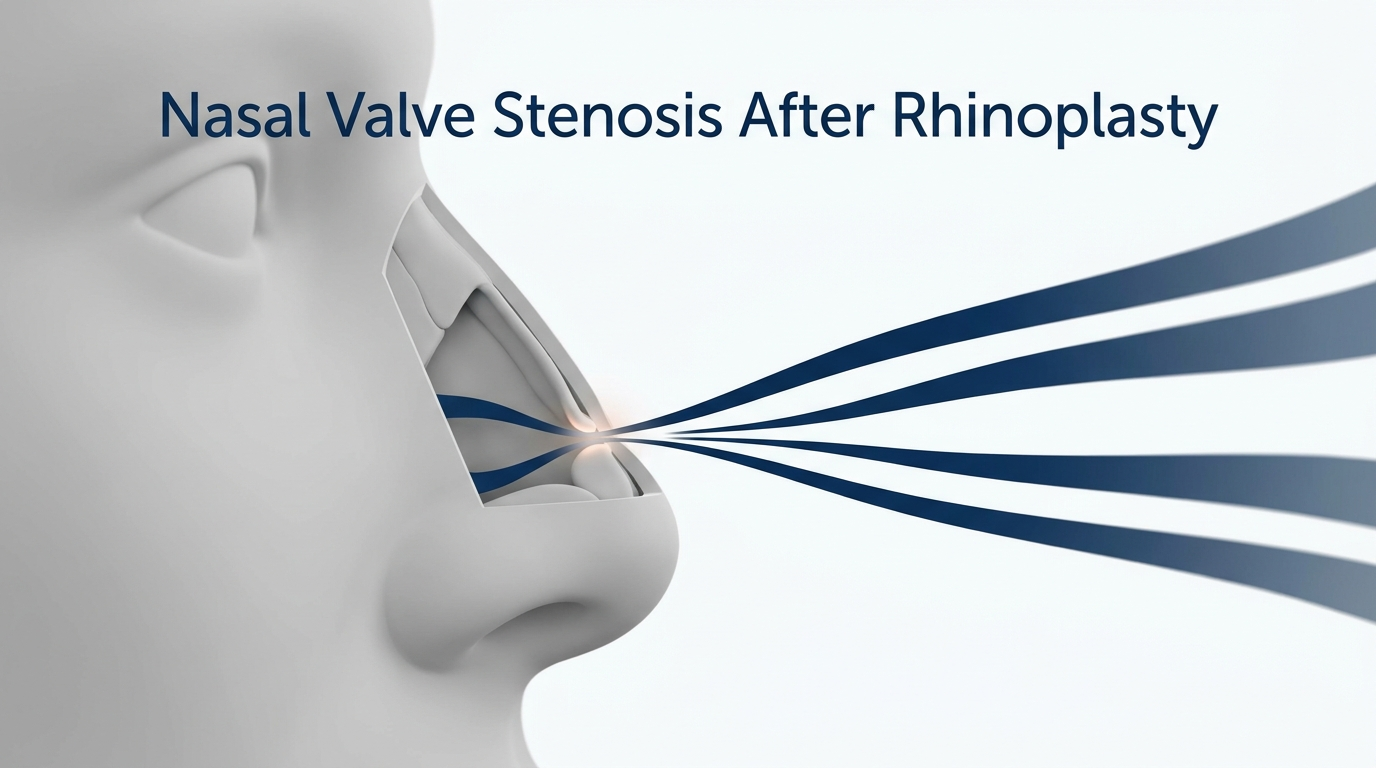
Rhinoplasty can deliver a result that looks great—yet some patients notice their breathing feels worse afterward. When that happens, it’s often not “just swelling” or “just allergies.” One under-recognized reason is nasal valve stenosis after rhinoplasty, meaning the narrowest part of the nasal airway has become too tight or unstable.
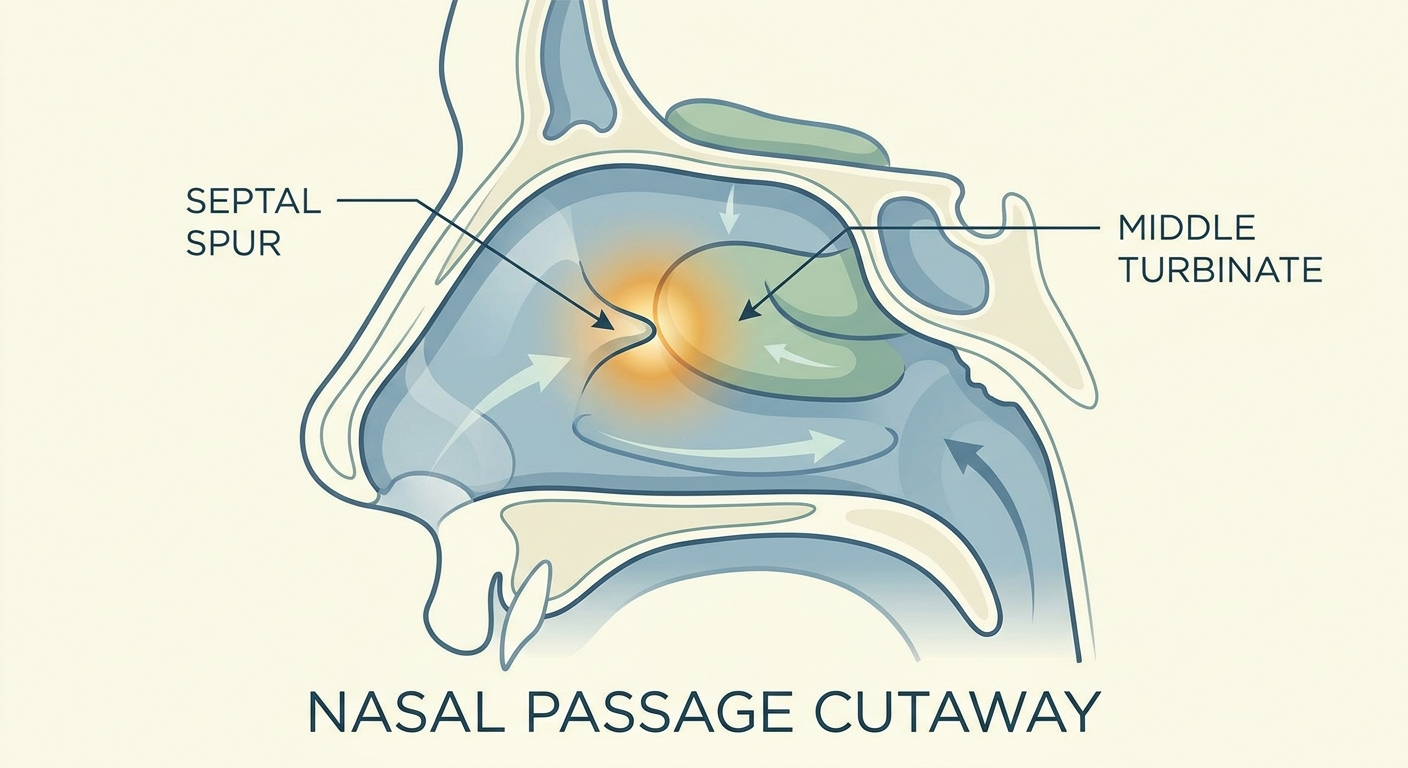
In plain language: the nasal valve is the tightest “pinch point” inside the nose. If that area becomes narrowed or starts to collapse during breathing, airflow drops—and the nose can feel blocked even when there isn’t much mucus. Many patients describe it as “breathing through a straw,” especially during exercise or at night.
The encouraging part is that many cases are treatable, but success depends on getting the right diagnosis and identifying whether the problem is fixed narrowing, collapse, or both. [1]
Bottom line: if breathing declined after rhinoplasty, a focused valve evaluation can clarify whether structure—not just swelling—is the driver.
What Is the Nasal Valve—and Why Does It Matter for Airflow?
- Internal nasal valve: The narrow angle deeper inside the nose. This is often the main bottleneck for airflow; internal nasal valve narrowing is a classic cause of persistent obstruction.
- External nasal valve: The nostril rim and lower sidewall (alar area). This region needs enough cartilage support to stay open during breathing.
A helpful analogy: think of the nasal valve like the “neck” of a balloon. A small change in that narrowest segment can noticeably change airflow—especially when you inhale strongly.
Stenosis vs. collapse
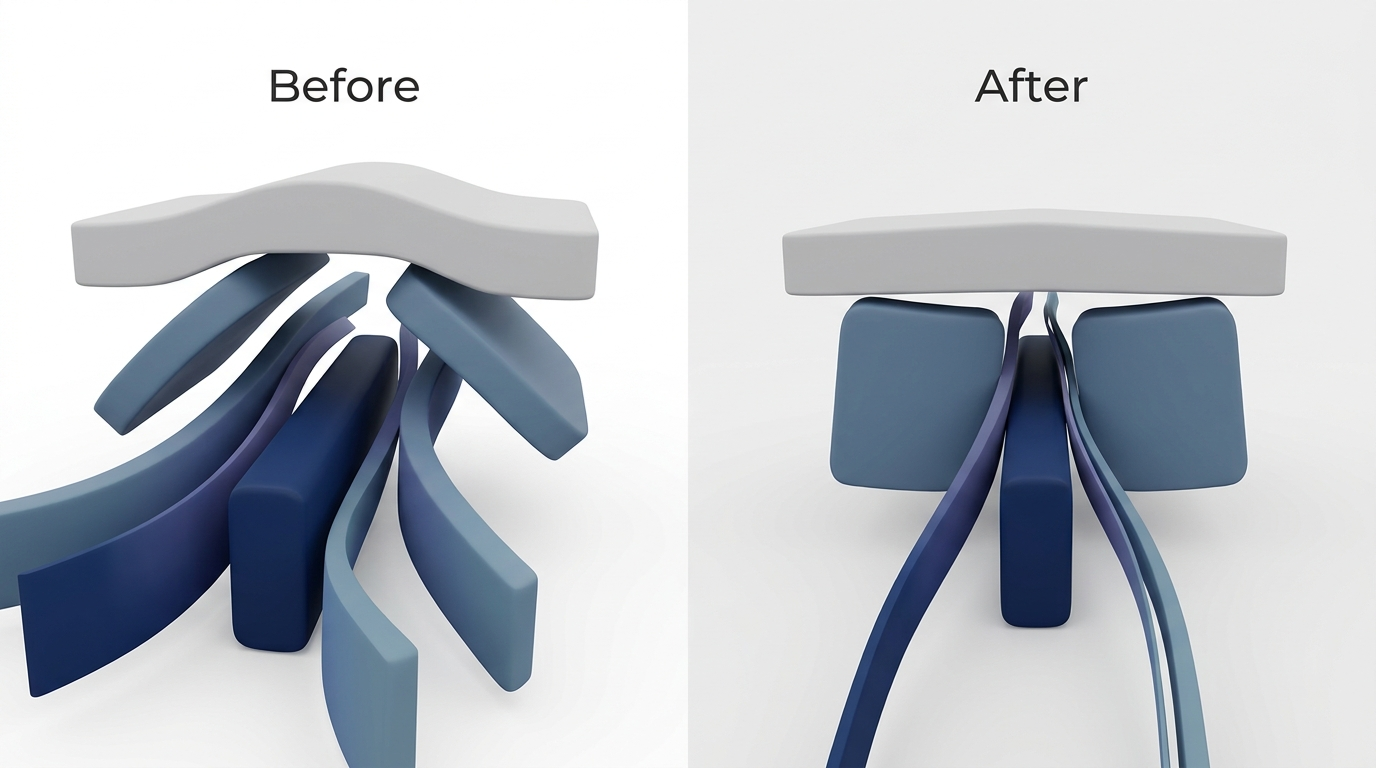
- Fixed narrowing (stenosis): The airway is too narrow even at rest.
- Dynamic collapse: The sidewall caves in during inhalation—especially with a deep breath or exercise. This is also called dynamic nasal sidewall collapse.
Small changes at the valve can cause big changes in airflow—especially during deep inhalation.


Why Nasal Valve Stenosis Can Happen After Rhinoplasty (Causes)
Structural weakening of cartilage support
The nasal sidewalls rely on cartilage strength and shape. If rhinoplasty reduces support—such as weakening the upper lateral cartilages or the alar structures—the sidewall may be more likely to pull inward during breathing.
Internal valve narrowing after dorsal hump reduction (a common mechanism)
After a dorsal hump is removed, the “roof” in the middle third can narrow if the upper lateral cartilages are brought too close together, reducing the internal valve angle and restricting airflow. In real terms, someone may feel “okay” at rest but notice limited airflow with deep inhalation, talking for long periods, or cardio workouts.
Scar tissue and healing changes
Scar tissue can add stiffness, tightness, or inward pull that contributes to fixed obstruction—especially when symptoms persist well beyond the early healing window.
It’s often not the valve alone (combined causes are common)
Nasal valve dysfunction often overlaps with:
- Septal deviation (learn more about deviated septum relief: https://sleepandsinuscenters.com/deviated-septum-relief)
- Turbinate enlargement
- Inflammatory conditions like allergic rhinitis or chronic rhinitis
This matters because procedures aimed only at the septum or turbinates may not fully resolve symptoms if nasal valve dysfunction is missed. [1,2]
In many post-rhinoplasty cases, valve issues coexist with septum, turbinate, or inflammation problems—so a complete evaluation matters.
Symptoms: How Patients Describe Nasal Valve Problems After Rhinoplasty
Most common symptoms
- Difficulty breathing through one or both nostrils
- A persistent “blocked” sensation (even without heavy mucus)
- Mouth breathing, especially at night
- Snoring or new sleep disruption
- Breathing that feels worse with:
- Exercise
- Lying down or sleeping [2,5]
Clues that suggest dynamic collapse
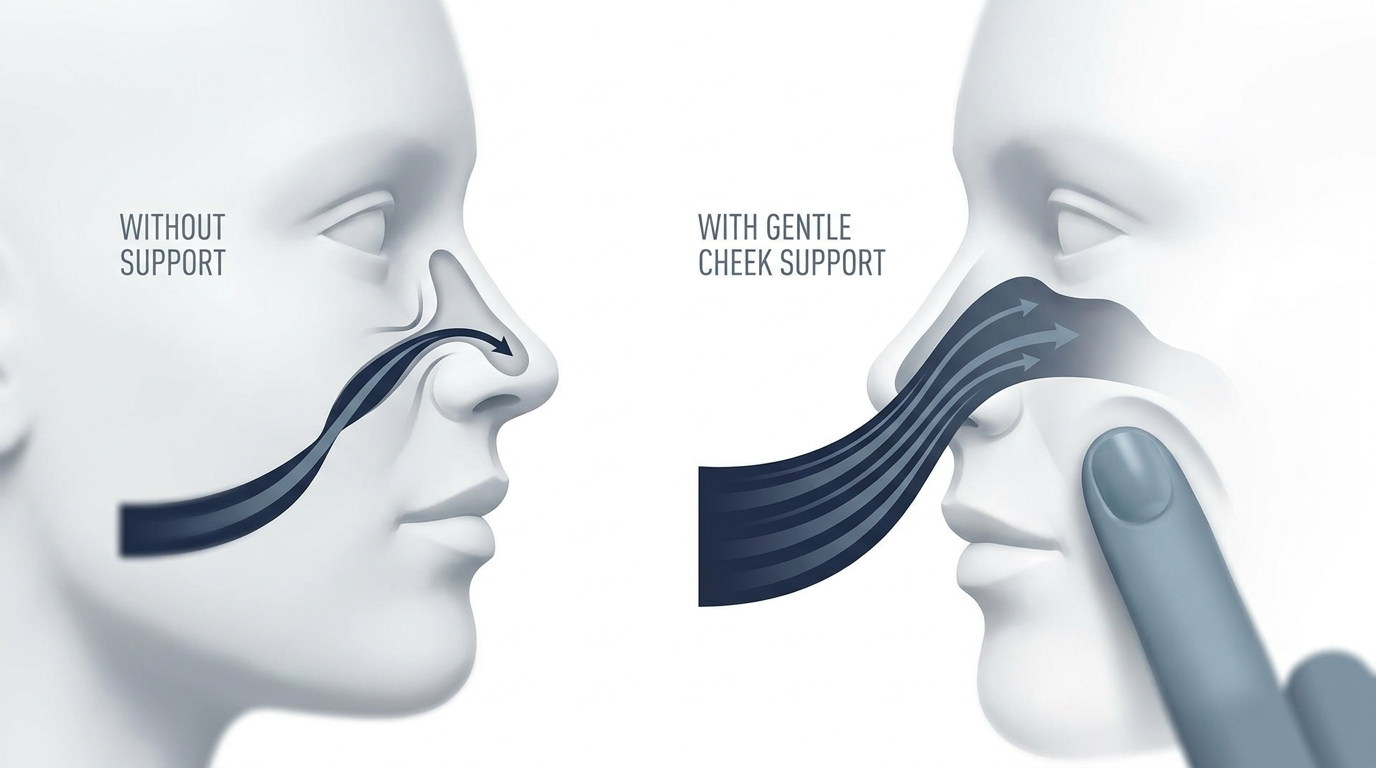
- Feeling like the sidewall/nostril caves inward during inhalation
- Noticing breathing improves when gently supporting the cheek or sidewall
If you want a patient-friendly way to explore patterns before an appointment, see our nasal valve collapse self-test (educational only; not a substitute for in-office diagnosis): https://sleepandsinuscenters.com/blog/nasal-valve-collapse-self-test-how-to-diagnose-nasal-obstruction-at-home
Quality-of-life impact
- Poor sleep and waking with dry mouth
- Reduced exercise tolerance
- Stress or frustration about breathing—especially when the nose “looks fine” externally
When the nose looks refined but airflow is limited, the day-to-day impact can be out of proportion to how “open” the nose appears.
When Is It Normal Post-Op Swelling vs. a Real Structural Problem?
Normal early healing
Congestion and swelling are common early after rhinoplasty, and airflow can fluctuate. If symptoms persist beyond the expected healing window—or if obstruction is strongly positional or exertional—evaluate for structural causes like valve narrowing or collapse. [1,2]
Red flags that justify an ENT evaluation (educational)
- Obstruction that’s persistent, worsening, or clearly asymmetric
- Sleep disruption or snoring that began after surgery
- Visible sidewall collapse during breathing
Swelling tends to improve with time; structural problems tend to feel consistent, activity-triggered, or mechanically reproducible.
Diagnosis: How ENTs Evaluate Nasal Valve Stenosis After Rhinoplasty
History and physical exam
- Timing: Immediate vs. gradual onset after surgery
- Triggers: Worse with exercise, deep inhalation, or lying down?
- Laterality: One side vs. both sides?
- Exam: Septum, turbinates, internal nasal valve region, external nasal wall and alar support [1,2]
Symptom scoring (NOSE questionnaire)
Many practices use the NOSE (Nasal Obstruction Symptom Evaluation) questionnaire to quantify severity and track response over time. [3]
Why misdiagnosis happens
Septal deviation or turbinate enlargement can be easier to “see” and addressed first, but if nasal valve dysfunction is the main driver, treating septum/turbinates alone may leave ongoing symptoms. [2]
A careful valve-focused exam, often with NOSE scoring, helps separate swelling from structural narrowing or collapse.
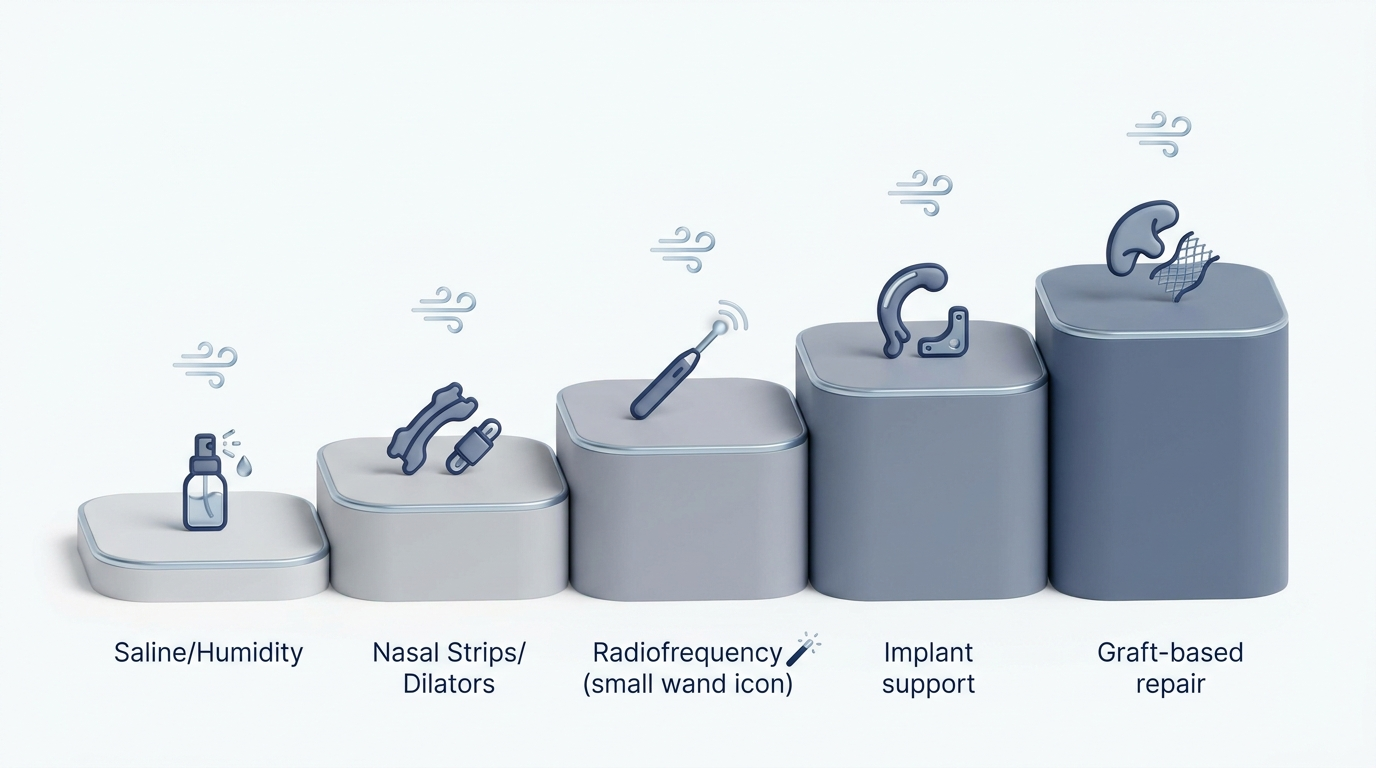
Treatment Options (from least invasive to most definitive)
The plan depends on whether symptoms are mild, dynamic, fixed narrowing, or a combination—and whether other problems (septum/turbinates/inflammation) are also present. [2,5]
Conservative management for mild symptoms
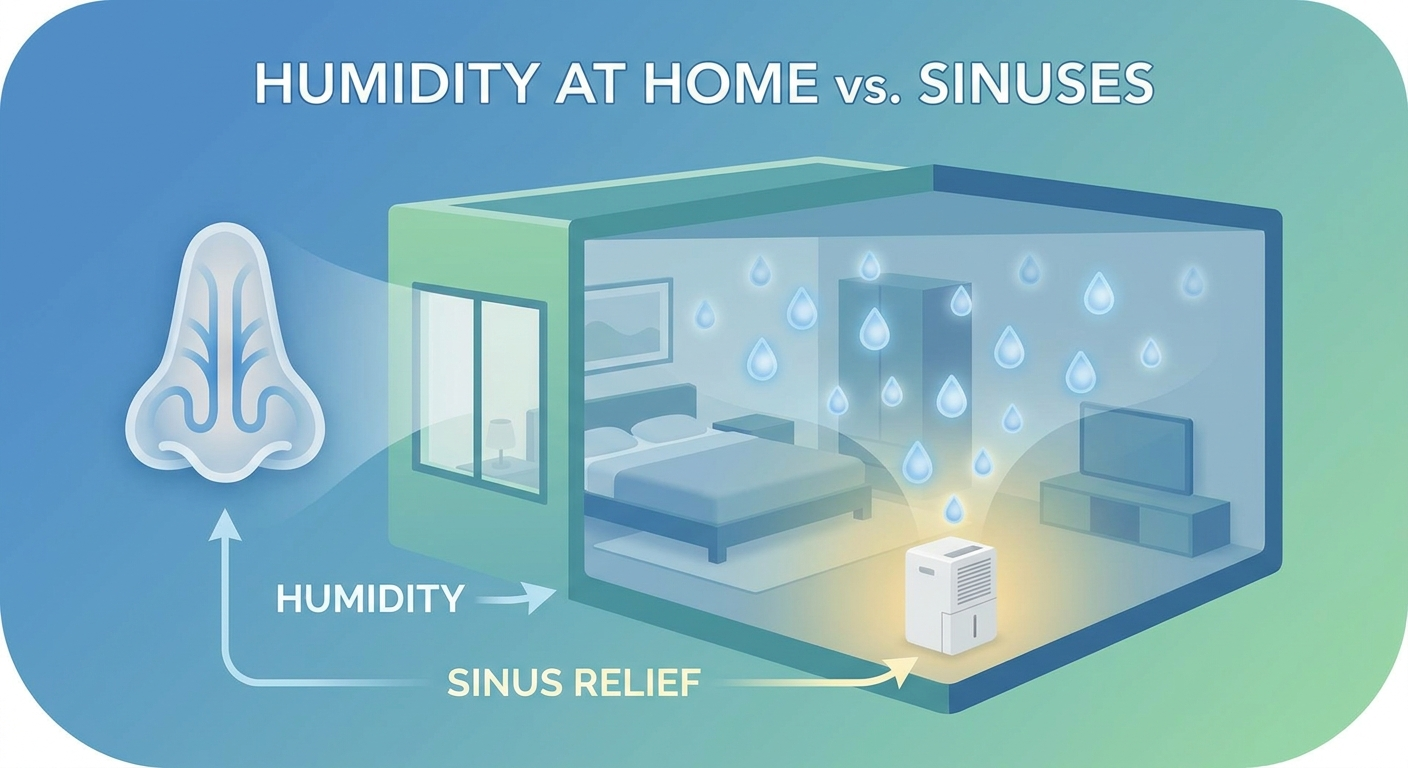
- Saline rinses and humidification for comfort (especially if dryness/crusting is present)
- Address inflammatory contributors when relevant (rhinitis/allergy management)
- A trial of external nasal strips or internal nasal dilators (often most helpful for dynamic collapse). For a practical comparison, see nasal strips vs. internal nasal dilators: https://sleepandsinuscenters.com/blog/nasal-strips-vs-internal-dilators-which-is-best-for-better-breathing
Note: These measures can offer clues (not a diagnosis) about dynamic collapse vs. fixed narrowing. [2,5]
Office-based or minimally invasive options
- Temperature-controlled radiofrequency (VivAer)
In selected patients, radiofrequency remodeling can target tissue in the valve region to improve airflow. In a 2024 retrospective series of 37 patients with prior rhinoplasty or prior nasal valve repair, average NOSE scores improved by 22.4 points (36.6%); 56.8% met response criteria, and repeat treatment helped about half of initial nonresponders. This is one small retrospective study; results vary by anatomy, and not everyone is a candidate—particularly after complex rhinoplasty. [3]
For a broader overview, see radiofrequency ablation for nasal obstruction: https://sleepandsinuscenters.com/blog/radiofrequency-ablation-for-nasal-obstruction
- Implants (selected patients)
In some anatomies, implants may support the lateral wall. Candidacy is individualized and depends on whether the main problem is dynamic collapse, fixed narrowing, or both. [2,4]
Surgical correction (often needed for significant anatomic narrowing)
- Graft-based repair (common in revision functional rhinoplasty)
- Spreader graft: Widens/supports the internal nasal valve (helpful for internal valve narrowing).
- Alar batten graft: Supports the external valve/sidewall and can reduce dynamic collapse.
Cartilage for grafting may come from septum, ear, or rib, depending on what’s available after prior surgery. The functional goal is to restore enough support and width for stable airflow during sleep and activity.
To learn more about surgical strategies, see how ENT doctors fix nasal valve collapse: https://sleepandsinuscenters.com/blog/how-ent-doctors-fix-nasal-valve-collapse
- Suture techniques and open repair
Some cases can be addressed with suture-based support, sometimes combined with grafts. The surgical plan is tailored to what’s actually collapsing or narrowed.
- Combine procedures when needed
Because mixed causes are common, valve repair may be combined with septoplasty and/or turbinate reduction when appropriate. [2,4]
For fixed anatomic narrowing or weak support, structurally restoring width and stability is often the most durable option—planned case-by-case after a full evaluation.
Lifestyle & Self-Care Tips to Breathe Better While You Pursue Treatment
These steps don’t “cure” structural nasal valve stenosis after rhinoplasty, but they can help while you’re being evaluated:
Nighttime breathing tips
- If symptoms worsen when lying on your back, noticing whether side-sleeping changes airflow can provide useful information.
- Optimize bedroom humidity to reduce dryness and improve comfort.
Exercise adjustments
- Use a gradual warmup and note whether symptoms spike with deep inhalation (often a clue for dynamic collapse patterns).
Track symptoms to support diagnosis
- Consider tracking a monthly NOSE score.
- Note triggers (exercise, sleep position) and whether strips/dilators change airflow—useful clues during clinical evaluation. [1]
Small routine changes can improve comfort now—and the patterns you track can speed up accurate diagnosis later.
FAQs (Patient-Friendly)
Can rhinoplasty really cause nasal valve collapse or stenosis?
- Yes, in some patients rhinoplasty can contribute by narrowing the internal valve or weakening cartilage support—particularly after structural changes like dorsal hump reduction. [2]
Why do I feel congested if it’s a structural issue?
- Airflow restriction can feel like congestion even without infection or heavy mucus because the passage is physically smaller or less stable. [5]
I had septoplasty/turbinate reduction but still can’t breathe—now what?
- A nasal valve problem may have been missed, and combined causes are common. A complete evaluation considers the valve, septum, turbinates, and inflammation together. [1,2]
Do nasal strips help nasal valve stenosis after rhinoplasty?
- They can help some people—especially those with dynamic sidewall collapse—but they don’t typically correct significant fixed narrowing long-term. [5]
Is VivAer radiofrequency a good option after rhinoplasty?
- It may help selected post-rhinoplasty patients, but candidacy and expectations depend on anatomy and the type of obstruction; evidence to date includes small retrospective series. [3]
What’s the most definitive treatment?
- When fixed anatomic narrowing or weak support is confirmed, structural widening and support—often using grafts as part of functional revision—are frequently the most durable options, individualized to your anatomy. [2,4]
Your best option depends on the specific pattern of narrowing or collapse and any coexisting issues like septal deviation or turbinate hypertrophy.
When to See an ENT (Call to Action)
If breathing trouble persists after surgery, affects sleep or exercise, or you suspect sidewall collapse, an ENT evaluation can clarify whether the cause is nasal valve stenosis after rhinoplasty, inflammation, septal deviation, turbinate enlargement, or a combination. A thorough assessment looks at valve + septum + turbinates + inflammation to build a complete plan. [1,2]
If you’d like expert guidance and a clear next step, you can book an appointment with Sleep and Sinus Centers of Georgia: https://www.sleepandsinuscenters.com/
Getting the right diagnosis is the fastest path to the right fix.
References
1. Rhee JS, et al. Clinical Consensus Statement: Diagnosis and Management of Nasal Valve Compromise. (2010). https://pmc.ncbi.nlm.nih.gov/articles/PMC5943059/
2. Pirola F, et al. Nasal valve obstruction: a comprehensive analysis of the current literature and proposal of a management algorithm. (2025). https://pmc.ncbi.nlm.nih.gov/articles/PMC11983596/
3. Simmons et al. Evaluating post-rhinoplasty nasal obstruction treatment: The efficacy of VivAer radiofrequency ablation. (2024). https://www.sciencedirect.com/science/article/abs/pii/S0196070924001248
4. Position Statement: Nasal Valve Repair. (2023). https://www.entnet.org/resource/position-statement-nasal-valve-repair/
5. Cleveland Clinic. Nasal Valve Collapse: Symptoms, Causes, Test & Treatment. (2023). https://my.clevelandclinic.org/health/diseases/24977-nasal-valve-collapse
Medical Disclaimer
This article is for educational purposes only and is not medical advice. Please consult a qualified healthcare provider for diagnosis and treatment. This content does not replace evaluation by a qualified clinician. If you have persistent or worsening nasal obstruction—especially after surgery—seek care from an appropriate specialist (such as an ENT).
Don’t let allergies slow you down. Schedule a comprehensive ENT and allergy evaluation at Sleep and Sinus Centers of Georgia. We’re here to find your triggers and guide you toward lasting relief.