Tree Nut Allergy Throat Tightening: Anaphylaxis vs ENT Evaluation
Throat tightening after eating tree nuts can feel frightening—and it deserves prompt, careful attention. In some cases, it may signal anaphylaxis, a fast-moving allergic emergency that can happen even without a rash or hives. The priority is always emergency response first, then follow-up with the right specialist for prevention and lingering symptoms—often an allergist, and sometimes an ENT (ear, nose, and throat) specialist. [1][2][3]
This guide explains red flags, what commonly happens next after the reaction is controlled, and when persistent throat or voice problems may warrant an ENT evaluation at Sleep and Sinus Centers of Georgia.
Throat Tightening After Tree Nuts: Why It Can Be an Emergency
Throat symptoms can be especially alarming because they may involve the upper airway—the “shared hallway” for breathing and swallowing. If that hallway starts to narrow from swelling or spasm, symptoms can escalate quickly. That’s why clinicians treat new throat tightness after a likely allergen exposure as urgent until proven otherwise. [3]
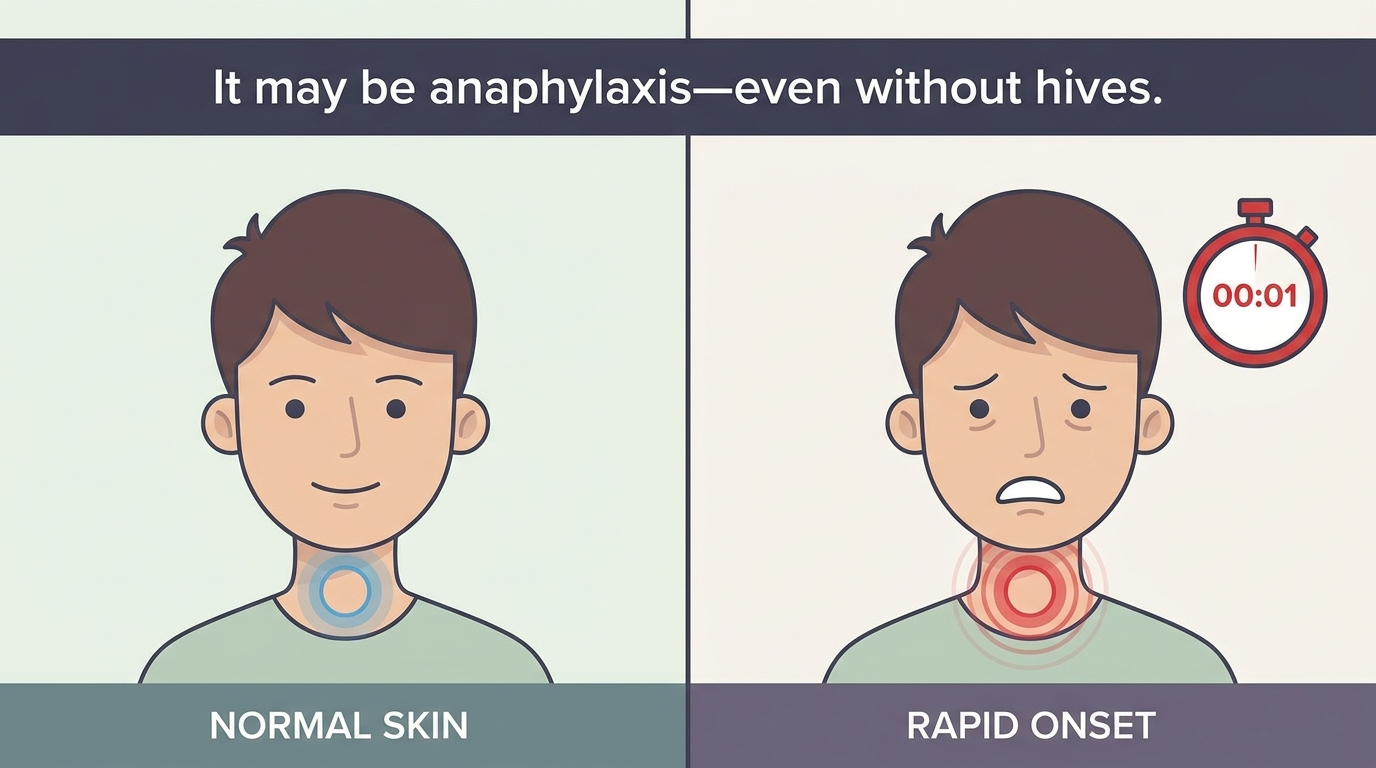
It may be anaphylaxis—even if there’s no rash or hives. Many people associate anaphylaxis with hives, but skin symptoms aren’t required. Some reactions show up mainly in the throat, breathing, stomach, or circulation. Throat tightness after eating nuts that begins within minutes to a few hours is particularly concerning. [3][4]
In plain terms: if your throat feels like it’s “closing” soon after tree nut exposure, it may be more than irritation. It can be part of a broader, body-wide reaction—even when your skin looks normal. [3][4]
Symptoms that raise concern for anaphylaxis. Seek urgent evaluation if symptoms develop after tree nut exposure and include any of the following (especially in combination): [2][3][4]
- Throat tightness or a “closing” sensation
- Throat, tongue, or lip swelling
- Hoarseness or a sudden voice change during the reaction
- Trouble swallowing (drooling, inability to swallow saliva)
- Wheezing, persistent coughing, shortness of breath
- Dizziness, fainting, confusion, pale/clammy skin
- Severe abdominal symptoms (cramps, vomiting)
Some people search for “anaphylaxis without hives” after a reaction like this—and yes, it can happen. [3][4]
Example: Someone eats a cookie containing walnuts, and within 10–20 minutes they feel throat tightness and their voice gets raspy, but they never develop hives. That pattern can still fit anaphylaxis and should be treated as an emergency. [3][4]
*Bottom line: new throat tightness after nut exposure is an emergency until proven otherwise.*
What to Do Right Now (Action Steps)
Goal: Understand that emergency treatment comes before an ENT visit if symptoms are happening now.
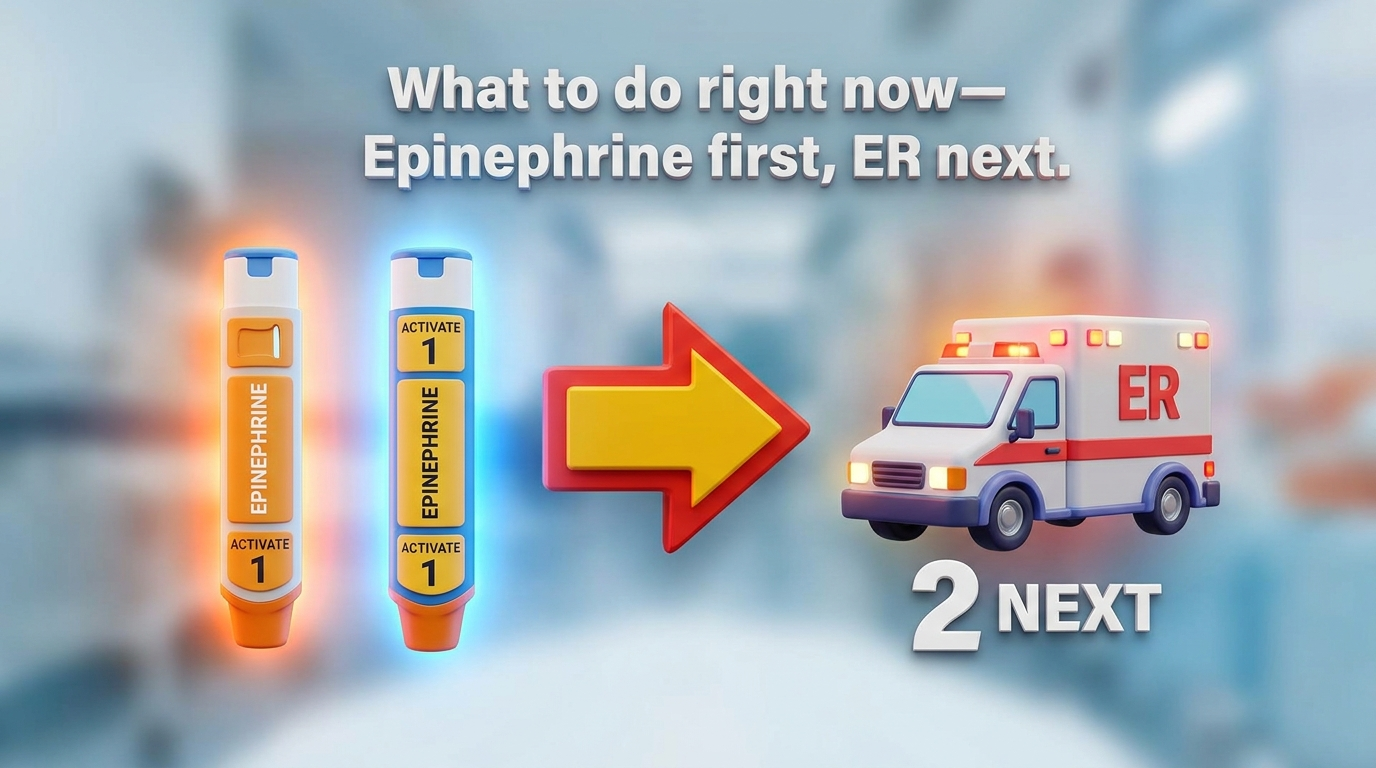
If symptoms are happening right now (or just happened), think “ER first, appointments later.” It’s reasonable to feel torn—many people wonder if it’s “bad reflux” or “something stuck.” But with possible anaphylaxis, the safest plan is to treat first and sort out the diagnosis after you’re stable. [3][7]
Use epinephrine immediately if throat or breathing symptoms occur. When throat or breathing symptoms occur after a known or suspected allergen exposure, emergency guidelines emphasize epinephrine as first-line treatment. If an epinephrine auto-injector has been prescribed, it’s typically intended for rapid use in these scenarios—following the plan provided by your clinician and the device instructions. Antihistamines may help some symptoms, but they are not a substitute for epinephrine in severe reactions. [3][7]
(If you’ve ever wondered about epinephrine for throat tightness, the key point is that epinephrine is used for suspected anaphylaxis—not for routine throat irritation.) [3][7]
A clinician-style way to think about it: “Throat + allergen exposure = treat airway risk early.” That’s why action plans are designed to be simple in the moment. [7]
Call emergency services and go to the ER. Because allergic reactions can worsen quickly—or recur after seeming to improve—emergency evaluation is often recommended. ER monitoring also helps address the risk of a biphasic reaction (symptoms returning after initial improvement). [3][7]
If you’re debating whether to “wait it out,” remember that anaphylaxis is defined by the potential for rapid progression. Getting monitored is part of staying safe, not overreacting. [3]
When a second epinephrine dose may be needed. Some emergency plans and product instructions describe that if symptoms don’t improve or symptoms return, a second dose may be needed. Follow the timing guidance in your prescribed emergency action plan and the auto-injector labeling while emergency services are on the way. [3][7]
Practical tip: many action plans recommend carrying two auto-injectors so a second dose is available if needed. [7]
*Act first to protect the airway; appointments come later.*
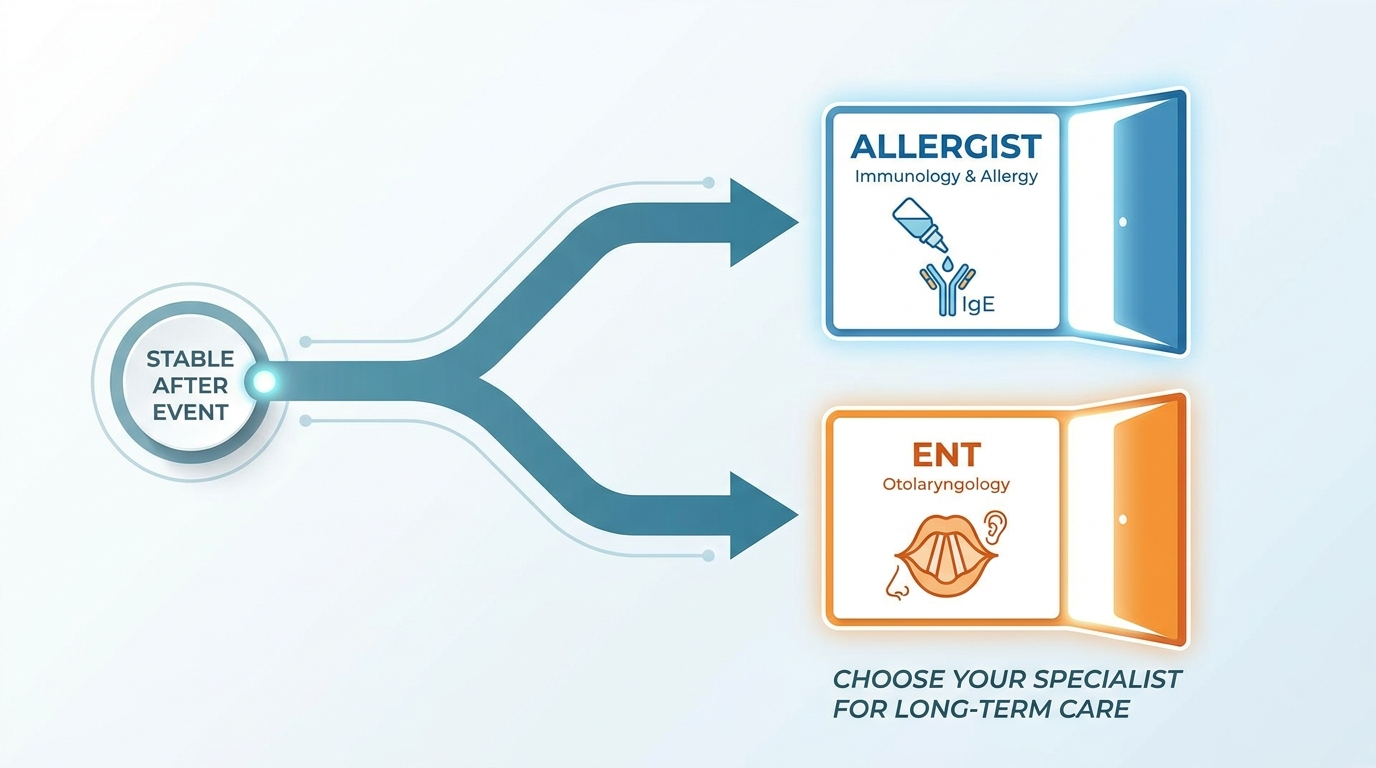
After You’re Stable: Who Should You See—Allergist or ENT?
Once the emergency has passed, the next step is figuring out what happened and how to prevent it. The right specialist depends on your main lingering concern: confirming a food allergy and preventing future reactions (typically allergist) versus evaluating ongoing throat/voice/swallowing problems (sometimes ENT). [1][5][6]
The allergist is usually the key specialist for confirming tree nut allergy. After an episode of throat tightness after eating nuts, the next step is often determining whether this was a true allergy and building a prevention plan. Allergists typically focus on:
- Detailed reaction history
- Skin-prick testing and/or specific IgE blood testing
- A medically supervised oral food challenge when appropriate [1][2][4]
If you’re considering next steps, Sleep and Sinus Centers of Georgia also offers information on allergy testing as part of an evaluation pathway: https://sleepandsinuscenters.com/allergy-testing
Important safety note: an oral food challenge should never be attempted at home. [4]
Example: If you had throat tightness after a mixed-nut bar but you’re unsure which nut (or whether it was cross-contact), an allergist can help narrow the likely trigger and create a clear avoidance and emergency plan. [1][4]
When an ENT specialist becomes important. An ENT’s role is different: ENT care often focuses on ongoing or recurrent voice, swallowing, and upper-airway symptoms—particularly when they persist after the acute allergic event has passed or when symptoms don’t fit a straightforward allergy pattern. [5][6]
If you’re unsure how to decide, this guide on when to see an ENT can help you sort out which symptoms point toward ENT evaluation: https://sleepandsinuscenters.com/when-should-i-see-an-ent
*Most patients start with an allergist for diagnosis and prevention; ENT becomes key if throat or voice symptoms persist.*
When to See an ENT Specialist for Throat Symptoms After Tree Nuts
ENT care is generally most helpful when the emergency is over, but the throat still doesn’t feel “back to normal”—or when similar symptoms keep recurring and you need a structured look at the larynx (voice box) and throat. [5][6]
Recurrent swallowing difficulty, “sticking,” or persistent lump sensation. Some people continue to notice throat symptoms long after the initial event—especially if the experience triggered ongoing throat awareness, irritation, or swallowing discomfort. Symptoms that may justify ENT evaluation include:
- Food feels stuck
- Frequent choking/coughing with meals
- Persistent “lump in throat” sensation (globus)
This overlap is one reason it’s easy to confuse globus sensation vs allergy. If “something stuck in my throat” becomes a recurring problem, a structured evaluation can help clarify the cause. [6] Related reading: https://sleepandsinuscenters.com/blog/globus-sensation-explained-causes-symptoms-and-treatment-guide
Analogy: Think of globus like a “false alarm” sensation in the throat—uncomfortable and very real, but not always caused by swelling from allergy. The job of evaluation is to identify what’s driving it. [6]
Hoarseness—how long is too long? Hoarseness during an allergic reaction can be a red flag. Separately, hoarseness that lingers may have non-allergic explanations (irritation, reflux, vocal strain), and ENT guidance is commonly recommended when hoarseness:
- lasts more than 4 weeks, or
- is severe for more than a few days, or
- occurs with breathing difficulty [5]
This is especially relevant for anyone experiencing hoarseness after allergic reaction and wondering whether it’s expected to resolve.
What an ENT may do at the visit. An ENT visit may include:
- A focused head and neck exam
- Visualization of the throat and voice box (larynx), often with flexible laryngoscopy
- If swallowing symptoms are prominent, consideration of a swallowing evaluation (such as endoscopic assessment when indicated) [5][6]
Many patients find it reassuring to hear, “We can look directly at the vocal folds and surrounding tissue.” When symptoms are persistent, visualization can turn uncertainty into a plan. [5][6]
*If symptoms linger or recur, direct visualization by an ENT can convert uncertainty into a clear plan.*

Conditions That Can Mimic “Allergy Throat Tightening” (Don’t Self-Diagnose)
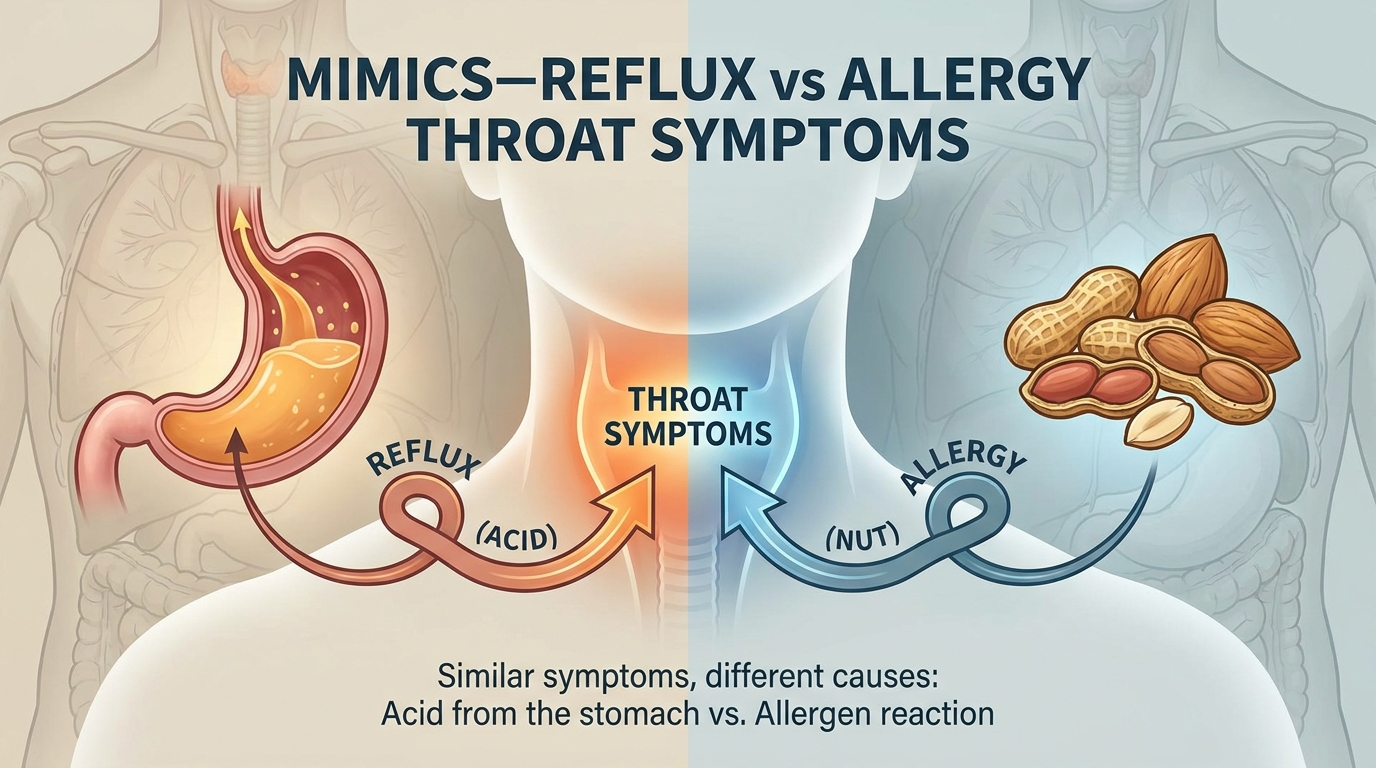
Not all throat symptoms after eating are allergic. Because the sensations can be similar, repeated episodes deserve careful evaluation—especially when you’re trying to distinguish reflux vs allergy throat symptoms.
A key clue is timing and pattern. Allergy symptoms often start soon after exposure and may involve multiple body systems. Other conditions may be more chronic, fluctuate day to day, or track with voice use, reflux triggers, or stress. Still, overlap is common—so it’s best not to guess. [3][5][6]
Reflux-related throat symptoms (GERD/LPR). Reflux can cause throat tightness, globus, throat clearing, and voice changes. Some people notice patterns after certain foods and assume it must be allergy, when reflux is actually contributing. [5][6] For a deeper comparison, see LPR vs GERD throat symptoms: https://sleepandsinuscenters.com/blog/lpr-vs-gerd-throat-symptoms-key-differences-and-treatment-guide
Example: A person who gets hoarse after late meals or notices frequent throat clearing in the morning may be dealing with reflux-related irritation rather than ongoing allergic swelling. [5][6]
Vocal cord disorders (including paradoxical vocal fold motion). Some vocal cord conditions can cause a “throat closing” sensation or episodic breathing difficulty. The experience can feel dramatic and may be mistaken for allergy—another reason ENT visualization can be helpful.
Eosinophilic esophagitis (EoE). EoE is a food-related immune condition that can cause dysphagia, food sticking, and recurring swallowing trouble. It can coexist with other allergic diseases and may require coordinated care.
Anxiety/panic, infections, and other upper-airway conditions. Stress responses can amplify throat sensations, and infections or irritation can create swelling or tightness. The right workup helps avoid assumptions—especially after a frightening event.
*Similar symptoms can have different causes—let evaluation, not guesswork, guide you.*
Tree Nut Allergy Basics (Quick Patient-Friendly Primer)
If you’re new to this topic, a little context can make next steps less overwhelming—especially while you’re waiting to see a specialist. [1][2]
What counts as a “tree nut”? Common tree nuts include: walnut, almond, cashew, pistachio, pecan, hazelnut, Brazil nut, macadamia, and pine nut (classification can vary, so individualized guidance matters). [1][2]
Why reactions can be unpredictable. Even with the same food, reaction severity can vary based on dose and cofactors like exercise, alcohol, intercurrent illness, and asthma control. This unpredictability is one reason tree nut allergy throat tightening should be treated cautiously and evaluated thoroughly. [3][4]
*Understanding triggers and variability helps you plan and stay safe.*
Treatment & Prevention After Diagnosis (Allergist-Led, ENT-Supported)
The core plan. Food allergy management commonly includes:
- Strict avoidance and label reading
- Carrying epinephrine (often two devices)
- A written emergency action plan and training for family/caregivers [1][3][7]
Many people find it helpful to keep the plan in more than one place (phone + printed copy), so it’s available even under stress. [7]
Lifestyle tips that reduce risk:
- Use clear restaurant strategies (ask about cross-contact, shared equipment, desserts)
- Keep a travel checklist (backup meds, action plan, safe snacks)
- Plan for school/work (medical ID, notifying key staff, accessible medications)
- Replace expired epinephrine and store it according to labeling [7]
When ENT treatment may be part of the plan. ENT care may support symptom control when other issues worsen throat sensations—such as chronic laryngeal irritation, voice strain, or reflux management—especially when tree nut allergy throat tightening has been ruled out as the ongoing cause. [5][6]
*Preparation and clear plans reduce risk and anxiety.*
FAQs (SEO-Friendly Q&A)
Q: Can tree nut allergy cause throat tightness without hives?
A: Yes. Anaphylaxis without hives is recognized; skin findings are common but not required. [3][4]
Q: If my throat feels tight but I can still breathe, should I use epinephrine?
A: If throat symptoms occur after a suspected allergen exposure, emergency guidance generally prioritizes treating possible anaphylaxis according to an established emergency plan and seeking emergency care. This article is educational—follow the plan provided by your clinician. [3][7]
Q: Should I see an ENT or allergist first?
A: Emergency care first for acute symptoms. For confirming allergy and prevention planning: allergist. For persistent hoarseness, swallowing problems, or upper-airway symptoms: ENT. [1][2][4][5][6]
Q: Can reflux feel like an allergic reaction in the throat?
A: Yes. Reflux can cause globus, throat clearing, tightness, and hoarseness—symptoms that can overlap with allergy sensations. Evaluation helps separate reflux vs allergy throat symptoms. [5][6]
Q: Is an oral food challenge safe to try at home?
A: No. Oral food challenges should only be done under medical supervision. [4]
*If in doubt, treat suspected anaphylaxis per your prescribed plan and seek emergency care.*
When to Get Emergency Help (Callout Box)
If throat tightness, throat swelling, breathing trouble, faintness, or rapidly worsening symptoms occur after eating tree nuts, treat it as an emergency. Use prescribed epinephrine per your emergency plan and call emergency services. [3][7]
Book an Appointment (Next-Step CTA)
If your reaction is over but you’re left with persistent hoarseness, swallowing difficulty, globus sensation, or recurring upper-airway symptoms, you can request an ENT evaluation with Sleep and Sinus Centers of Georgia. Visit https://www.sleepandsinuscenters.com/ to book an appointment and choose a convenient location. You can also explore when an ENT visit is appropriate here: https://sleepandsinuscenters.com/when-should-i-see-an-ent
Medical Disclaimer
This article is for general education and is not a substitute for personalized medical advice, diagnosis, or treatment. If you suspect anaphylaxis or have severe or worsening symptoms, use prescribed epinephrine per your emergency plan and seek emergency care immediately. [3][7]
This article is for educational purposes only and is not medical advice. Please consult a qualified healthcare provider for diagnosis and treatment.
References
[1] American College of Allergy, Asthma & Immunology (ACAAI). Food Allergies. https://acaai.org/allergies/allergic-conditions/food/
[2] Cleveland Clinic. Tree Nut Allergy: Causes, Symptoms & Treatment (2025). https://my.clevelandclinic.org/health/diseases/tree-nut-allergy
[3] American Academy of Allergy, Asthma & Immunology (AAAAI). Anaphylaxis. https://www.aaaai.org/conditions-treatments/allergies/anaphylaxis
[4] NIAID-Sponsored Expert Panel. Guidelines for the Diagnosis and Management of Food Allergy (2010/2011). https://pmc.ncbi.nlm.nih.gov/articles/PMC4249938/
[5] ENT Health. Hoarseness. https://www.enthealth.org/conditions/hoarseness/
[6] ENT Health. Dysphagia. https://www.enthealth.org/conditions/dysphagia/
[7] Food Allergy Research & Education (FARE). Emergency Care Plan (English). https://www.foodallergy.org/resources/emergency-care-plan-english
Don’t let allergies slow you down. Schedule a comprehensive ENT and allergy evaluation at Sleep and Sinus Centers of Georgia. We’re here to find your triggers and guide you toward lasting relief.