Septoplasty Telltale Signs: Symptoms That May Prompt a Discussion
Breathing through your nose shouldn’t feel like a daily struggle—or like you’re constantly “working around” your own anatomy. If you’ve dealt with ongoing blockage, pressure, or “sinus” discomfort that doesn’t improve with typical treatments, it may help to learn the septoplasty telltale signs that suggest a structural issue—like a deviated septum—could be part of the problem.
This article is for educational purposes and cannot diagnose medical conditions. An ENT evaluation can help determine what’s causing symptoms and which treatments may help. For background, see Cleveland Clinic’s and Mayo Clinic’s septoplasty overviews (sources linked at the end).
If these symptoms sound familiar, consider discussing them with an ENT to clarify whether the issue is structural, inflammatory, or both.
Quick Take—When Septoplasty May Be Worth Discussing
Septoplasty is commonly discussed when nasal obstruction symptoms are persistent, affect sleep/exercise/daily life, and don’t improve with appropriate medical care.
A simple way to think about it: medications can reduce swelling, but they can’t “move a wall.” If the main bottleneck is the septum itself, lasting relief may require addressing anatomy—often alongside managing inflammation.
Fast checklist: consider an ENT evaluation if you have 3+ of these
- Chronic nasal congestion that lasts for months
- You consistently breathe better through one nostril
- Facial pressure that feels “sinus-related” but keeps returning
- Headaches that seem to track with nasal blockage/pressure
- Frequent nosebleeds (especially with dryness/crusting)
- Reduced sense of smell
- Post-nasal drip or a constant “drip” sensation
These are common septoplasty telltale signs, but they’re not exclusive to a deviated septum—several other conditions can look very similar. Sources: Cleveland Clinic; Mayo Clinic (links at end)
If symptoms persist despite appropriate care, an ENT can help determine whether structure, inflammation, or both are the main drivers.

What Is the Nasal Septum—and What Does “Deviated” Mean?
The septum’s job (why straightness affects breathing): The nasal septum is the wall inside the nose that separates the left and right nasal passages. When it’s reasonably centered, airflow tends to move more smoothly through both sides—like air moving through two similarly sized lanes. When it’s significantly off-center, one side may become narrower. That narrowing can contribute to breathing difficulty and other deviated septum symptoms, especially when you add everyday swelling from allergies, colds, irritants, or dry air.
Common reasons the septum becomes deviated:
- Natural growth differences: Many people have some degree of deviation
- Nasal trauma: Past sports injuries, falls, or accidents
- Prior nasal surgery: Less common, but can contribute in some cases
Source: Mayo Clinic (link at end)
A significantly off-center septum can narrow a nasal passage, especially when everyday swelling is present.
Septoplasty Explained (In Plain Language)
What septoplasty does: Septoplasty is a procedure that aims to improve airflow by straightening the septum. Surgeons may trim, reposition, and/or remove small portions of cartilage and bone so the nasal passages are less obstructed.
The goal is typically functional—improving breathing—rather than changing how the nose looks. Patients often describe wanting a basic, everyday win: “I just want to breathe normally when I’m walking the dog or trying to sleep.” Source: Cleveland Clinic; Mayo Clinic (links at end)
Septoplasty vs. rhinoplasty (common confusion):
- Septoplasty: Focused on breathing and internal structure
- Rhinoplasty: Focused on external shape/cosmetic appearance (sometimes combined with septoplasty)
If you’re exploring treatment options, you can also read: Deviated Septum Relief: https://sleepandsinuscenters.com/deviated-septum-relief
Septoplasty’s primary aim is better airflow, not cosmetic change.
Septoplasty Telltale Signs: Key Symptoms That May Warrant a Conversation
If you’re wondering, “Do I need septoplasty?” an ENT will usually look for a pattern: ongoing obstruction symptoms plus exam findings that match. Below are commonly reported symptoms that may prompt discussion.
1) Chronic nasal congestion that doesn’t match your allergy/cold pattern
- Stuffiness that lasts weeks to months, not just during a cold
- Symptoms that may feel worse at night or with exercise
- Limited improvement with typical allergy routines (when appropriate)
2) One-sided blocked airflow (you always breathe better through one nostril)
- “My right (or left) nostril never really opens.”
- You default to mouth-breathing at night because nasal airflow feels insufficient
3) Facial pressure or “sinus pressure” without clear infection signs
4) Recurrent headaches (including pressure-type headaches)
5) Frequent nosebleeds (especially if dryness + turbulence are present)
6) Reduced sense of smell (hyposmia)
7) Post-nasal drip, sneezing, or a persistent “drip” feeling
Sources: Cleveland Clinic; Mayo Clinic; septoplasty outcomes/complications review (NCBI/PubMed Central, 2022) (links at end)
Symptoms alone don’t determine the need for surgery; exam findings and response to medical therapy guide next steps.
Symptoms That Can Mimic a Deviated Septum (And Why This Matters)
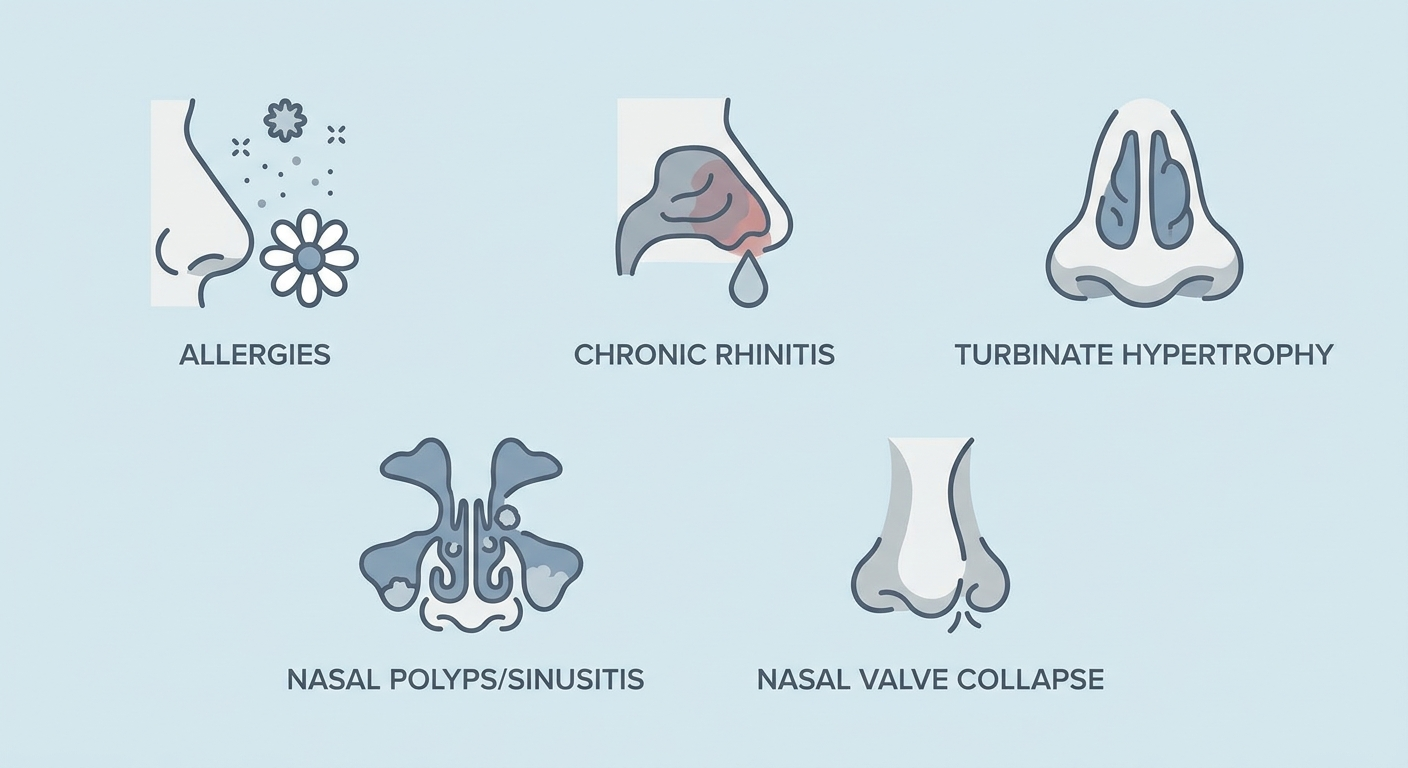
Several conditions can look like deviated septum symptoms, which is why an accurate diagnosis matters. If you treat the wrong cause (for example, focusing only on allergies when anatomy is the major issue—or vice versa), you can end up frustrated and still congested.
Allergies (seasonal/perennial): Often come with predictable triggers and may include itchy/watery eyes and clear runny nose. If this pattern fits, allergy testing may help clarify what’s driving symptoms: https://sleepandsinuscenters.com/allergy-testing
Chronic rhinitis (nonallergic/vasomotor): Some people get congestion from temperature changes, odors, smoke, or certain foods. Learn more: https://sleepandsinuscenters.com/treating-chronic-rhinitis
Turbinate hypertrophy (swollen nasal tissue): Turbinates help humidify and filter air. If they’re chronically enlarged, they can significantly narrow airflow—and sometimes coexist with a deviated septum.
Nasal polyps or chronic sinusitis: These may cause more pronounced inflammation, thick drainage, frequent infections, and smell loss.
Nasal valve collapse (structural sidewall issue): If breathing improves when you gently pull the cheek/nostril outward, the nasal valve may be involved. See: https://sleepandsinuscenters.com/blog/how-ent-doctors-fix-nasal-valve-collapse
Source: Cleveland Clinic (link at end)
Different problems can create similar congestion—getting the diagnosis right helps avoid the wrong solution.
What Causes Septoplasty to Become the “Next Step” (When Conservative Care Isn’t Enough)
The pattern ENT doctors look for—septoplasty is most often considered when there is:
- Persistent nasal obstruction that affects sleep, exercise, or daily comfort
- Exam findings showing meaningful septal deviation
- Incomplete response to appropriate medical therapy
Common conservative options to try (not exhaustive):
- Saline spray/irrigation
- Allergen avoidance and allergy treatment when indicated
- Steroid nasal sprays when appropriate
- Reducing irritant exposure (smoke, strong scents)
Source: Mayo Clinic (link at end)
For a decision-focused overview, see: Is Septoplasty Right for Your Deviated Septum? https://sleepandsinuscenters.com/blog/is-septoplasty-right-for-your-deviated-septum
Septoplasty is typically considered when symptoms, anatomy, and limited response to medical therapy align.

How an ENT Confirms Whether You Might Benefit From Septoplasty
Symptom history & quality-of-life impact—expect questions about:
- Day vs. night symptoms; seasonal patterns
- What improves (or doesn’t) with medications
- Mouth-breathing, snoring, sleep disruption, exercise limits
Tip: Before your visit, jot down what you’ve tried (sprays, rinses, antihistamines), what helped, and what didn’t. That history often speeds up decision-making.
Physical exam (including internal nasal exam): Identifies where the septum deviates (front vs deeper areas), turbinate enlargement, and signs of inflammation.
Nasal endoscopy (when needed): Gives a clearer view of internal anatomy and helps rule out polyps or significant inflammation.
Imaging (sometimes): A CT scan may be considered when sinus disease is suspected or when symptoms don’t match what’s seen on exam.
Sources: Mayo Clinic; Cleveland Clinic (links at end)
A focused exam aligns symptoms with anatomy and helps map out the most effective, least invasive plan.

Treatment Options Before (and Alongside) Septoplasty
Non-surgical treatments that may help (depending on cause) may include:
- Saline rinses/humidification for dryness and irritation
- Allergy evaluation and management when symptoms fit
- Reviewing medication use, since some OTC decongestant sprays can cause rebound congestion if overused
When procedures are combined, examples include:
- Septoplasty + turbinate reduction (a common combination)
- Septoplasty + sinus procedures (when sinus disease is present)
Source: Cleveland Clinic (link at end)
Optimizing inflammation and anatomy together often yields the best breathing results.
What to Expect From Septoplasty Surgery
Step-by-step overview (high level)—techniques vary, but commonly involve:
- Anesthesia (often general; sometimes local with sedation)
- Incisions typically inside the nose (usually no external scar)
- Adjusting cartilage/bone to improve airflow
- Possible splints/packing depending on surgeon preference and anatomy
If you’re anxious about the process, ask your surgeon: “What’s the plan for my specific anatomy?” and “Will you also address turbinates if needed?”
Expected benefits—many patients pursue septoplasty for:
- Improved nasal airflow
- Reduced obstruction-related discomfort
- Possible smell improvement (varies and depends on other factors)
Sources: Cleveland Clinic; Mayo Clinic (links at end)
The procedure typically targets function—better day-to-day nasal breathing.
Septoplasty Recovery: Normal Symptoms vs. Warning Signs
Normal early recovery symptoms (first days to weeks) can include temporary stuffiness from swelling, mild to moderate discomfort, light bleeding/oozing early on, and temporary smell changes. Many people describe the first phase as intense “stuffy nose” pressure more than sharp pain.
Lifestyle tips to heal comfortably (follow your surgeon’s instructions): saline rinses if approved, sleep with head elevated, avoid strenuous activity and nose blowing until cleared, hydrate and humidify if dryness is an issue.
For a more detailed timeline: Septoplasty Recovery Week by Week https://sleepandsinuscenters.com/blog/septoplasty-recovery-week-by-week-complete-timeline
Complications to watch for (seek prompt medical care): heavy bleeding that won’t stop; fever, worsening pain, or foul drainage; new or worsening external shape concerns; persistent whistling/crusting that could suggest septal perforation.
Sources: Cleveland Clinic; NCBI/PubMed Central review (2022) (links at end)
Expect gradual improvement as swelling subsides, and call your care team promptly if red-flag symptoms arise.

FAQs About Septoplasty Telltale Signs
How do I know if my congestion is allergies or a deviated septum? Allergies often follow triggers (seasons, pets, dust) and may respond to allergy-directed treatment. A deviated septum more often causes a consistent “structural” blockage—frequently worse on one side. Many people have both, which is why evaluation is helpful.
Can a deviated septum cause headaches and facial pressure? It can contribute to pressure sensations in some people, especially when airflow is restricted. However, these symptoms are nonspecific and should be evaluated to determine the cause. Septoplasty is not a primary treatment for headaches unless obstruction is a clear factor.
Will septoplasty change the shape of my nose? Septoplasty is usually intended to improve breathing, not change appearance. External changes are uncommon but possible in certain situations.
Is septoplasty painful? Most people describe discomfort and congestion (similar to intense “stuffy nose” pressure) more than sharp pain, and symptom-control strategies are part of typical post-op care.
How long until I can breathe normally again? Breathing often improves gradually as swelling settles over weeks. The timeline can vary based on anatomy and whether other procedures were done.
What if symptoms don’t improve after surgery? Persistent symptoms may be related to turbinate swelling, rhinitis, nasal valve issues, or sinus inflammation. Follow-up visits help determine next steps.
Sources: Mayo Clinic; Cleveland Clinic (links at end)
An individualized evaluation helps sort out overlapping causes and the most fitting treatment path.
When to Seek an ENT Evaluation
Consider scheduling an evaluation if you have: nasal obstruction lasting more than several weeks to months; persistent one-sided blockage and sleep disruption; recurrent nosebleeds or facial pressure that keeps returning; reduced sense of smell that isn’t improving.
To be evaluated at Sleep and Sinus Centers of Georgia, request an appointment: https://sleepandsinuscenters.com/appointments
If symptoms affect your daily life or sleep, a focused visit can clarify options.
Sources
- Cleveland Clinic – Septoplasty overview/indications: https://my.clevelandclinic.org/health/treatments/17779-septoplasty
- Mayo Clinic – Septoplasty overview: https://www.mayoclinic.org/tests-procedures/septoplasty/about/pac-20384670
- Septoplasty outcomes/complications review (NCBI/PubMed Central, 2022): https://pmc.ncbi.nlm.nih.gov/articles/PMC9736816/
This article is for educational purposes only and is not medical advice. Please consult a qualified healthcare provider for diagnosis and treatment.
Don’t let allergies slow you down. Schedule a comprehensive ENT and allergy evaluation at Sleep and Sinus Centers of Georgia. We’re here to find your triggers and guide you toward lasting relief.