Painful Nose Pimple: Causes, Treatments, and When to See a Doctor
A painful nose pimple can be as simple as an inflamed acne spot—or it can signal irritation or infection in and around the nostril. Because the nose sits in a higher-risk area of the face, it’s especially important to handle tender bumps carefully and avoid “DIY” squeezing.
The tricky part is that several different issues can feel similar at first: a deep, sore acne bump on the outside of the nose can mimic a tender spot just inside the nostril, and both can throb when you touch your face, wash it, or even smile.
Below is an educational guide to what a painful bump on or in the nose often means, what supportive care may help, what not to do, and when it’s worth getting evaluated.
Medical disclaimer: This article is for general education and does not replace professional medical advice, diagnosis, or treatment. If you’re concerned about infection or your symptoms are worsening, seek medical care.
Quick Take: What a Painful Nose Pimple May Mean
Most commonly, a painful nose pimple may be caused by:
- Acne (an inflamed pore on the outside of the nose), or
- A localized irritation/infection near the nostril opening, such as nasal vestibulitis (often felt as a “pimple inside nose” or a sore, crusty spot at the nostril entrance).
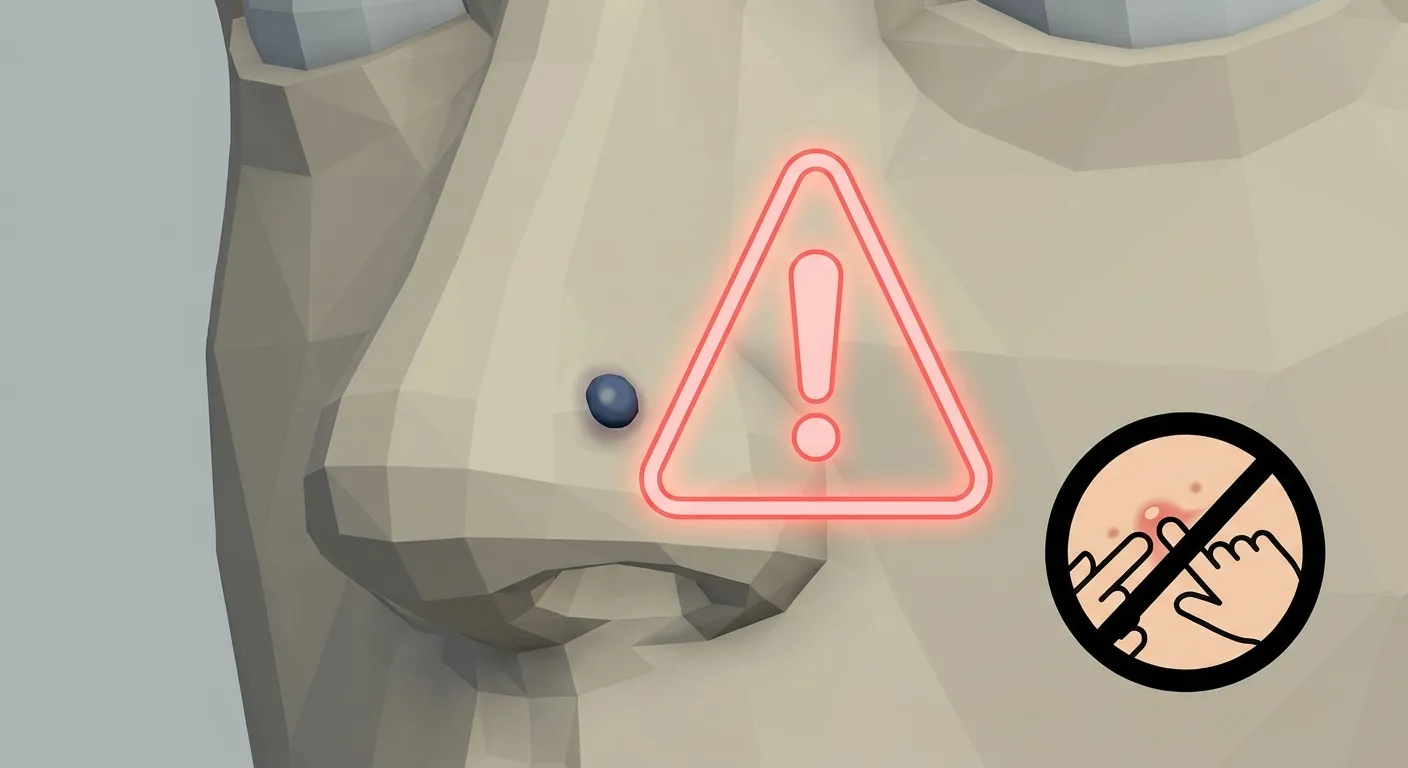
A key safety point: avoid popping or picking at bumps on or inside the nose. For some mild, improving cases, supportive home care may be appropriate, but if you’re unsure or symptoms worsen, seek medical evaluation. (Overview source: https://www.medicalnewstoday.com/articles/320972)
A helpful way to think about it: acne is usually an “angry clogged pore,” while vestibulitis is more like “irritated/infected skin at the nostril doorway.” They can overlap, but the location and accompanying signs (like crusting) often point you in the right direction.
*Bottom line: Start gently, avoid squeezing, and get help if symptoms progress or spread.*

Symptoms: What Does a Painful Nose Pimple Feel or Look Like?
Common, mild symptoms (often acne-related)
- A tender red bump on the outside of the nose
- Localized swelling and soreness (sometimes a “deep” feeling because nasal skin can be thick and oily)
- A visible whitehead or blackhead in some cases
If your nose pimple hurts but stays small and localized, that often fits with inflamed acne.
Concrete examples: People often notice pain when putting on glasses, wearing a mask, or rubbing the nose while washing their face. You may also feel a “bruise-like” tenderness even when the pimple looks small—because inflammation can be deeper than the surface suggests.
Symptoms that can suggest irritation or infection (more than “just acne”)
- Pain at the nostril opening or pain inside the nostril (vestibule)
- Crusting, weeping, or irritation right at the nostril entrance
- Pus/drainage or worsening swelling
- Increasing warmth and tenderness, or redness that seems to spread
If you’re noticing crusting along with soreness, you may also find this helpful: nasal crusting treatment https://sleepandsinuscenters.com/blog/treating-nasal-crusting-at-home-and-in-the-clinic (Vestibulitis description source: https://my.clevelandclinic.org/health/diseases/24928-nasal-vestibulitis)
These clues may suggest irritation or infection rather than classic acne.
Brief clinician-style perspective: “When patients say, ‘It feels like a pimple inside my nose,’ we think about vestibulitis and irritation first—especially if there’s crusting.”
Emergency warning signs (seek urgent care)
- Rapidly expanding swelling of the nose or face
- Fever, chills, or feeling ill
- Red streaking, or swelling spreading toward the eye/cheek
- Severe headache, vision changes, eyelid swelling, confusion, or neck stiffness
These can be signs that an infection is spreading and needs prompt attention. (Context: https://health.clevelandclinic.org/danger-triangle)
*If symptoms are rapidly worsening or you feel unwell, seek urgent care.*

Causes of a Painful Nose Pimple (Outside vs. Inside the Nose)
Acne vulgaris (a common cause)
Acne forms when oil and dead skin clog a pore, leading to inflammation. On the nose, pimples can feel especially tender because the area has:
- Many oil glands
- Thicker skin in places
- Lots of “pressure” from facial expressions and glasses/masks
This is a common reason a painful nose pimple can feel deeper than it looks.
Clarifying analogy: Think of it like inflammation under a thicker “roof.” Even if the surface spot is small, there can be a larger, sore area underneath.
Nasal vestibulitis (irritation/infection at the nostril opening)
Nasal vestibulitis is inflammation or infection near the front of the nostril. It can be triggered by irritation such as:
- Frequent nose blowing (colds/allergies)
- Nose picking
- Trimming nasal hair (especially if it causes tiny cuts)
- Dryness and cracking at the nostril opening
It may look like a tender bump, a small sore, or even a “pimple” right at the nostril entrance. For a deeper dive, see our guide to nasal vestibulitis: https://sleepandsinuscenters.com/blog/nasal-vestibulitis-causes-care-complete-guide-for-treatment (Source: https://my.clevelandclinic.org/health/diseases/24928-nasal-vestibulitis)
A common scenario: you have a cold, you’re wiping/blowing your nose frequently, the skin gets irritated, and then a painful, crusty spot shows up right at the nostril edge.
Folliculitis or an infected ingrown hair
Hair follicles on and around the nose can become inflamed or infected—especially after trimming. This can resemble an infected pimple on the nose and may be quite tender.
If the bump sits right where a hair grows (or right after you trimmed nasal hair), folliculitis is a reasonable possibility—especially if it’s a small, focused sore spot.
Furuncle/boil or small abscess
A deeper infection can form a boil in the nose (furuncle) or small abscess. These tend to be:
- More painful
- More swollen
- Sometimes associated with visible pus or drainage
This is one reason clinicians caution against squeezing—pressure can push infection deeper.
Less common look-alikes (briefly)
- Cold sore (HSV): often blister-like and may tingle/burn
- Cyst: firmer, slow-growing, often less “surface” redness at first
- Allergic/irritant reaction: multiple small inflamed bumps rather than one focal lesion
*Location, crusting, and drainage are clues that can help distinguish acne from irritation or infection.*
Why You Should Not Pop a Nose Pimple (Especially in the “Danger Triangle”)
What is the facial “danger triangle”?
The “danger triangle of the face” is the area from the bridge of the nose down to the corners of the mouth. It’s a cautionary concept because infections in this area can rarely spread more seriously if they are significant or untreated. (Context: https://health.clevelandclinic.org/danger-triangle)
What could go wrong if you squeeze or pick?
If you’re wondering whether you should pop a pimple on your nose: it’s strongly discouraged—especially for anything that might be infected or located at/inside the nostril.
Popping, picking, or using tools can:
- Create tiny breaks in the skin that let bacteria spread
- Worsen inflammation and swelling
- Increase the risk of more serious (though uncommon) complications if a significant infection spreads from this region
In rare cases, severe infections tied to this area can lead to serious complications, particularly if untreated. That’s why multiple medical resources emphasize avoiding squeezing and avoiding instruments inside the nose. (Sources: https://health.clevelandclinic.org/danger-triangle and https://www.henryford.com/blog/2026/01/popping-pimples-in-the-triangle-of-death)
*Hands off is the safest choice—especially for tender bumps on or inside the nostril.*
Safe At-Home Treatment (What You Can Do)
These options are best suited for mild, localized tenderness without fever or spreading redness. If symptoms are worsening or you’re concerned it may be infected, consider reaching out for evaluation.
Warm compresses (gentle comfort for tenderness)
- Use a warm (not hot) clean compress
- Apply for 10–15 minutes, 3–4 times/day
The goal is comfort and gentle support of natural drainage—without squeezing. (Source: https://www.aad.org/public/diseases/acne/diy/treat-deep-painful-pimple)
Tip for comfort: If the area is very tender, focus on warming the surrounding skin rather than pressing directly on the bump.
Ice for swelling or pain
- Wrap ice/cold pack in a cloth
- Apply 5–10 minutes at a time, with breaks
(Source: https://www.aad.org/public/diseases/acne/diy/treat-deep-painful-pimple)
Warmth and cold can be used at different times—warm compresses for soothing and gentle “softening,” ice for short-term pain relief.
Over-the-counter acne options (for pimples on the outside of the nose)
If the bump is clearly on the outer skin (not in the nostril), some people use:
- Benzoyl peroxide as a spot treatment (can be drying/irritating)
- Salicylic acid for clogged pores
Avoid harsh scrubs or aggressive exfoliation—more irritation can make a sore bump feel worse. (Source: https://www.aad.org/public/diseases/acne/diy/treat-deep-painful-pimple)
A gentle approach usually wins here: use a tiny amount, limit frequency, and stop if the skin becomes raw or increasingly painful.
Gentle hygiene and “hands off” rules
- Wash with a mild cleanser
- Keep hands and nails away from the area
- Avoid needles, tweezers, and extraction tools near the nostrils
If you wear glasses or a mask, consider cleaning the nose pads or adjusting fit to reduce friction while the area calms down.
If the bump is inside the nose
If you suspect a “pimple inside nose,” the approach is more conservative:
- Warm compresses and avoiding trauma are typically the safest starting points
- Avoid putting acne chemicals deep into the nostril unless a clinician specifically recommends it (the tissue can be sensitive and easily irritated)
If you’ve been repeatedly blowing your nose, the most helpful “treatment” may simply be giving the tissue a chance to settle—without picking, squeezing, or scrubbing.
*Use simple, gentle measures at home, and seek evaluation if symptoms fail to improve or escalate.*

Treatments a Clinician May Recommend (If It’s Infected or Not Improving)
Evaluation: what your doctor or ENT may look for
- Exact location (outer nose skin vs. nostril opening)
- Signs of vestibulitis, cellulitis, or abscess
- Whether the appearance suggests an ingrown hair/folliculitis vs. acne
They may also ask what you’ve tried at home and whether symptoms are stable, improving, or progressing—because the trend matters as much as the current look.
Prescription treatment options
Depending on the findings, treatment may include:
- Topical antibiotic ointment for nasal vestibulitis
- Oral antibiotics if there’s concern about spreading infection
- Guidance for pain control and skin protection
Drainage or procedure (when needed)
If there’s a true abscess or boil that isn’t resolving, professional drainage (when appropriate) is safer than attempting to squeeze at home—especially in this facial region. (Source: https://my.clevelandclinic.org/health/diseases/24928-nasal-vestibulitis)
*Targeted medical treatment can reduce risk and speed recovery when infection is suspected.*

When to See a Doctor for a Painful Nose Pimple
Make an appointment soon if:
- Pain increases after 24–48 hours of supportive care
- The bump grows quickly or becomes more tender
- You suspect it’s inside the nostril and it’s very painful
- You get recurrent bumps in the same spot
If you’re unsure whether symptoms warrant specialty evaluation, see when to see an ENT: https://sleepandsinuscenters.com/blog/when-should-i-see-an-ent
Seek urgent care if:
- Fever or feeling unwell
- Spreading redness/swelling toward the eye or cheek
- Severe headache, eye symptoms, or neurologic symptoms
(Sources: https://health.clevelandclinic.org/danger-triangle and https://www.medicalnewstoday.com/articles/320972)
*Consider seeking medical evaluation sooner if the bump is inside the nostril, very painful, or not improving after 1–2 days.*
Prevention & Lifestyle Tips (Reduce Recurrence)
Acne prevention basics (nose-focused)
- Choose non-comedogenic sunscreen and moisturizer
- Clean items that touch your face (phone screen, pillowcases, makeup brushes)
- Avoid heavy occlusive products concentrated on the nose
If you’re prone to nose breakouts, consistency is often more helpful than intensity: gentle cleansing and fewer irritating products can mean fewer inflamed bumps over time.
Prevent nasal vestibulitis triggers
- Avoid picking inside the nose
- Blow gently; treat irritation early during colds/allergies
- If trimming nasal hair, use clean tools—avoid plucking
- If dryness is a frequent issue, ask a clinician about safe moisture strategies (some people use saline products)
(Source: https://my.clevelandclinic.org/health/diseases/24928-nasal-vestibulitis)
*Gentle habits and early care for irritation can reduce future flare-ups.*

FAQs About Painful Nose Pimples
Is a painful pimple on my nose always acne?
No. A painful nose pimple can be acne, but it can also reflect nasal vestibulitis, folliculitis, or a deeper boil—especially if symptoms are inside the nostril or associated with crusting or drainage. (Source: https://www.medicalnewstoday.com/articles/320972)
Can I pop it if it has a whitehead?
Even if it looks “ready,” popping is discouraged because of infection risk and because the nose sits in the “danger triangle” of the face. (Source: https://health.clevelandclinic.org/danger-triangle)
What if it’s inside my nostril?
Treat a “pimple inside nose” as higher risk for irritation and infection. Avoid applying typical acne products deep inside the nostril unless directed, and consider checking in with a clinician if it’s very tender or worsening. (Source: https://my.clevelandclinic.org/health/diseases/24928-nasal-vestibulitis)
How long should it take to go away?
A mild acne bump may start improving over several days. An infected bump or boil may worsen more quickly—especially if swelling spreads—so earlier evaluation can be important if it’s not improving within 24–48 hours.
What’s the fastest safe way to reduce pain?
Supportive steps that often help include warm compresses and brief icing—without pressure or squeezing. (Source: https://www.aad.org/public/diseases/acne/diy/treat-deep-painful-pimple)
Conclusion: Safe Next Steps
A tender bump on the nose is common, but a painful nose pimple deserves extra caution. The safest approach is usually: hands off, use warm compresses, consider ice for swelling, and reserve acne products for outer-nose skin only. If symptoms are spreading, severe, or not improving, it’s reasonable to seek evaluation—especially for possible infection like nasal vestibulitis.
If you’d like help figuring out what’s causing your symptoms and what care is appropriate, you can schedule an appointment with Sleep and Sinus Centers of Georgia: https://sleepandsinuscenters.com/appointments
*When in doubt, a quick check-in with a clinician can provide clarity and reduce risk.*
References
1. https://www.medicalnewstoday.com/articles/320972
2. https://my.clevelandclinic.org/health/diseases/24928-nasal-vestibulitis
3. https://health.clevelandclinic.org/danger-triangle
4. https://www.henryford.com/blog/2026/01/popping-pimples-in-the-triangle-of-death
5. https://www.aad.org/public/diseases/acne/diy/treat-deep-painful-pimple
“This article is for educational purposes only and is not medical advice. Please consult a qualified healthcare provider for diagnosis and treatment.”
Don’t let allergies slow you down. Schedule a comprehensive ENT and allergy evaluation at Sleep and Sinus Centers of Georgia. We’re here to find your triggers and guide you toward lasting relief.