Nose Rotting Away: Causes, Symptoms, and Treatment Options
Feeling like your nose is “rotting away” can be frightening—and for good reason. People often use this phrase to describe a cluster of symptoms: a foul smell that won’t go away, thick crusting, black material, worsening pain, or even a new hole in the nasal septum. Clinically, these complaints can reflect nasal tissue necrosis (tissue injury or death) or other destructive processes inside the nose.
Some causes can progress rapidly and become life-threatening without urgent treatment (such as invasive fungal infections). Others develop more slowly over weeks to months (such as autoimmune disease or cocaine-induced nasal damage). Because the right treatment depends entirely on the cause, this isn’t a symptom to self-diagnose—ENT evaluation may include endoscopy, imaging, cultures, and sometimes a nasal biopsy. Severe necrotizing infections and rhino-orbito-cerebral mucormycosis can be particularly dangerous without prompt care. References: StatPearls; Johns Hopkins Medicine
Medical disclaimer note: This article is educational and does not replace professional care. If you have severe symptoms or rapid worsening, seek urgent evaluation.
First—What Does “My Nose Is Rotting Away” Usually Mean?
When someone says their nose feels like it’s “rotting,” they may be noticing one or more of the following:
- Foul odor that persists
- Crusting and thick drainage that keeps coming back
- Black material inside the nose; this can be dried blood or crusting, but a black scab or dead tissue (eschar) is more concerning—especially if pain or other symptoms are severe or worsening
- Increasing tenderness, burning, or worsening pain
- Persistent sores or breakdown of the nasal lining
- A new “hole” sensation, whistling, or airflow changes suggesting a septal perforation
The nasal lining is delicate and well supplied with blood. When it’s injured—by infection, inflammation, or reduced blood flow—it can behave like a wound that won’t heal: it crusts, bleeds easily, and may start to break down.
Summary: Even similar-looking symptoms can come from very different causes, which is why professional evaluation is crucial.

When to Treat This as an Emergency (Go to the ER or Same-Day ENT)
Red-flag symptoms that should not wait:
- Black eschar inside the nose or on the palate (roof of the mouth)
- Severe facial pain, swelling, fever, or rapidly worsening symptoms
- Eye swelling, vision changes (blurry or double vision), or trouble moving the eye
- Severe headache, confusion, weakness, neck stiffness
- Uncontrolled diabetes or immunosuppression (transplant medicines, high-dose steroids, neutropenia, some cancer therapies) plus sudden severe sinus/nasal symptoms
Clinicians worry most when symptoms progress over hours to days rather than months. In that setting, an ENT will focus on ruling out infections that invade tissue and blood vessels, because delays can increase the risk of eye or brain involvement. Rhino-orbito-cerebral mucormycosis is classically associated with diabetes and immunosuppression and may progress quickly, with a risk of orbit (eye) and brain involvement. References: StatPearls; Frontiers 2023
What to do while seeking care (safe, practical steps):
- Do not pick crusts or attempt to remove black eschar
- Use only sterile, distilled, or previously boiled and cooled water for nasal irrigation
- Avoid starting leftover antibiotics or other old prescriptions without medical advice
- If bleeding is heavy, you feel faint, or symptoms are escalating quickly, seek emergency care
If you’re unsure about urgency, see: https://sleepandsinuscenters.com/blog/when-should-i-see-an-ent
Summary: Fast-moving pain, swelling, vision changes, or black eschar—especially with diabetes or immunosuppression—should be treated as urgent.

Common Symptoms People Describe as “Nose Rotting Away”
Local nose/sinus symptoms:
- Bad smell (foul odor), thick drainage, persistent crusting
- Nasal blockage (often worse on one side), pressure, pain
- Recurrent nosebleeds, tenderness, sores, scabs that don’t heal
- A whistling sound when breathing (a common clue of septal perforation)
Structural changes you may notice:
- A new hole in the septum (the wall between nostrils)
- Nasal bridge changes (including “saddle-nose” in advanced cases)
- Widening or collapse of nasal support
If you’re noticing airflow changes, whistling, or a new hole, see: https://sleepandsinuscenters.com/blog/septal-perforation-symptoms-key-signs-and-causes-to-know
Whole-body symptoms that raise concern:
- Fever, fatigue, weight loss, night sweats
- Joint pain
- Cough or coughing blood
- Kidney issues (sometimes first detected on lab tests)
An ENT may ask about these because some conditions don’t stay in the nose—for example, vasculitis can affect multiple organs.
Summary: Pay attention to one-sided symptoms, nonhealing sores, whistling, and systemic signs—these patterns help pinpoint the cause.

Causes of Nasal Tissue Breakdown (From Fast Emergencies to Slower Conditions)
Rapidly progressive, life-threatening causes (medical emergencies)
Rhino-orbito-cerebral mucormycosis (invasive fungal infection)
- Higher-risk groups: uncontrolled diabetes (especially ketoacidosis), organ transplant recipients, people on significant immunosuppression (including high-dose steroids), and those with neutropenia
- Symptoms: facial pain, fever, severe congestion, and possible black eschar from angioinvasive tissue destruction
- Management: urgent surgical debridement plus antifungal therapy (often liposomal amphotericin B), alongside correction of underlying risk factors. References: StatPearls; Frontiers 2023
Necrotizing bacterial infections / necrotizing soft tissue infection (NSTI)
- Can follow trauma, dental sources, severe sinus infections, or skin breakdown
- Hallmarks: rapidly worsening pain (often out of proportion), spreading swelling, fever, skin discoloration, and systemic illness
- Requires immediate evaluation, IV antibiotics, and often urgent surgery. Reference: Johns Hopkins Medicine
Severe local ischemia/necrosis (reduced blood supply)
- Tissue injury may result from vasoconstrictive exposures, pressure injury, or iatrogenic causes
- Even without obvious infection, tissue can deteriorate; evaluation is essential because the underlying cause determines treatment
Summary: Rapid-onset symptoms with severe pain, black eschar, or systemic illness demand same-day assessment.
Subacute/chronic causes (still serious—need ENT workup)
Cocaine-induced midline destructive lesions (CIMDL)
- Crusting, bleeding, foul odor
- Septal perforation (whistling, dryness, recurrent scabbing)
- Progressive cartilage/bone destruction and nasal collapse
- Stopping cocaine is essential; reconstruction is often staged after disease stability. Reference: MDPI 2021
Autoimmune vasculitis—Granulomatosis with polyangiitis (GPA)
- Can mimic cocaine-related damage and chronic infection
- Diagnosis: blood testing (ANCA—often PR3-ANCA/c-ANCA) and biopsy when appropriate
- Treatment: systemic immunosuppression coordinated with rheumatology. Reference: PMC Review 2025
Chronic granulomatous infections
- Tuberculosis, syphilis, and certain fungal infections can cause long-standing inflammation and tissue destruction
- Cultures and pathology are crucial for targeted therapy
Nasal cavity or sinus malignancy (cancer)
- Concerning features: one-sided obstruction, recurrent one-sided nosebleeds, facial numbness, loose teeth, persistent pain, neck lump
- Diagnosis typically requires imaging and biopsy
Summary: Slower, destructive patterns often reflect cocaine injury, autoimmune disease, chronic infection, or—less commonly—cancer, and each requires a different treatment path.

How ENT Specialists Diagnose the Problem
What an ENT visit may include:
- History: timeline and speed of progression; diabetes control; immune status; intranasal drug use; nasal spray use; trauma or prior surgery; associated symptoms (eye complaints, fevers, cough, urinary changes)
- Nasal endoscopy: a targeted look at crusting, bleeding, exposed cartilage, masses, or necrosis that can’t be seen externally
Tests that guide the right treatment:
- Biopsy (often crucial when necrosis or a mass is present)
- Cultures (bacterial and fungal) plus pathology review
- Blood tests when indicated (inflammatory markers and ANCA when GPA is suspected). Reference: PMC Review 2025
- Imaging: CT sinuses to evaluate bony damage; MRI when orbital/brain involvement is a concern (for example, invasive fungal disease)
If you’re anxious about the idea of sampling, here’s what happens during a sinus biopsy: https://sleepandsinuscenters.com/blog/what-happens-during-a-sinus-biopsy
Summary: Endoscopy, imaging, cultures, and biopsy often provide the definitive answer and direct the right therapy.
Treatment Options (Depend on the Cause)
Emergency treatment pathways
Suspected rhino-orbito-cerebral mucormycosis
- Urgent ENT evaluation and surgical debridement when indicated
- Antifungal therapy (often liposomal amphotericin B)
- Rapid optimization of underlying risk factors (for example, glucose control). Reference: StatPearls
Necrotizing bacterial infection (NSTI)
- Rapid evaluation, IV antibiotics, and surgical management as needed. Reference: Johns Hopkins Medicine
Treatments for chronic/subacute causes
Cocaine-related tissue destruction
- Complete cessation
- ENT-guided nasal care to reduce crusting and irritation
- Staged reconstruction if needed after disease stability. Reference: MDPI 2021
GPA / autoimmune vasculitis
- Systemic immunosuppressive therapy coordinated with rheumatology
- Monitoring for lung and kidney involvement. Reference: PMC Review 2025
Chronic infections
- Therapy targeted to biopsy/culture results, with follow-up endoscopy to confirm healing
Malignancy
- Treatment varies by tumor type and stage and may include surgery, radiation, and/or chemotherapy through a coordinated ENT/oncology approach
Summary: Because treatments differ dramatically—from antifungals and surgery to immunosuppression or cancer care—accurate diagnosis comes first.
Lifestyle and Home-Care Tips (Support Healing—Not a Substitute for Evaluation)
Safer nasal care (general guidance):
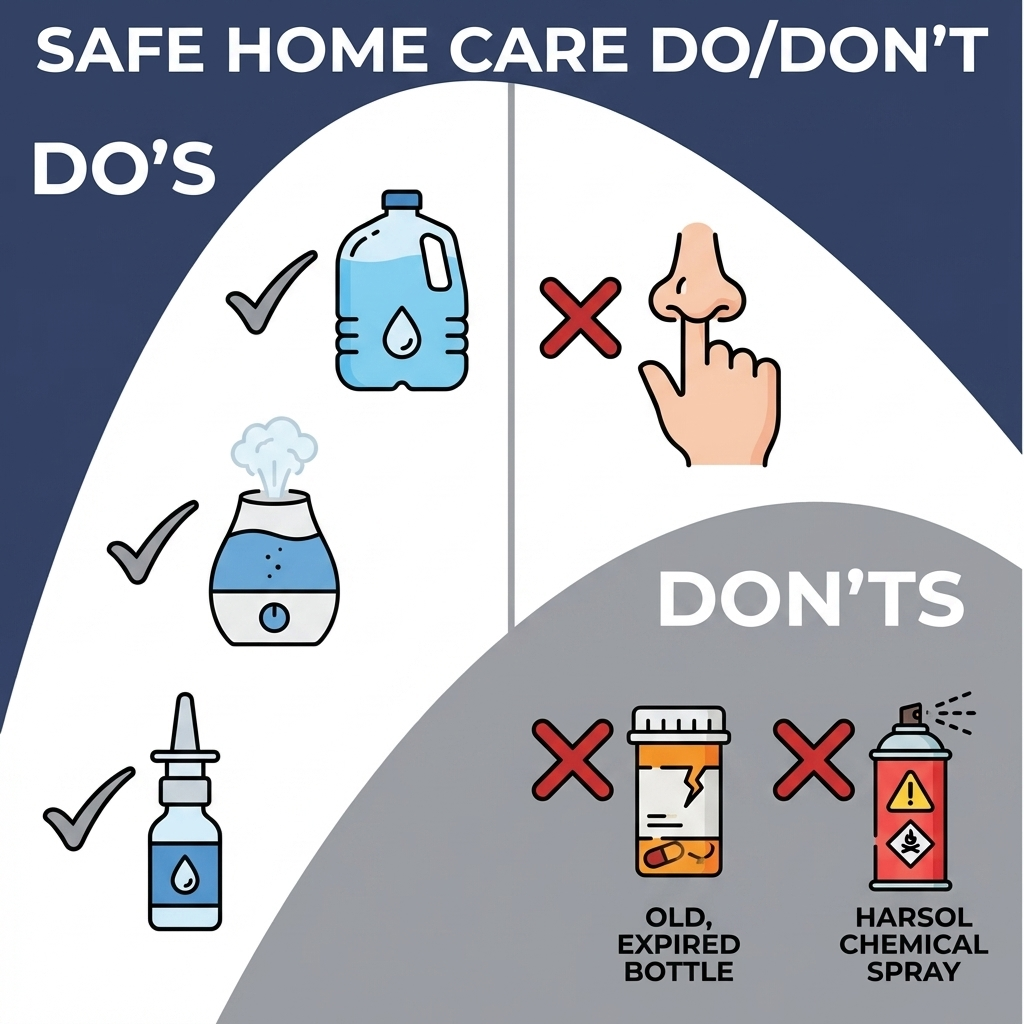
- If using saline irrigation, use sterile, distilled, or previously boiled and cooled water
- Humidification and gentle saline sprays may help dryness and crusting (when appropriate)
- Avoid irritants such as smoke/vaping, harsh fumes, and intranasal drug use
Risk-factor control that can help:
- Better glucose control in diabetes can reduce the risk of severe infections
- If you are immunosuppressed and develop severe sinus/nasal symptoms, contact your care team promptly
What not to do:
- Don’t scrape or forcibly remove black tissue or deep crusts
- Don’t rely on OTC sprays to treat suspected fungal disease
- Don’t delay evaluation when symptoms are progressing
If you’re unsure whether to see a specialist now or later: https://sleepandsinuscenters.com/blog/when-should-i-see-an-ent
Summary: Gentle moisture, safe irrigation, and avoiding irritants help—but none replace a proper diagnostic evaluation.
FAQs
Q: Can a sinus infection make my nose tissue die?
A: Rarely, yes. Severe bacterial infections or invasive fungal infections can cause nasal tissue necrosis and require urgent treatment. Reference: StatPearls
Q: What does black stuff inside my nose mean?
A: It may be dried blood or crusting, but a black scab or eschar—especially with severe pain, fever, diabetes, or immunosuppression—warrants urgent evaluation. Reference: StatPearls
Q: Can cocaine really destroy the nose?
A: Yes. Chronic intranasal use can cause cocaine-induced midline destructive lesions, including septal perforation and collapse. Reference: MDPI 2021
Q: How do doctors tell cocaine damage from autoimmune disease like GPA?
A: It often takes a combination of history, exam, imaging, blood tests (including ANCA—often PR3-ANCA/c-ANCA), and frequently biopsy. Reference: PMC Review 2025
Q: Will my nose go back to normal?
A: It depends on the cause and how early it’s treated. Infections generally do better with earlier intervention. If there has been structural loss (cartilage/bone), reconstruction may be considered after the underlying problem is controlled.
Q: When should I see an ENT vs my primary care doctor?
A: Ongoing crusting/bleeding, one-sided symptoms, suspected septal perforation, tissue breakdown, or any red-flag symptoms are common reasons to involve ENT. For urgent concerns, see: https://sleepandsinuscenters.com/blog/when-should-i-see-an-ent
Conclusion: Don’t Ignore “Nose Rotting Away” Symptoms
The phrase “nose rotting away” can be associated with infection, cocaine-related injury, autoimmune disease, or malignancy. Because treatments differ dramatically (antifungals plus surgery vs immunosuppression vs targeted antimicrobials vs cancer care), prompt evaluation—often including endoscopy, imaging, cultures, and nasal biopsy—is the critical first step.
If you’re experiencing persistent crusting, foul odor, recurrent bleeding, one-sided blockage, or any red-flag symptoms, seek evaluation by an ENT or another qualified healthcare provider for a clear diagnosis and treatment plan. Learn more or request a visit: https://www.sleepandsinuscenters.com/
Summary: Early, accurate diagnosis saves tissue, reduces risk, and improves outcomes.
References
- StatPearls / NCBI Bookshelf. Rhinocerebral Mucormycosis. https://www.ncbi.nlm.nih.gov/books/NBK559288/
- Frontiers in Cellular and Infection Microbiology (2023). Mucormycosis in 2023: an update… https://www.frontiersin.org/articles/10.3389/fcimb.2023.1254919/full
- International Journal of Environmental Research and Public Health (MDPI) (2021). Cocaine-Induced Midline Destructive Lesions. https://www.mdpi.com/1660-4601/18/15/7831
- PMC (2025). Midline Destructive Lesions: Differentiating GPA… https://pmc.ncbi.nlm.nih.gov/articles/PMC12131111/
- Johns Hopkins Medicine. Necrotizing Soft Tissue Infection. https://www.hopkinsmedicine.org/health/conditions-and-diseases/necrotizing-soft-tissue-infection
This article is for educational purposes only and is not medical advice. Please consult a qualified healthcare provider for diagnosis and treatment.
Talk with a Georgia ENT
If you're dealing with ongoing nasal symptoms, the board-certified ENT team at Sleep and Sinus Centers of Georgia can help — with offices in Lawrenceville, Athens, and Braselton. Learn more about our ENT specialists, or request an appointment.
Don’t let allergies slow you down. Schedule a comprehensive ENT and allergy evaluation at Sleep and Sinus Centers of Georgia. We’re here to find your triggers and guide you toward lasting relief.