
Nasal Endoscopy Procedure: What to Expect, Benefits, and Recovery
If you’ve been dealing with ongoing congestion, frequent sinus infections, or a reduced sense of smell, your ENT may recommend a nasal endoscopy procedure to get a clearer view of what’s happening inside your nose and sinus drainage areas. This quick, in-office exam provides real-time information that can help explain persistent symptoms and guide next steps—often without needing anything invasive.
Think of it like switching from looking through a keyhole to turning on the lights in a room: your clinician can see deeper areas that a basic nasal exam can’t fully evaluate.
Below is a patient-friendly guide to what nasal endoscopy is, how it’s performed, and what recovery typically looks like.
Quick Overview (For Patients in a Hurry)
- What it is: A small camera (endoscope) is used to look inside the nasal passages and sinus openings.
- How long it takes: The diagnostic portion often takes only a few minutes; total visit time may be longer for discussion and planning.
- Comfort level: Usually well-tolerated; the most common side effect is temporary nasal discomfort/irritation.
- Why it’s done: Helps evaluate chronic congestion, rhinosinusitis, nasal polyps, and other nasal/sinus concerns.

What Is a Nasal Endoscopy?
A nasal endoscopy is an exam performed by an ENT specialist using a thin, lighted camera to inspect the inside of the nose. Because it can show areas that aren’t visible with a standard exam, it’s commonly used when symptoms are persistent or the cause isn’t obvious.
For example, if you’ve tried saline rinses and nasal sprays but still feel “blocked,” endoscopy can help determine whether the issue looks more like swelling/inflammation, thick mucus, polyps, or anatomy that narrows airflow.
What the endoscope looks like (and how it works)
The endoscope is a slender tube with a light and camera at the tip. The images appear on a monitor, allowing your clinician to evaluate the nasal lining, airflow pathways, and sinus drainage openings in much more detail than a basic nasal exam alone.
Some patients like being able to see the video feed (if your clinic shares it). As one clinician might put it: “It helps us point to what we’re seeing and connect it to what you’re feeling.”
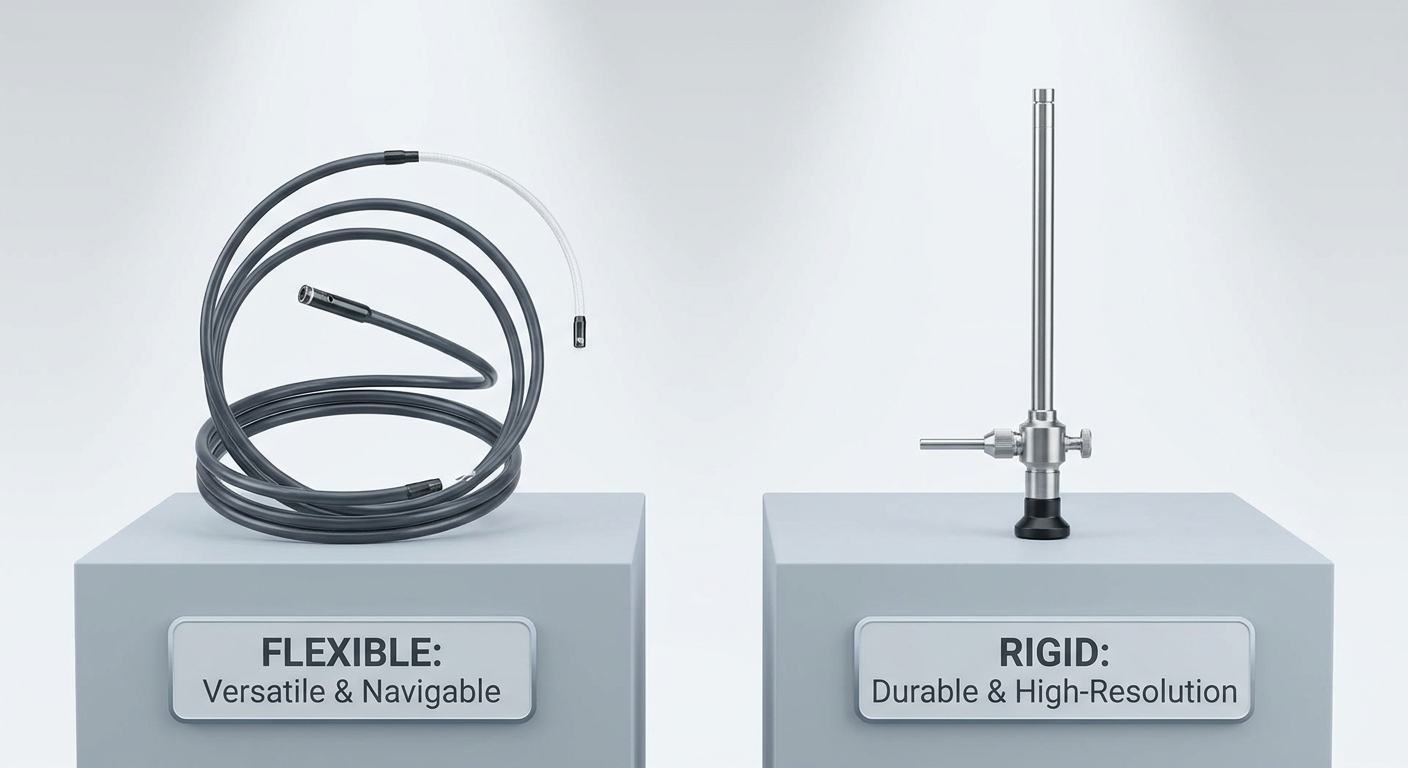
Flexible vs. rigid nasal endoscopy (what’s the difference?)
There are two main types:
- Flexible endoscope: Often easier to tolerate for many patients and can be helpful for a broader, “around-the-corners” view of nasal anatomy.
- Rigid endoscope: Typically provides sharper, more detailed visualization and may be preferred for targeted views, documentation, or planning around sinus anatomy.
Your ENT selects the type based on your symptoms, anatomy, and the specific clinical question being evaluated. In some cases, the decision is simply choosing the tool that provides the clearest look at the area of concern.
In short, nasal endoscopy lets your clinician see more so your plan can be more precise.

Why Your ENT Might Recommend a Nasal Endoscopy
A nasal endoscopy procedure is often used when symptoms suggest an ongoing nasal or sinus issue—and when a closer look can provide answers quickly.
It’s especially helpful when symptoms are lingering, recurring, or not matching what’s seen on a basic exam. In other words, if your experience says “something’s not right,” endoscopy helps your ENT verify what’s happening internally.
Common symptoms that lead to nasal endoscopy
Here are common reasons an ENT may recommend nasal endoscopy:
- Chronic nasal congestion or obstruction
- Facial pressure/pain or “sinus headaches”
- Recurrent or chronic sinus infections (suspected rhinosinusitis)
- Post-nasal drip or chronic cough (when sinus-related causes are suspected)
- Reduced sense of smell
- Frequent nosebleeds or nasal crusting
- Suspected nasal polyps or structural blockage
Conditions nasal endoscopy can help diagnose
Nasal endoscopy can support evaluation of:
- Rhinosinusitis (acute or chronic)
- Nasal polyps
- Chronic rhinitis/inflammation
- Deviated septum or turbinate enlargement (as part of an obstruction evaluation)
- Suspicious growths or possible sources of bleeding (as part of a broader ENT workup)
It’s important to note that endoscopy is a powerful exam tool, but your diagnosis still depends on the full picture—your symptoms, medical history, and sometimes additional tests.
How nasal endoscopy fits into treatment planning
One of the biggest advantages of nasal endoscopy is how quickly it can guide next steps. Depending on what’s seen (and how that matches your symptoms), your clinician may consider:
- Medication adjustments (sprays, rinses, or other therapies)
- Additional testing (sometimes including imaging such as a CT scan)
- Discussion of in-office or surgical options, if appropriate
This is often a useful diagnostic step because it provides real-time information.
Bottom line: Endoscopy helps move from “symptoms” to “clarity,” so next steps can be better targeted.

What to Expect During the Nasal Endoscopy Procedure (Step-by-Step)
If you’re feeling nervous, it helps to know that a diagnostic nasal endoscopy procedure is usually brief and performed right in the exam room. If you’d like a more detailed walkthrough, see our Step-by-step nasal endoscopy overview: https://sleepandsinuscenters.com/blog/nasal-endoscopy-procedure-step-by-step-guide-benef-20260327181340
Before the scope (prep in the exam room)
Typically, your appointment includes:
- A review of symptoms and relevant medical history (including nosebleeds, bleeding risk, and medications)
- Sitting upright in an exam chair
- A numbing spray and/or decongestant spray to improve comfort and help open the nasal passages for better visibility (not always required, but commonly used)
If you’re prone to nosebleeds or take blood thinners, mention that early—your clinician may tailor the approach to minimize irritation.
During the scope (what you’ll feel)
Most patients describe sensations such as:
- Pressure or a “tickling” feeling
- Watery eyes
- An urge to sneeze
The diagnostic portion is commonly quick—often only a few minutes—though your overall visit will be longer to allow time for discussion, exam, and planning. Many patients say it feels “weird but doable,” and the odd sensation usually fades quickly once the scope is out.
If tissue removal/biopsy is needed (not always)
In some situations, a clinician may recommend taking a small sample (biopsy) or removing a small amount of tissue—for example, if an area looks unusual or needs clarification. This is not part of every endoscopy and is based on clinical judgment and your specific situation.
If biopsy is discussed, it’s reasonable to ask what the goal is (confirmation vs. ruling something out), what you may feel afterward, and what symptoms should prompt a follow-up call.
Think of endoscopy as a brief, camera-guided check that prioritizes comfort while gathering high-value information.

Benefits of Nasal Endoscopy (Why It’s So Useful)
More accurate answers than a basic exam alone
Nasal endoscopy allows visualization deeper inside the nasal cavity, including areas near sinus drainage openings where inflammation, polyps, or mucus buildup may contribute to symptoms. For patients, this can be validating: persistent congestion isn’t always “just allergies,” and endoscopy can help clarify what’s actually contributing.
Fast, minimally invasive, and information-rich
This exam can provide high-value information quickly, helping reduce guesswork when symptoms have lingered or haven’t responded to first-line treatments. Because it’s typically performed in the office, you can often discuss findings right away—what was seen, what it likely means, and what the next step could be.
Helps guide next steps (treatments and procedures)
Because endoscopy provides real-time findings, it often helps your ENT make more confident decisions about whether symptoms are more consistent with inflammation, structural blockage, infection patterns, polyps, or other concerns. It can also help prioritize: for instance, whether a medication adjustment makes sense first, or whether imaging is more helpful before discussing procedures.
In many cases, endoscopy turns uncertainty into a clear, shared plan.
Risks, Side Effects, and Safety
Common side effects (usually mild and temporary)
Most side effects are short-lived. Common ones include:
- Temporary nasal soreness or irritation
- Mild nosebleed or spotting
- Sneezing or watery eyes
Some people also notice temporary throat numbness if numbing spray drips backward. That sensation typically wears off.
When to call the office (red flags)
Contact your clinician or seek urgent evaluation if you experience:
- Heavy or persistent bleeding
- Fever, worsening pain, or new concerning symptoms after the visit
- Severe headache, significant swelling, or any rapidly worsening symptoms (rare)
Is nasal endoscopy safe?
When performed by trained clinicians, nasal endoscopy is generally considered safe and well-tolerated. For a deeper breakdown of safety considerations, read: Is nasal endoscopy safe? https://sleepandsinuscenters.com/blog/is-nasal-endoscopy-safe
Most patients experience only brief, mild irritation; significant or worsening symptoms should be reviewed with your clinic.
Nasal Endoscopy Recovery: What Happens After the Procedure?
For most people, nasal endoscopy recovery is minimal, especially for routine diagnostic exams. Many patients go back to work, school, errands, or normal routines the same day. If you’re anxious about discomfort, it may help to plan a lighter schedule—but most people don’t need downtime.
Right after the test (same-day expectations)
Many patients return to normal activities right away. If numbing spray is used, you may notice temporary numbness or a drip sensation in the throat for a short period. If your nose feels slightly “raw,” that usually reflects mild irritation from the exam and/or dryness. Mild irritation is common and usually improves quickly; worsening symptoms should be discussed with the clinic.
Tips to feel better after nasal endoscopy
General comfort measures your clinician may discuss include:
- Avoiding aggressive nose blowing for the rest of the day if you feel irritated
- Using saline spray or rinses if recommended
- Staying hydrated to reduce nasal dryness
If you have spotting, gentle care matters. When in doubt, ask your clinic what’s normal for you, especially if you’ve had nosebleeds in the past.
How long does discomfort last?
Mild irritation typically improves quickly—often the same day. If symptoms feel like they’re escalating rather than settling down, that’s a good reason to check in with the office.
For most patients, recovery is simple: brief, mild irritation that settles quickly.
“Symptoms, Causes, Treatments” Context: What Endoscopy Findings May Mean
Nasal endoscopy results are most useful when paired with your symptoms and history. In some cases, additional testing (like imaging) may still be considered.
If endoscopy findings are consistent with rhinosinusitis
Possible causes can include inflammation, infection patterns, allergies, or drainage blockage. Typical treatment options may involve saline rinses, nasal steroid sprays, and allergy management. Antibiotics are sometimes used when appropriate, depending on the clinical picture.
If nasal polyps are seen
Polyps are often associated with chronic inflammation. Treatment options can include topical nasal steroids, short courses of oral steroids in select situations, newer targeted medications for severe disease, or surgery when needed.
If structural blockage is suspected (septum/turbinates)
Sometimes endoscopy suggests that anatomy is contributing to obstruction. Next steps may include medical management first, followed by a discussion of procedural options if symptoms persist.
Endoscopy is one piece of the puzzle; the diagnosis and plan depend on symptoms + exam + (sometimes) imaging.
Lifestyle Tips to Support Sinus Health (Before and After Your Visit)
These general strategies can support nasal comfort and help your ENT visit be more productive.
Reduce irritants that inflame nasal passages
Common irritants include smoke exposure, strong fragrances, and dusty environments. If you notice that certain environments reliably worsen symptoms, that pattern is useful information to share at your appointment.
At-home habits that can improve nasal comfort
Depending on your situation, your clinician may discuss:
- Saline rinses as directed
- Humidification if indoor air is dry
- Allergen-control steps if allergies appear to be a trigger
Track symptoms to help your ENT
Consider keeping notes on:
- Which side feels blocked (or if it alternates)
- Triggers (weather changes, irritants, seasonal allergies)
- How often infections occur
- What you’ve tried and whether it helped
Even a short list on your phone can make your visit more efficient and help connect symptoms to endoscopy findings.
Small daily habits and simple notes about your symptoms can make your visit more efficient and your plan more personalized.
FAQs About Nasal Endoscopy Procedure
How long does a nasal endoscopy take?
Often only a few minutes for the diagnostic portion, though the full appointment includes discussion and planning.
Is nasal endoscopy painful?
Many patients describe it as pressure or irritation rather than true pain. Numbing spray may be used. For more detail focused on comfort, see: Is a nasal endoscopy painful? https://sleepandsinuscenters.com/blog/what-is-nasal-endoscopy----and-is-it-painful
Do I need someone to drive me home?
Usually not for a routine in-office diagnostic exam. If any additional procedure or sedation is planned, your clinic will provide specific instructions.
Can nasal endoscopy take the place of a CT scan in every case?
A nasal endoscopy procedure can reveal important findings in real time, but CT imaging may still be recommended in some cases—especially when deeper sinus mapping or surgical planning is needed.
What should I tell my doctor before the procedure?
Let your clinician know about blood thinners, bleeding disorders, frequent nosebleeds, medication allergies, and any history of nasal or sinus surgery.
When to See an ENT for Persistent Nasal/Sinus Symptoms
Signs it’s time to get evaluated
- Persistent, recurrent, or worsening nasal/sinus symptoms
- Ongoing congestion or obstruction
- Reduced sense of smell
- Frequent infections
- Concern for nasal polyps or chronic inflammation
What to expect at an ENT visit beyond nasal endoscopy
An ENT visit typically includes symptom review, a nasal exam, and a personalized treatment plan. Nasal endoscopy is one tool that can help clarify what’s driving the symptoms.
If symptoms keep recurring or getting in the way of life, it’s reasonable to get an expert evaluation.
Conclusion + Call to Action
A nasal endoscopy procedure is a quick, commonly used exam that helps your ENT move from “symptoms” to “answers.” Whether you’re dealing with congestion, suspected polyps, or concerns related to a chronic rhinosinusitis diagnosis, endoscopy can provide valuable information to guide a clear plan.
To learn more or schedule an evaluation, contact Sleep and Sinus Centers of Georgia—and book an appointment at https://www.sleepandsinuscenters.com/.
A brief in-office look can make a big difference in finding the right next step.
Citation List (Sources)
- Johns Hopkins Medicine. “Nasal Endoscopy.” https://www.hopkinsmedicine.org/health/treatment-tests-and-therapies/nasal-endoscopy
- ENT & Allergy. “What Is a Nasal Endoscopy Procedure?” (2023). https://www.entandallergy.com/blog/2023/february/what-is-a-nasal-endoscopy-procedure/
- ENT & Allergy. “Nasal Endoscopy & Chronic Nasal Problems: What to Expect.” (2024). https://www.entandallergy.com/blog/2024/november/nasal-endoscopy-chronic-nasal-problems-what-to-e/
- NCBI/PMC. Clinical discussion on nasal endoscopy applications. https://pmc.ncbi.nlm.nih.gov/articles/PMC3930889/
This article is for educational purposes only and is not medical advice. Please consult a qualified healthcare provider for diagnosis and treatment.
Don’t let allergies slow you down. Schedule a comprehensive ENT and allergy evaluation at Sleep and Sinus Centers of Georgia. We’re here to find your triggers and guide you toward lasting relief.