Maxillary Sinus Toothache: How Sinus Problems Cause Tooth Pain
Upper tooth pain can be confusing—especially when it feels like a dental problem but shows up with congestion, facial pressure, or a head cold that won’t quit. A maxillary sinus toothache is a real (and surprisingly common) scenario because your maxillary sinuses sit extremely close to the roots of your upper back teeth.
The tricky part is that sinus inflammation can mimic tooth pain—and sometimes a tooth problem can actually cause sinusitis. It’s easy to see how people end up bouncing between “Maybe I need a root canal?” and “Maybe it’s just my sinuses.”
This guide explains the anatomy, common symptom patterns, and how clinicians sort out sinus-related tooth pain vs. true dental disease. It’s general information only and not a substitute for an in-person evaluation or diagnosis.
Quick answer—can a sinus problem really cause tooth pain?
Yes. Sinus-related tooth pain is often a form of referred pain, meaning irritation or pressure in one area is felt somewhere nearby. The upper premolars and molars are the most commonly involved because their root tips can sit very close to the floor of the maxillary sinus.
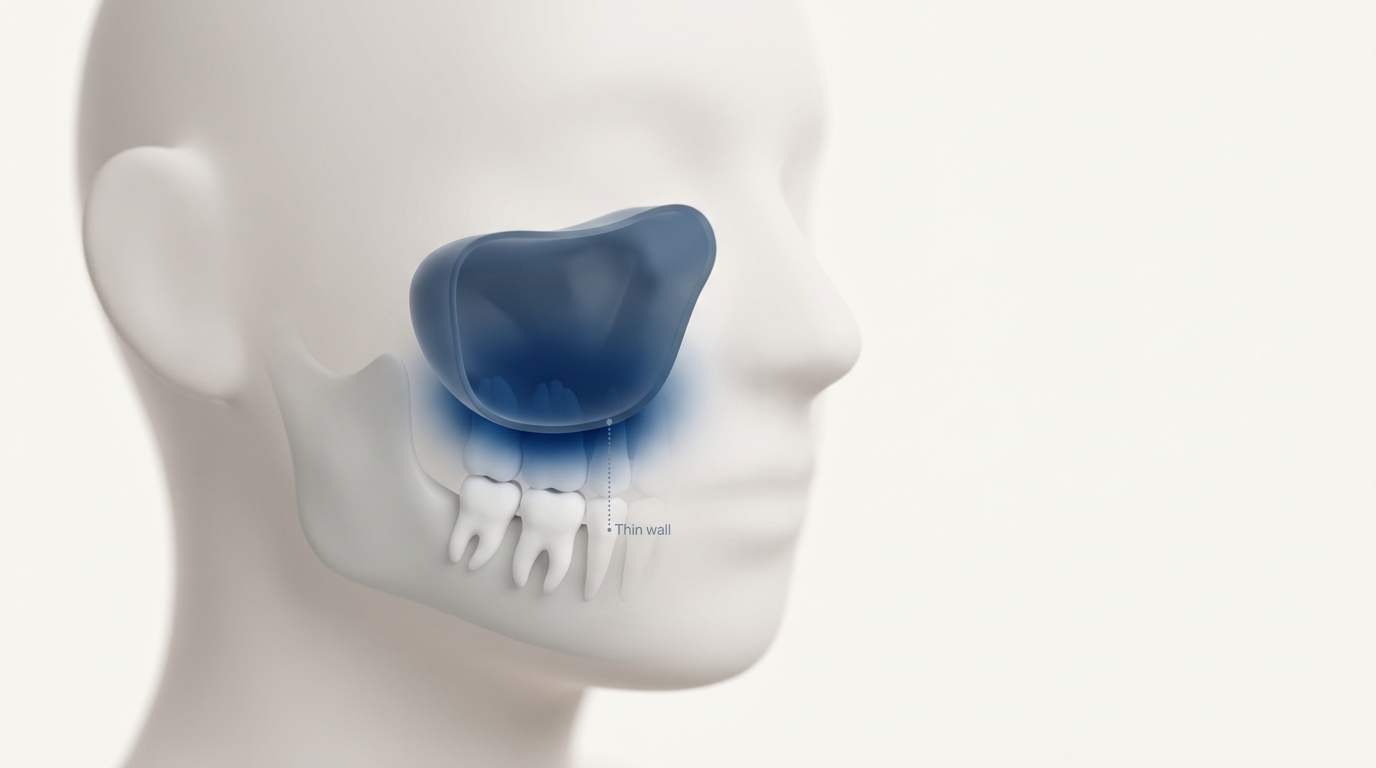
A practical way to picture it: the sinus and the tooth roots can be like next-door neighbors sharing a thin wall. If the sinus lining swells and pressure builds, the discomfort can broadcast into the teeth—even when the teeth themselves are healthy.
Clinical anatomy research highlights how closely the maxillary sinus relates to posterior tooth roots—especially in the upper back teeth. (PMC, 2019) https://pmc.ncbi.nlm.nih.gov/articles/PMC6449588/
If you want a focused companion read, see: Can sinus problems cause tooth pain? https://sleepandsinuscenters.com/blog/can-sinus-problems-cause-tooth-pain
Summary: It’s common for maxillary sinus pressure to feel like an upper toothache—even when the teeth are healthy.
Understanding the anatomy: why the maxillary sinus and upper teeth are linked
Where the maxillary sinus sits: The maxillary sinuses are air-filled spaces located behind your cheeks and directly above the upper teeth. On imaging, the floor of the sinus may look extremely close to tooth roots—and in some people, it can even appear to overlap the root tips.
That close neighborhood is why a sinus flare can feel like an upper toothache, even if a dental exam doesn’t find cavities, cracks, or gum disease. Patients often describe it as a deep pressure rather than a sharp, pinpoint tooth zing.
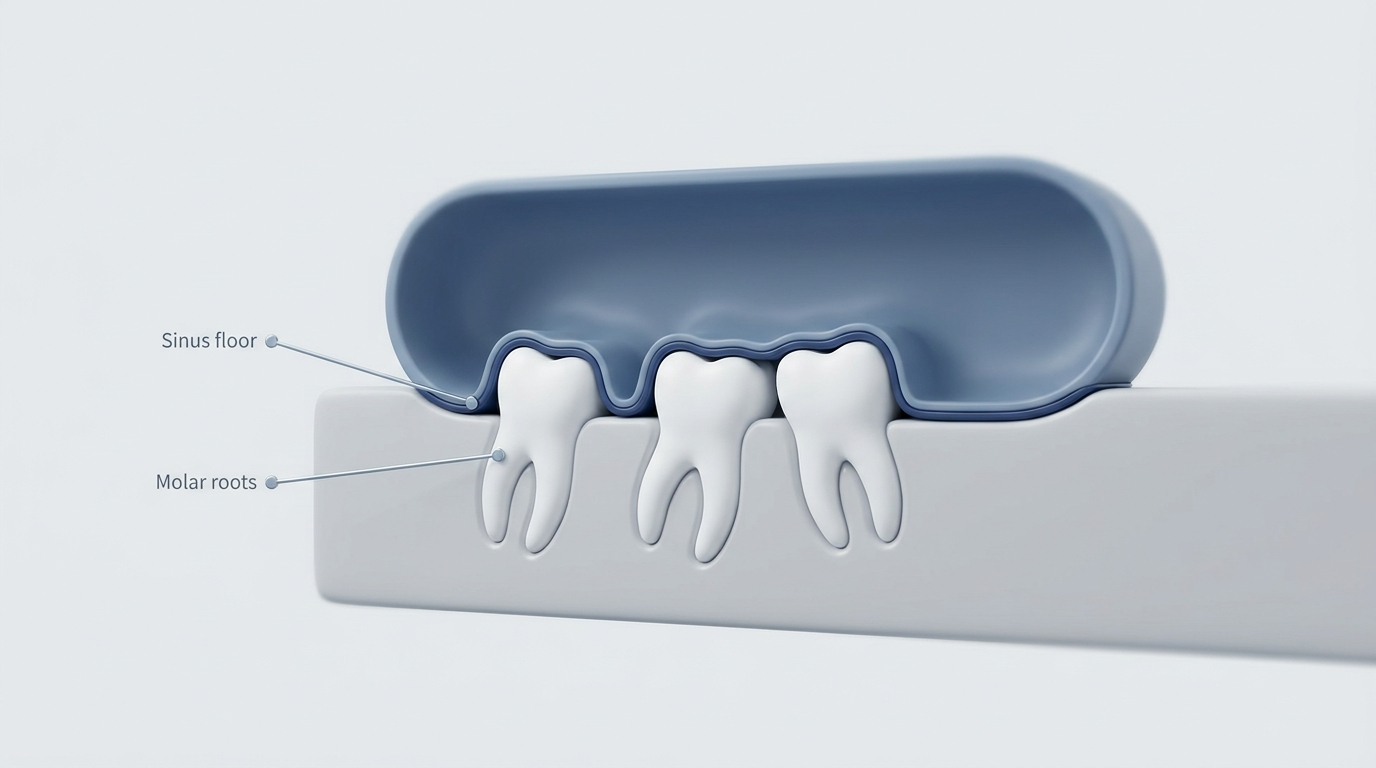
The root tip near the sinus floor connection: Upper molars frequently have roots that sit nearest the sinus floor. When one sinus is more inflamed than the other, symptoms can be one-sided, which may also make it feel like a single-side dental issue.
One common scenario: a person points to the upper left molars and says, “It feels like the whole side is sore,” but the discomfort is really coming from the left maxillary sinus above them. (Reference: PMC anatomy review, 2019) https://pmc.ncbi.nlm.nih.gov/articles/PMC6449588/
For a broader overview, read: Maxillary sinusitis symptoms, causes, and treatments https://sleepandsinuscenters.com/blog/maxillary-sinusitis-symptoms-causes-and-effective-20260119212006
Summary: The sinus floor and upper molar roots live close together, so sinus swelling can easily echo as tooth pain.
Symptoms: what a maxillary sinus toothache typically feels like
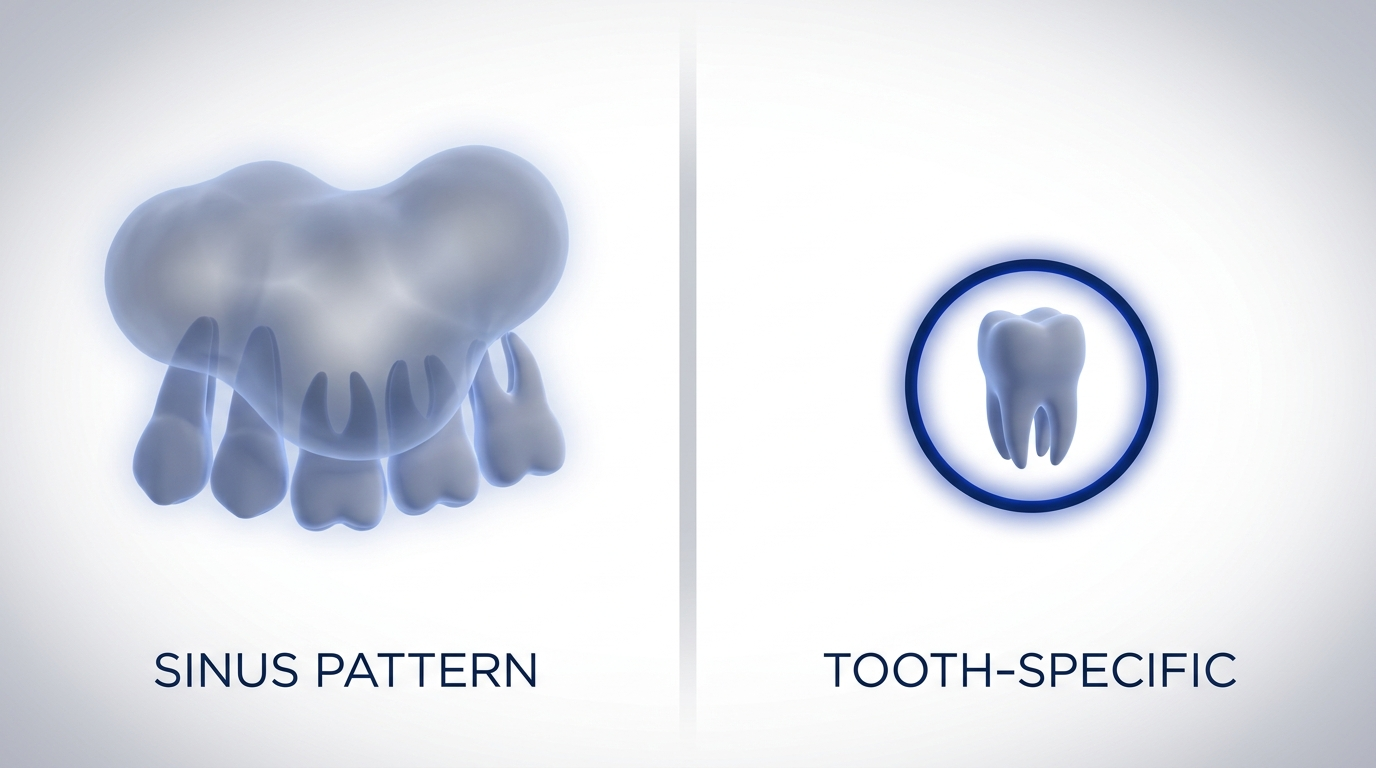
A maxillary sinus toothache tends to follow recognizable patterns—but it can still overlap with true dental pain. The goal is not self-diagnosis; it’s understanding which patterns lean sinus vs. tooth-specific.
Patterns that suggest sinus-related tooth pain:
- A dull, aching pressure in the upper teeth (often the back teeth)
- Discomfort affecting multiple teeth, not just one
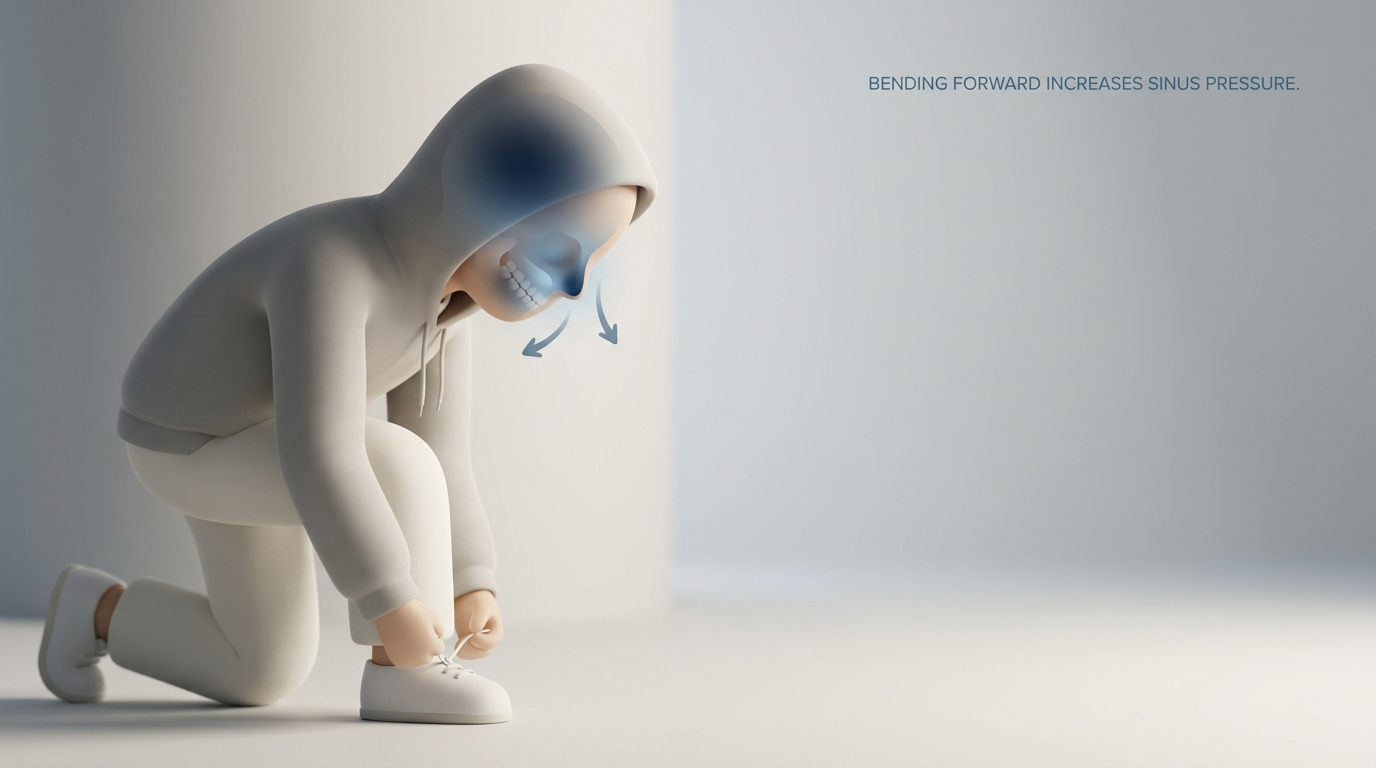
- Pain that feels worse when bending forward, lying down, or changing head position
- Tooth discomfort occurring alongside sinus symptoms like congestion, facial pressure, or postnasal drip
A simple example: you bend to tie your shoes and suddenly the upper molars throb more. That gravity/pressure pattern is a classic clue clinicians listen for. Mayo Clinic notes that sinus infections can cause tooth pain, especially in the upper back teeth, because of proximity and pressure. (Mayo Clinic, 2023) https://www.mayoclinic.org/diseases-conditions/acute-sinusitis/expert-answers/toothache/faq-20058299
Symptoms that suggest it may be a dental problem instead:
- Pain concentrated in one specific tooth
- Noticeable sensitivity to hot, cold, or sweet
- Pain that spikes with biting or chewing
- Gum swelling, a bad taste, or a pimple-like bump on the gums (sometimes associated with an abscess)
A helpful detail: dental pain is often easier to point to with a fingertip—one tooth that’s clearly the culprit—while sinus-related tooth pain can feel more spread out and harder to localize.
Red flags—when to seek urgent care:
- Facial swelling or swelling around the eye
- High or persistent fever
- Severe headache, vision changes, or rapidly worsening symptoms
Summary: Widespread upper tooth pressure with congestion points toward sinus causes; pinpoint, bite-triggered pain points toward a dental source.
Causes: sinusitis vs. tooth-caused sinus infection (odontogenic maxillary sinusitis)
Not all sinus infection tooth pain has the same origin. The two big categories are sinus inflammation that refers pain to the teeth, and sinusitis that starts from a dental source.
Non-dental sinus inflammation that can trigger tooth pain may begin with:
- Viral upper respiratory infections (colds)
- Seasonal allergies
- Irritant exposure
When sinus drainage is blocked, pressure can build—leading to aching that can resemble upper molar pain. People sometimes interpret this as “my fillings must be failing,” when the timing (right after a cold or allergy flare) is actually a clue pointing upward to the sinus.
Odontogenic maxillary sinusitis (OMS): when a tooth infection drives sinus disease. Reviews describe OMS as common enough—and missed often enough—that it can be mistaken for regular sinusitis, especially when symptoms look primarily sinus-related. (PMC, 2020) https://pmc.ncbi.nlm.nih.gov/articles/PMC7770314/
Potential dental sources include:
- Deep decay reaching the pulp
- A persistent or complicated issue after root canal therapy
- Periodontal (gum) disease
- Tooth extraction sites, implants, or communication between mouth and sinus
Because the sinus and tooth roots can be so close, a root infection–sinus connection is anatomically plausible—and important not to overlook.
Summary: Sinus pressure can refer pain to teeth, but teeth can also trigger sinusitis—especially in the upper molar region.
How doctors tell the difference: diagnosis that prevents the wrong treatment
When the root cause is unclear, the best outcomes usually come from a structured process rather than guessing. Many patients say, “I don’t want to treat the wrong thing first.” That instinct is right.
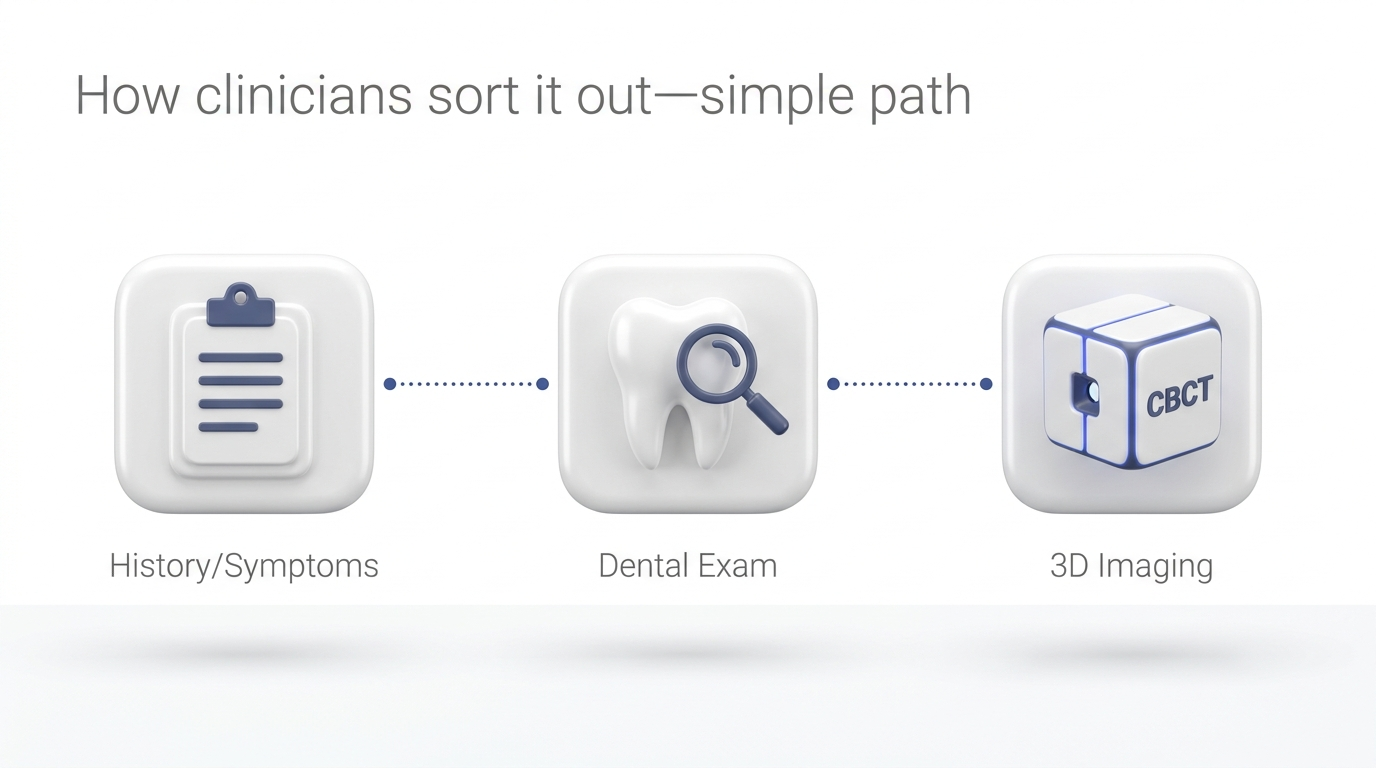
Step 1—history + symptom review
A clinician may ask about:
- Whether pain involves one tooth or multiple teeth
- Nasal congestion, smell changes, or postnasal drip
- Whether pain changes with head position
- Recent dental work, root canals, extractions, or implants
Clinicians often weigh patterns like one tooth vs. several, does it track with congestion, and does bending forward worsen it—but determining the cause typically requires an in-person exam rather than self-assessment.
Step 2—systematic dental exam (often needed even if symptoms feel sinus)
Even when it feels like a sinus problem, a dental evaluation can help check for:
- Tooth tenderness to tapping (percussion)
- Bite-related pain
- Gum pocketing or mobility
- Hidden cracks or leaking restorations
Step 3—imaging: why 3D scans can matter (CBCT)
Traditional 2D dental X-rays can miss anatomy and disease that sit behind other structures. In cases where the tooth–sinus relationship is suspicious, Cone Beam CT (CBCT) can be useful for identifying:
- Periapical infection near the sinus floor
- Signs of sinus floor involvement
- One-sided maxillary sinus disease patterns that suggest a dental origin
OMS reviews discuss imaging’s role—especially when unilateral maxillary sinus disease is present. (PMC, 2020) https://pmc.ncbi.nlm.nih.gov/articles/PMC7770314/
Related reading: Sinus CT scan—what it shows and how it helps diagnose sinus issues https://sleepandsinuscenters.com/blog/sinus-ct-scan-what-it-shows-and-how-it-helps-diagnose-sinus-issues
Summary: A careful history, dental exam, and targeted imaging (often CBCT) help separate sinus-referred pain from true tooth disease.
Treatments that work (and why antibiotics alone often don’t)
Treatment depends on whether the problem is primarily sinus inflammation, a bacterial sinus infection, or odontogenic maxillary sinusitis (OMS) with a dental driver. That’s why two people with upper tooth pain can need very different next steps.
If it’s sinus inflammation (not dental)
For non-dental sinus inflammation, care may focus on symptom relief and restoring drainage. Options a clinician may discuss include:
- Saline rinses
- Intranasal corticosteroid sprays (when appropriate)
- Allergy management if triggers are suspected
Many sinus-related symptoms improve over time, but persistent or worsening symptoms often warrant reassessment—especially if the pain keeps returning in the same upper molar region. (Mayo Clinic, 2023) https://www.mayoclinic.org/diseases-conditions/acute-sinusitis/expert-answers/toothache/faq-20058299
If you’re trying to understand when antibiotics are (and aren’t) used, see: Do I always need antibiotics for a sinus infection? https://sleepandsinuscenters.com/blog/do-i-always-need-antibiotics-for-a-sinus-infection
If it’s OMS (tooth-caused sinusitis)
With OMS, successful treatment usually requires addressing the dental source, not only sinus medications. Depending on the cause and tooth prognosis, dental treatment options may include:
- Root canal therapy or retreatment
- Extraction (when a tooth can’t be predictably saved)
- Periodontal treatment if gum disease is the driver
ENT evaluation can be important when symptoms persist, drainage remains blocked, or disease becomes chronic. OMS literature also notes that antibiotics may reduce symptoms temporarily, but may not fully resolve OMS without source control of the dental problem. (PMC, 2020) https://pmc.ncbi.nlm.nih.gov/articles/PMC7770314/ (MDPI, 2025) https://www.mdpi.com/1648-9144/61/12/2175
When sinus procedures/surgery enter the conversation
For some chronic or complicated cases—particularly when sinus drainage remains obstructed after dental issues are addressed—sinus procedures may be considered as part of coordinated care. Reviews emphasize that collaboration between dental and ENT teams can matter in persistent OMS. (MDPI, 2025) https://www.mdpi.com/1648-9144/61/12/2175
Summary: Treat the true driver—sinus inflammation vs. a tooth source—because antibiotics alone often won’t fix tooth-driven sinusitis.
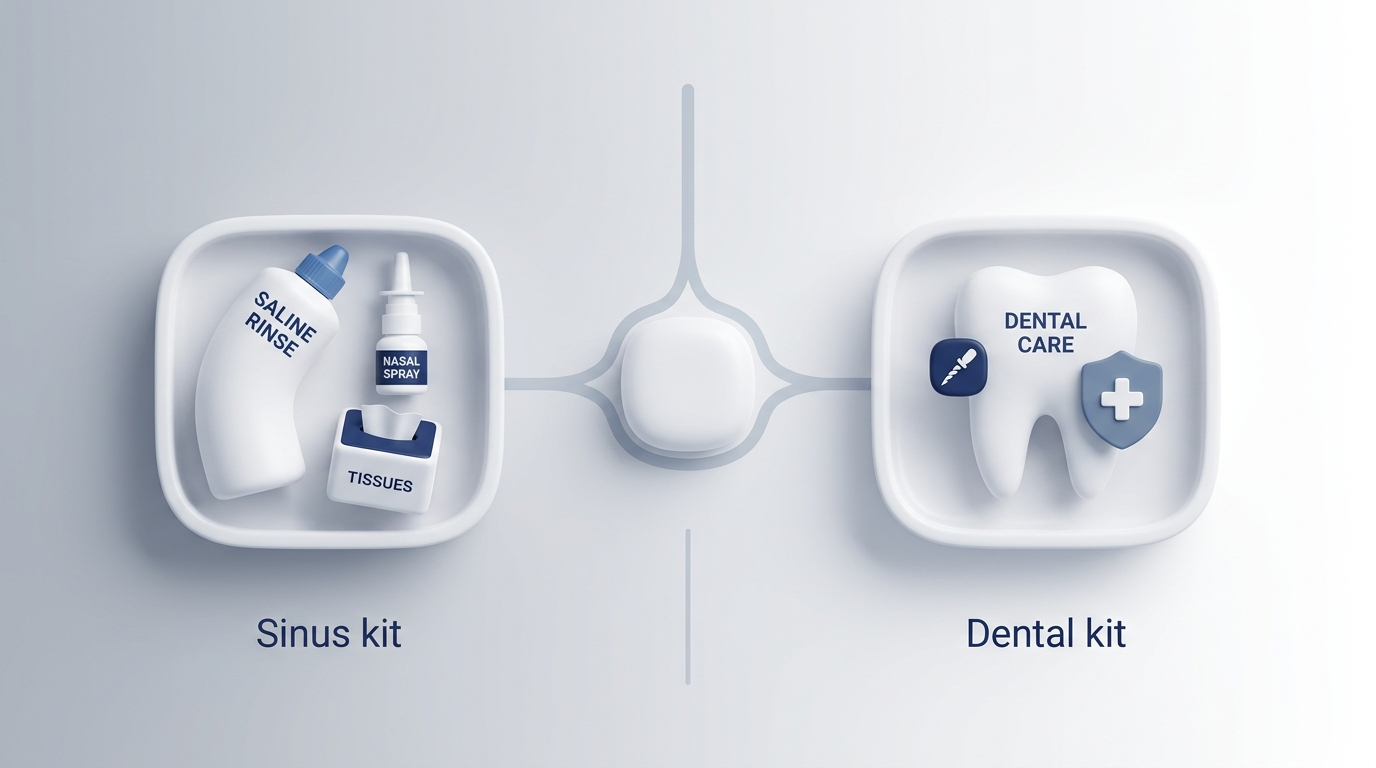
At-home relief and lifestyle tips (safe, patient-friendly)
A maxillary sinus toothache can be miserable, and many people look for ways to stay comfortable while they arrange evaluation. Think of these as comfort support, not a substitute for figuring out the cause.
Comfort measures for suspected sinus-related tooth pain:
- Staying hydrated; using humidified air when indoor air is dry
- Warm compresses over the cheeks
- Gentle saline irrigation (with proper water safety)
- Sleeping with the head slightly elevated to reduce pressure
- Reducing triggers like smoke, strong fragrances, and unmanaged allergies
What to avoid:
- Overusing topical decongestant sprays (rebound congestion can occur)
- Delaying evaluation when pain is severe, persistent, or recurrent
- Self-starting leftover antibiotics (can complicate diagnosis and isn’t always appropriate)
Summary: Simple comfort steps may help pressure symptoms while you arrange care, but they don’t replace an exam.
Featured snippet: Sinus vs Tooth Infection—6 Differences
1) Multiple upper teeth aching → more suggestive of sinus pressure/inflammation
2) One tooth clearly identified → more suggestive of dental disease
3) Worse when bending forward → more suggestive of sinus involvement
4) Hot/cold sensitivity → more suggestive of tooth nerve irritation
5) Congestion/facial pressure/postnasal drip → more suggestive of sinus involvement
6) Chewing or biting pain → more suggestive of a tooth-specific issue
FAQs about maxillary sinus toothache
Why do multiple upper teeth hurt at the same time?
Because sinus pressure and inflammation can create referred pain that feels like it’s coming from several upper teeth at once. (Mayo Clinic, 2023) https://www.mayoclinic.org/diseases-conditions/acute-sinusitis/expert-answers/toothache/faq-20058299
How can I tell if it’s a tooth infection or a sinus infection?
A helpful mental contrast is: sinus-leaning pattern = multiple teeth + congestion/facial pressure + worse bending forward. Dental-leaning pattern = one tooth + hot/cold sensitivity + chewing pain. A clinical exam and the right imaging are often needed to be confident—especially if symptoms keep recurring or you’ve already tried one approach without improvement.
Can a root canal cause sinus problems?
In some situations, persistent dental infection or anatomy close to the sinus floor may contribute to OMS, which is a recognized condition in the medical literature. (PMC, 2020) https://pmc.ncbi.nlm.nih.gov/articles/PMC7770314/
Will antibiotics fix sinus tooth pain?
Sometimes antibiotics are used for bacterial sinusitis—but in odontogenic maxillary sinusitis, antibiotics alone often don’t fully solve the problem if the dental source remains. (PMC, 2020) https://pmc.ncbi.nlm.nih.gov/articles/PMC7770314/ (MDPI, 2025) https://www.mdpi.com/1648-9144/61/12/2175
What kind of scan do I need—sinus CT or dental CBCT?
It depends on the suspected cause. CBCT is often helpful for evaluating the tooth–sinus relationship and dental sources of sinus disease, while medical sinus CT is commonly used to assess sinus anatomy and drainage pathways. (PMC, 2020) https://pmc.ncbi.nlm.nih.gov/articles/PMC7770314/
When should I see an ENT vs a dentist?
Educationally, many people start with: a dentist when pain is clearly localized to one tooth or triggered by chewing/temperature; an ENT when symptoms are recurrent/chronic sinus pressure, nasal blockage, or when symptoms continue despite dental evaluation and treatment. This is illustrative, not prescriptive—an in-person assessment is the best way to determine next steps.
Conclusion: the key takeaway
A maxillary sinus toothache happens because the maxillary sinus sits extremely close to the upper molars—so sinus inflammation can mimic dental pain. Just as importantly, dental disease can trigger sinusitis (OMS), which may require treating the tooth source to fully resolve symptoms. (Anatomy review: PMC, 2019) https://pmc.ncbi.nlm.nih.gov/articles/PMC6449588/ (OMS review: PMC, 2020) https://pmc.ncbi.nlm.nih.gov/articles/PMC7770314/
Call to action
If your upper tooth pain is persistent, keeps returning, or doesn’t match a typical tooth problem, consider scheduling an evaluation with Sleep and Sinus Centers of Georgia so the underlying cause—sinus-related, dental-related, or both—can be identified and addressed appropriately. To book an appointment, visit: https://sleepandsinuscenters.com/appointments
Standardized disclaimer
This information is for educational purposes only and is not a substitute for professional medical advice, diagnosis, or treatment. Always seek the advice of your physician, dentist, or other qualified health provider with any questions you may have regarding a medical or dental condition. Never disregard professional advice or delay seeking it because of something you have read here. If you think you may be experiencing a medical emergency, call 911 or go to the nearest emergency department.
Don’t let allergies slow you down. Schedule a comprehensive ENT and allergy evaluation at Sleep and Sinus Centers of Georgia. We’re here to find your triggers and guide you toward lasting relief.