Jaw Clenching (Bruxism) and ENT Health: How Teeth Grinding Affects Your Ears and Throat
If you have ear pressure, ear pain, or ringing—yet your ear exam looks normal—jaw clenching or grinding (bruxism) and temporomandibular disorders (TMD) could be involved. Reviews of TMD populations report aural symptoms like ear fullness (roughly 43%–96%) and ear pain (roughly 32%–77%), reflecting study differences rather than a specific individual risk (Mejersjö, 2021).
Safety first: if you have sudden hearing loss, severe dizziness, ear drainage with significant pain, trouble breathing or swallowing, fever, or rapidly worsening one-sided symptoms, seek prompt medical care.
Because ENT and dental concerns often overlap, a coordinated plan can work best—especially when ear pressure, ear pain, or tinnitus seem linked to jaw tension or clenching.
Featured snippet: Can bruxism cause ear fullness or tinnitus?
Often, yes. Bruxism and TMJ/TMD-related muscle or joint dysfunction are frequently linked with ear fullness/pressure and may also be associated with tinnitus, especially when symptoms change with jaw movement or stress. (Mejersjö, 2021; Peleg, 2022; DiPalma, 2025)
Common TMJ/bruxism-related ear symptoms
- Ear fullness or pressure (a “plugged” sensation)
- Ear pain with a normal ear exam
- Tinnitus that fluctuates with clenching, chewing, or stress
- Jaw soreness, fatigue, or headaches alongside ear symptoms
For a deeper overview of sleep-related grinding: https://sleepandsinuscenters.com/blog/ent-care-for-sleep-bruxism-understanding-causes-and-treatments
Tinnitus relief options: https://sleepandsinuscenters.com/blog/ent-care-for-tinnitus-relief-effective-treatments-and-tips
TMJ-focused walkthrough: https://sleepandsinuscenters.com/blog/ent-care-for-tmj-disorders-comprehensive-guide-to-treatment-and-relief
If your ear fullness feels like Eustachian tube dysfunction (ETD): https://sleepandsinuscenters.com/blog/eustachian-tube-dysfunction-symptoms-causes-effective-treatment-options
Bottom line: when ear or throat symptoms do not match a routine ear exam, consider a jaw component—ideally with coordinated ENT and dental input.
Quick take: Why teeth grinding can feel like an ear or throat problem
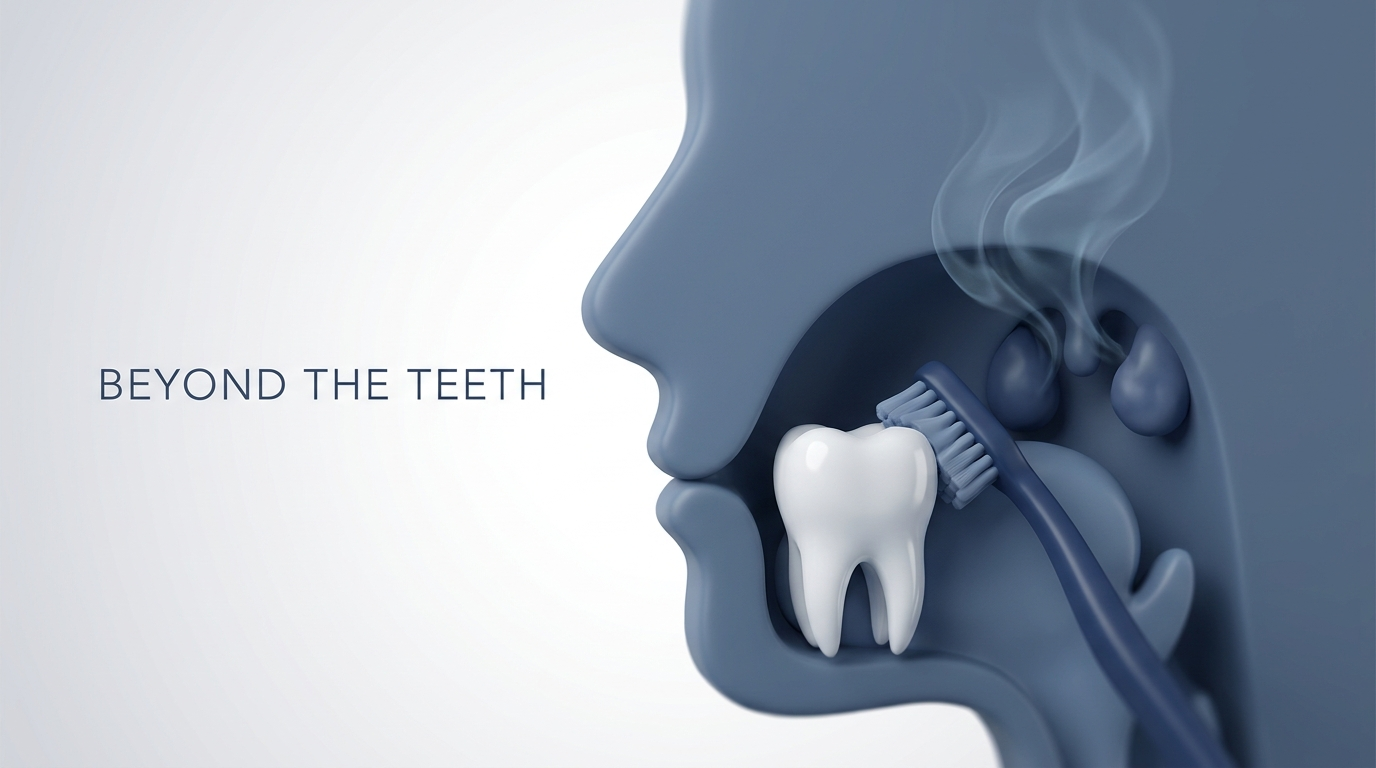
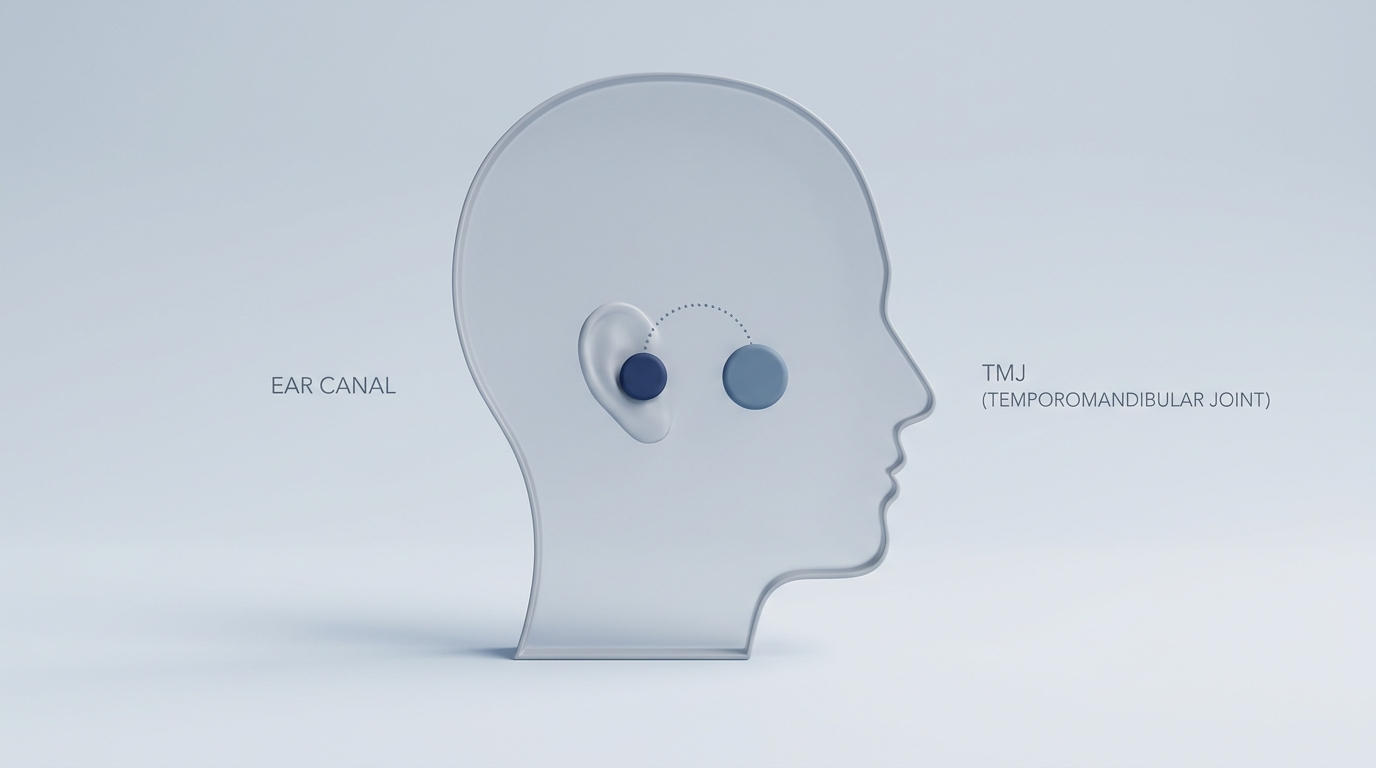
Your jaw joint (TMJ) sits just in front of your ear canal, and chewing muscles work in the same neighborhood. Overworked muscles can refer pain to nearby regions—so you may feel it in the ear, temple, neck, or throat even if the source is the jaw (Mejersjö, 2021). Think of it like a busy intersection: when traffic backs up at the jaw, you may “hear” it in the ear. If symptoms change with clenching or jaw movement, that is a useful clue.
What is bruxism—and how is it different from a TMJ disorder?
Bruxism involves grinding or clenching the teeth. TMD is an umbrella term for problems involving the TMJ, muscles, and bite mechanics. They often coexist and can amplify each other.
Bruxism (teeth grinding/clenching): sleep vs awake
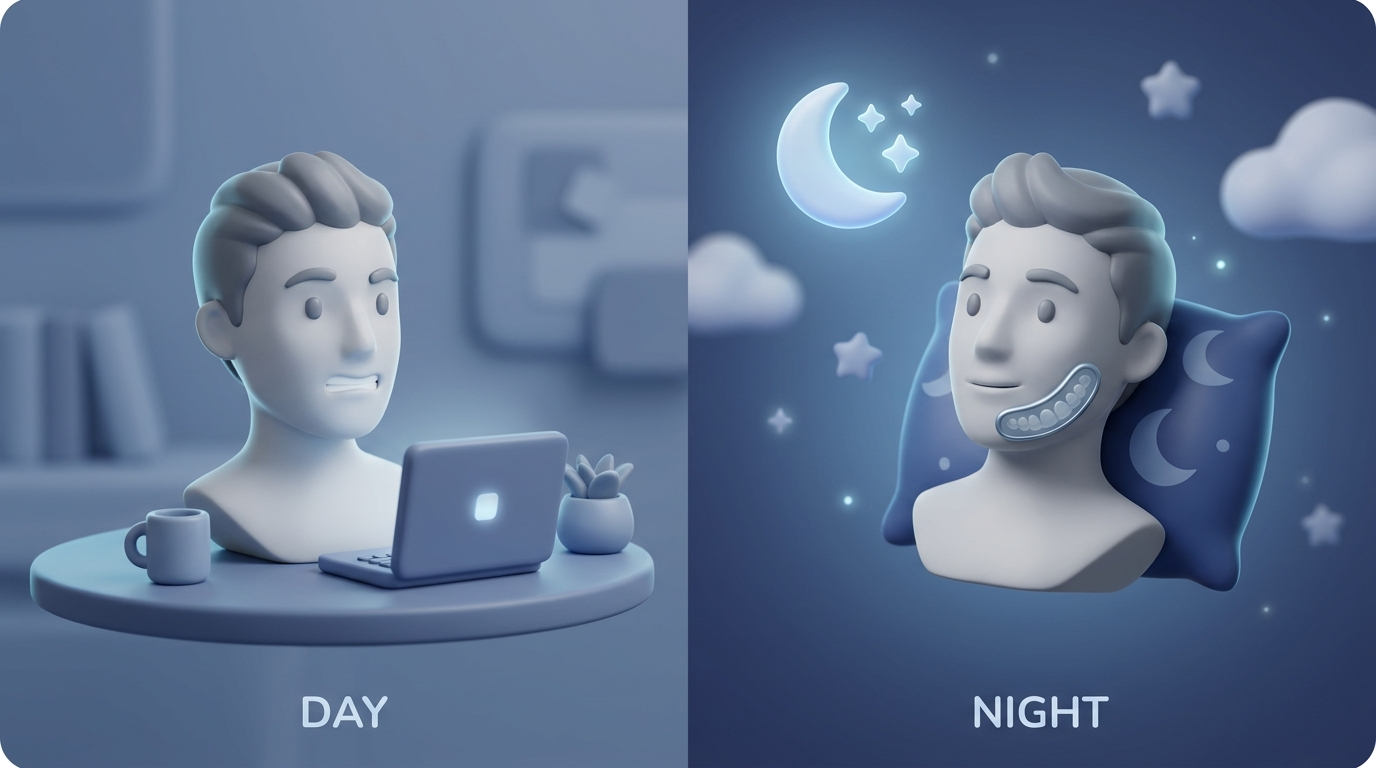
- Sleep bruxism: often noticed as morning jaw fatigue, headaches, or tooth wear.
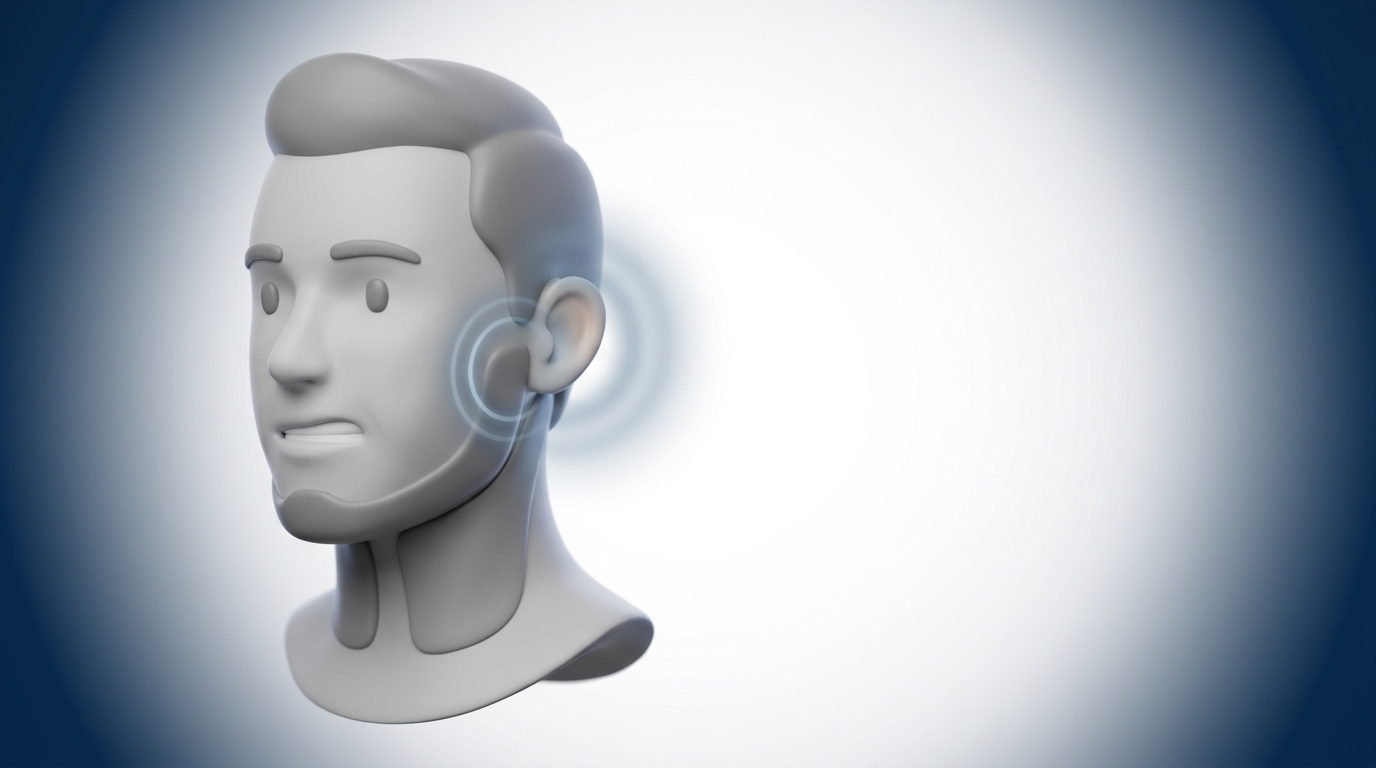
- Awake bruxism: common during stress, intense focus, commuting, workouts, or screen time.
Bruxism is multifactorial and many people notice its effects first—sometimes as pressure or pain around the ear—rather than noticing the clenching itself. (Shetty, 2011; MedlinePlus, Bruxism) Overview: https://sleepandsinuscenters.com/blog/ent-care-for-sleep-bruxism-understanding-causes-and-treatments
Tip: Noticing when your teeth touch during the day is often the first step toward relief.
TMD (temporomandibular disorder): the joint, muscles, and mechanics
The TMJ both hinges and glides, making it effective yet sensitive to overload. TMD can be muscle-related (soreness, tightness, fatigue, tension headaches) or joint-related (clicking, popping, locking, limited opening). Bruxism and TMD often reinforce each other. (Johns Hopkins Medicine, TMD) TMJ guide: https://sleepandsinuscenters.com/blog/ent-care-for-tmj-disorders-comprehensive-guide-to-treatment-and-relief
ENT symptoms that can be linked to bruxism/TMD
Many patients report ear fullness, ear pain with a normal ear exam, tinnitus that shifts with jaw movement, and neck or throat tension that tracks with jaw tension.
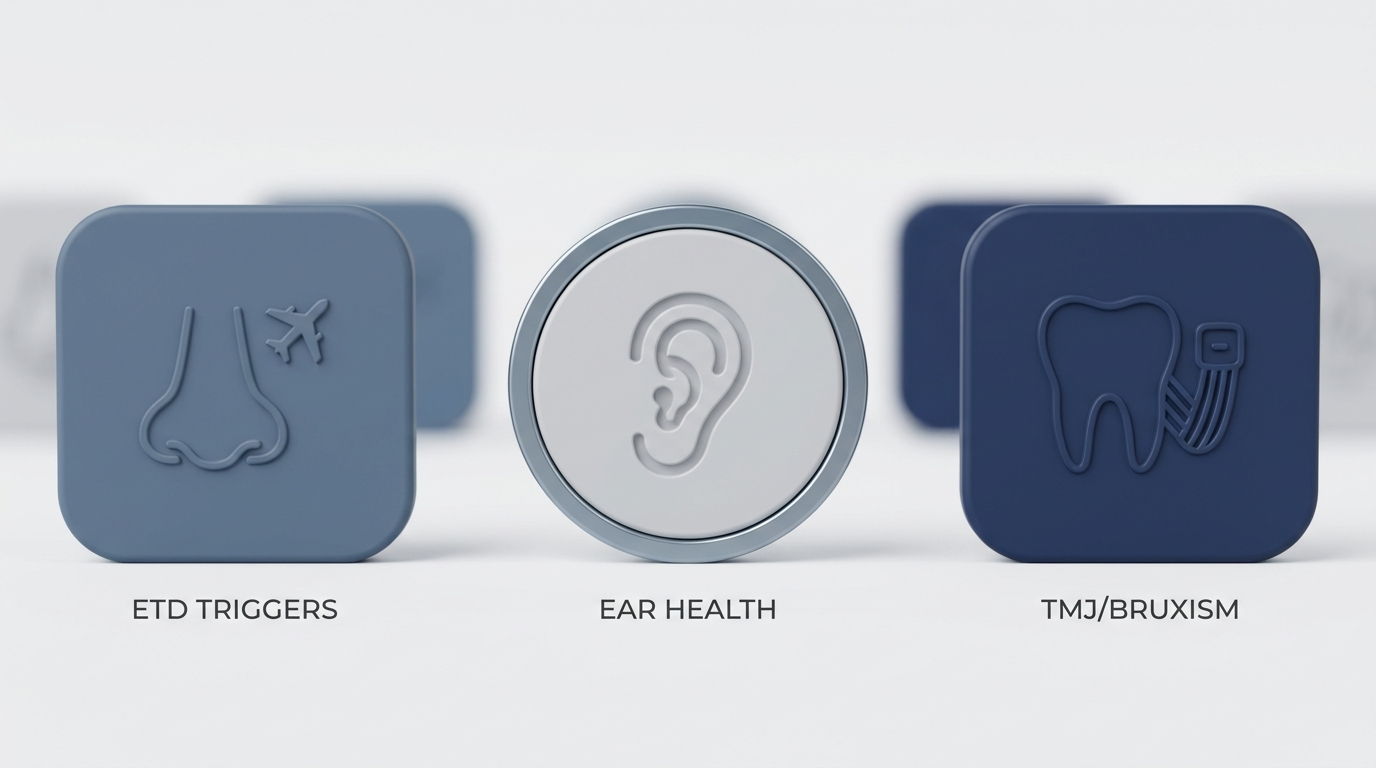
Ear fullness (pressure, plugged ear, cannot pop ears)
Common in TMD populations even when the ear exam is normal. It may feel like ETD: pressure, muffling, or trouble popping the ears (Mejersjö, 2021). You might notice it after long meetings, stressful drives, or intense workouts, with little change from swallowing or yawning.
Note: ETD is also common and treatable, so pattern clues help. This section is for general understanding only.
More like ETD when: nasal allergies/congestion are prominent; tympanometry or ear exam shows pressure changes; worse with flights, altitude, or colds.
More like TMJ/bruxism when: ear exam is normal; worse with chewing, clenching, or stress; accompanied by jaw soreness, temple headaches, or facial fatigue.
ETD overview: https://sleepandsinuscenters.com/blog/eustachian-tube-dysfunction-symptoms-causes-effective-treatment-options
Note: If your “ETD” never behaves like ETD, consider a jaw contribution.
Ear pain (otalgia) with a normal ear exam
Classic when there is no infection, wax blockage, or fluid, yet pain is real. Clues include pain with chewing, jaw tenderness, temple headaches, or spikes after stress or prolonged focus. (Mejersjö, 2021)
Tinnitus (ringing/buzzing) that fluctuates with jaw movement or stress
Some tinnitus is influenced by head/neck/jaw input (somatic tinnitus). TMD/bruxism can coexist with tinnitus and may worsen severity or distress in some patients. Clue: ringing changes with clenching, chewing, jaw movements, or pressing on jaw/neck muscles. (Peleg, 2022; DiPalma, 2025) Tinnitus resources: https://sleepandsinuscenters.com/blog/ent-care-for-tinnitus-relief-effective-treatments-and-tips
Throat and neck symptoms
Jaw and neck muscles work together. Frequent clenching can bring neck tightness, shoulder tension, a “lump in throat” sensation, or voice fatigue tied to tension patterns. Many causes exist for throat symptoms, so context matters. (Johns Hopkins Medicine, TMD)
Why jaw clenching affects the ears and throat (simple mechanisms)
Referred pain pathways: the TMJ, teeth, and parts of the ear share sensory pathways (trigeminal system). Irritation in jaw structures can be perceived as ear pain. (Mejersjö, 2021)
Muscle tightness and near-ear mechanics: overactive jaw and nearby muscles can contribute to pressure or fullness sensations; reviews describe plausible muscular and functional connections near middle-ear and Eustachian tube function for some. (Mejersjö, 2021; Shetty, 2011)
Irritation-sensitivity loop: clenching leads to fatigue and increased sensitivity, then guarding/tension, amplified by stress and poor sleep. (Shetty, 2011; MedlinePlus, Bruxism)
Signs your ear problem might be bruxism/TMD-related
- Ear fullness/pain that comes and goes
- Worse in the morning or after stressful/focused days
- Jaw clicking/popping, limited opening, or chewing discomfort
- Headaches at the temples, facial soreness, or jaw fatigue
- Symptoms that change when you clench, yawn, or move your jaw
When it is less likely to be TMJ/bruxism
Get prompt care for sudden hearing loss; severe dizziness/neurologic symptoms; fever, ear drainage, or rapidly escalating ear pain; trouble breathing/swallowing or severe throat symptoms.
Causes and risk factors—why some people clench/grind more
- Stress, anxiety, and concentration clenching, especially with screens, driving, or intense tasks. (MedlinePlus; Shetty, 2011)
- Sleep fragmentation, including possible sleep apnea; note snoring, gasping, or marked daytime sleepiness. (Shetty, 2011)
- Bite alignment, dental issues, and muscle habits; bite is not always the main driver but can contribute. (Shetty, 2011)
- Caffeine, alcohol, nicotine, and certain medications may amplify symptoms. (MedlinePlus)
Identifying your personal triggers helps target the most effective next steps.
How doctors figure it out (ENT + dental teamwork)
It is possible to have more than one issue (for example, ETD plus clenching). Addressing only one problem can leave stubborn symptoms behind. Coordinated care prevents either/or thinking and speeds relief.
What an ENT visit may include
- Otoscopy to rule out infection, wax, or visible problems
- Hearing testing and/or tympanometry when indicated
- Screening for ETD, sinus/allergy inflammation, and sometimes reflux-related throat irritation
What a dental/TMJ evaluation may include
- Tooth wear, enamel cracks, gum recession, or bite changes
- Jaw range of motion, joint tenderness/clicking, and muscle trigger points
- Sleep history, including whether a partner has noticed grinding (Johns Hopkins Medicine, TMD)
Why both evaluations matter
Address what is truly in the ear and what is being driven by the jaw to improve outcomes.
Treatments that actually help (stepwise, patient-friendly)
Plans are typically conservative first, then tailored based on response and findings.
Self-care and lifestyle strategies (often first line)
- Practice a relaxed jaw resting posture: lips together, teeth apart
- Heat for sore jaw muscles
- Temporarily reduce gum chewing or very hard/chewy foods
- Stress management (breathing routines, short breaks, counseling/CBT when appropriate)
- Sleep hygiene (consistent schedule; reduce late caffeine/alcohol) (MedlinePlus; Johns Hopkins Medicine, TMD)
Small, consistent habits can meaningfully reduce jaw overload.
Dental treatments
- Night guard/occlusal splint to protect teeth and reduce nighttime overload; custom-fit devices are often preferred
- Dental repair if grinding has damaged teeth
- In selected cases, prescription interventions such as botulinum toxin may be discussed after evaluation and informed consent (Shetty, 2011; MedlinePlus)
Dental protection plus habit change often works better than either alone.
Physical therapy and targeted muscle work
Jaw and neck physical therapy, posture retraining, and trigger point work can help, especially when neck/shoulder tension perpetuates jaw symptoms. (Johns Hopkins Medicine, TMD)
ENT-focused care when ear symptoms are prominent
- ETD-like symptoms may improve when nasal inflammation or allergies are treated
- For TMJ-related tinnitus or bothersome ringing, tinnitus care may include education, sound strategies, and addressing contributing conditions (Mejersjö, 2021; Peleg, 2022; DiPalma, 2025)
Treat what is truly in the ear—and what is feeding it from the jaw.
When medications are used
Short-term anti-inflammatories or prescription muscle relaxants may be considered as part of a broader plan. These require clinician guidance and are not one-size-fits-all. (Johns Hopkins Medicine, TMD)
Simple wellness habits to discuss with your clinician (a 7-day trial)
These general ideas are not a personalized treatment plan. If you have jaw locking, a recent injury, or other conditions, ask your clinician before trying new routines.
Daytime: brief check-ins a few times per day—drop shoulders, soften the jaw, let the teeth separate, and breathe gently through the nose with the tongue on the palate.
Evening: warm compress to the jaw/cheek if muscles feel tired; choose softer foods on days when chewing increases symptoms; short wind-down routine (lower light, fewer screens, calmer pace).
Sleep: if you suspect night grinding, prioritize a dental evaluation for a fitted guard; if you notice loud snoring, gasping, or marked daytime sleepiness, consider an ENT/sleep evaluation.
FAQs
Q: Can bruxism cause ear fullness even if my ears look normal?
A: Yes. Ear fullness is commonly reported in TMD/bruxism populations and may relate to muscular dysfunction and referred sensations. (Mejersjö, 2021)
Q: Can jaw clenching make tinnitus worse?
A: Evidence supports coexistence and suggests TMD/bruxism can exacerbate tinnitus severity or distress for some patients. (Peleg, 2022; DiPalma, 2025)
Q: How can I tell the difference between TMJ ear pain and an ear infection?
A: Infection is more likely with fever, drainage, and acute illness. TMJ-related ear pain is more likely when there is jaw tenderness, chewing pain, and a morning/stress-related pattern. (Mejersjö, 2021)
Q: Will a night guard stop tinnitus?
A: Night guards may help when jaw dysfunction contributes to tinnitus, but outcomes vary and should be discussed with a provider. (Peleg, 2022; DiPalma, 2025)
Q: When should I see an ENT vs a dentist?
A: See a dentist/TMJ specialist for tooth wear, jaw pain/clicking, or suspected grinding. See an ENT for persistent ear fullness/pain/tinnitus, hearing changes, or significant throat symptoms—coordination is often ideal. (Johns Hopkins Medicine, TMD)
Q: What are red flags that need urgent care?
A: Sudden hearing loss, severe dizziness/neurologic symptoms, ear drainage with severe pain, trouble breathing/swallowing, or rapidly worsening one-sided symptoms.
Key takeaways and next steps
- Bruxism/TMD is a common, often overlooked contributor to ear fullness, ear pain, and tinnitus-like symptoms. (Mejersjö, 2021; Peleg, 2022; DiPalma, 2025)
- The best results often come from addressing both the jaw and any true ENT condition.
- If you have ongoing jaw-related ear symptoms—especially with jaw soreness, headaches, or tooth wear—consider a coordinated evaluation.
Schedule an appointment with Sleep & Sinus Centers of Georgia: https://sleepandsinuscenters.com/appointments
References
Mejersjö C. (2021). Review on aural symptoms in orofacial pain/TMD. https://pmc.ncbi.nlm.nih.gov/articles/PMC8638311/
Shetty S. (2011). Bruxism literature review. https://pmc.ncbi.nlm.nih.gov/articles/PMC3081266/
DiPalma G. (2025). Study linking TMD/bruxism and tinnitus. https://pmc.ncbi.nlm.nih.gov/articles/PMC11818186/
Peleg O. (2022). TMD/bruxism prevalence in tinnitus clinic. https://www.mdpi.com/2076-3417/12/10/4970
MedlinePlus. Bruxism. https://medlineplus.gov/ency/article/001413.htm
Johns Hopkins Medicine. Temporomandibular Disorder (TMD). https://www.hopkinsmedicine.org/health/conditions-and-diseases/temporomandibular-disorder-tmd
This article is for educational purposes only and is not medical advice. Please consult a qualified healthcare provider for diagnosis and treatment.
Don’t let allergies slow you down. Schedule a comprehensive ENT and allergy evaluation at Sleep and Sinus Centers of Georgia. We’re here to find your triggers and guide you toward lasting relief.