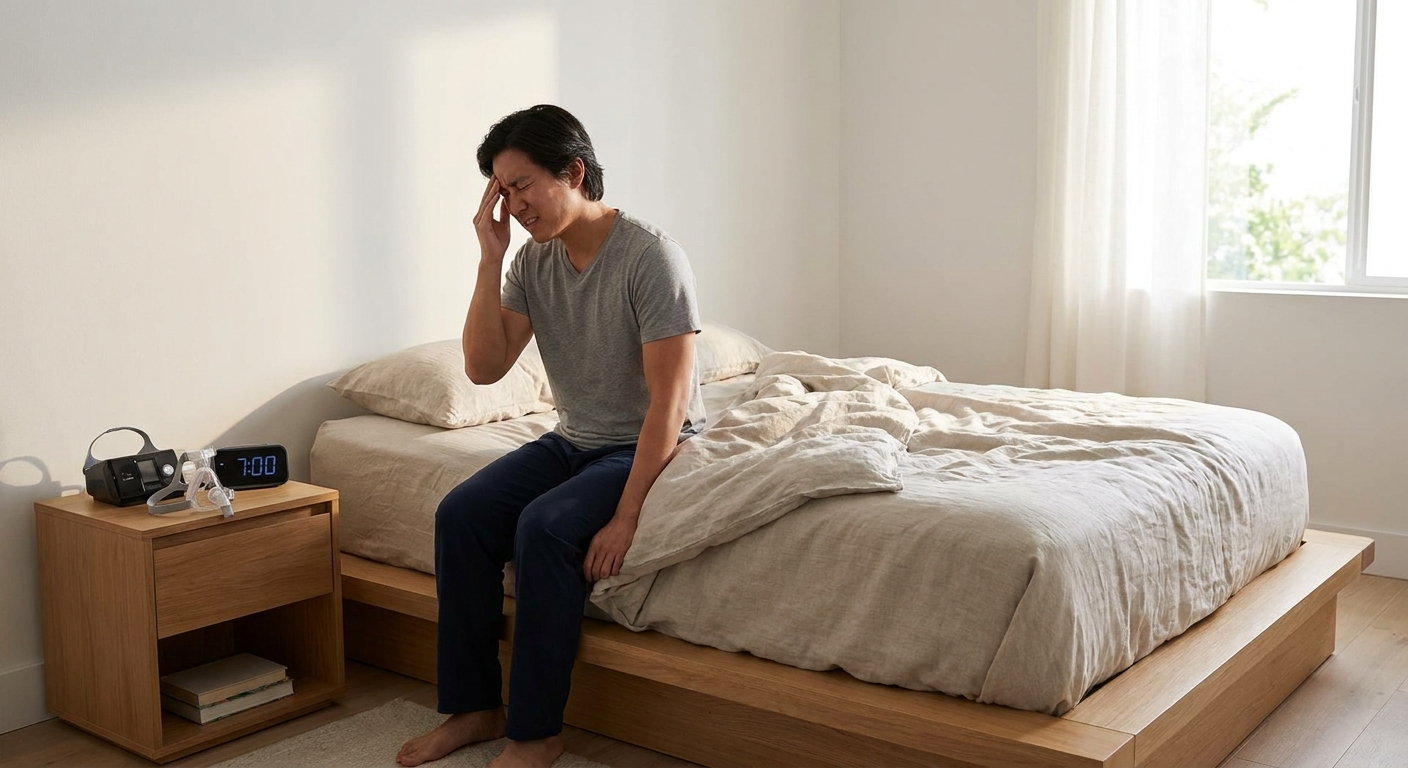
CPAP Claustrophobia: How to Overcome Mask Anxiety and Sleep Better
Starting CPAP can be a big adjustment—especially if wearing a mask triggers fear, panic, or the urge to rip it off. If that’s happening to you, you’re not alone, and you’re not “bad at CPAP.” CPAP claustrophobia and CPAP mask anxiety are common obstacles early on, and they’re a major reason people struggle with early and long-term CPAP use. [1][2]
The good news: success rarely means “perfect all-night use on night one.” For many people, it looks like steady progress over days or weeks—made easier by the right mask, comfort settings, and a structured acclimation plan. Think of it like breaking in new shoes: the goal isn’t to sprint on day one, it’s to get comfortable step by step.
- It’s okay to go slow; steady, supported progress counts. -
Quick reassurance: you’re not “failing” CPAP—this is common
The first couple of weeks tend to be the hardest because your brain and body are learning a new sleep routine: straps on the face, airflow sensations, hose movement, and the sound of the machine. Even when CPAP is helping your breathing, the newness can trigger an alarm response—especially for people who are sensitive to facial coverage or have a history of anxiety at night. [1][2]
Many clinicians hear some version of: “I know it’s helping, but the moment the mask goes on, I panic.” That doesn’t mean you’re doing anything wrong. It means your nervous system is treating the mask as a threat—and it can be retrained.
If you’re dealing with CPAP claustrophobia, try to measure progress in small, repeatable wins:
• Wearing the mask calmly for 10–20 minutes while awake
• Falling asleep with it (even if you wake up and remove it later)
• Keeping it on longer each night, little by little
- Small, consistent wins add up to real progress. -
What is CPAP claustrophobia (and how it differs from discomfort)?
CPAP claustrophobia vs. “this mask is annoying” — Not all CPAP problems are claustrophobia.
• Claustrophobia / anxiety response: A fear or panic reaction to facial coverage, airflow, or straps. You may feel trapped or unsafe even if the mask fit is technically adequate.
• Discomfort / mechanical issues: Pressure points, a sore nose bridge, dry mouth, noisy leaks, or irritation. These often improve with mask sizing, fit adjustments, humidification, or a different mask style. [1]
Both matter—because discomfort can fuel anxiety. For example, a loud leak can startle you, and that “jolt” can spiral into “I can’t breathe.” Fixing comfort issues doesn’t replace anxiety tools, but it often lowers the intensity of the trigger.
Mask anxiety and panic symptoms can be physical (not just “in your head”). When CPAP-related anxiety at night shows up, the body can flip into fight-or-flight: tight chest, rapid heartbeat, “air hunger,” nausea—even when CPAP is helping your breathing and may improve oxygen levels.
That’s why reassurance alone often isn’t enough. Many people do better with a practical plan: reduce triggers, build tolerance gradually, and use calming skills while you retrain your nervous system.
- Address both comfort and anxiety; they reinforce each other. -
Symptoms of CPAP mask anxiety (what patients commonly report)
Emotional + cognitive symptoms
• Sudden fear or dread at bedtime
• Racing thoughts like “I can’t breathe” or “I’m stuck”
• Feeling on-edge the moment the mask goes on
Physical symptoms
• Rapid heartbeat
• Sweating
• Chest tightness or a sensation of shortness of breath
• Nausea or dizziness
• A strong urge to pull the mask off immediately
Behavioral signs (often overlooked)
• Falling asleep, then waking up panicked (a classic pattern with CPAP-related panic symptoms)
• Postponing bedtime because you’re dreading the mask
• Skipping CPAP “just tonight,” then finding it becomes a habit
• Removing the mask unconsciously during sleep
- Recognizing the pattern is the first step toward changing it. -
Causes and triggers: why CPAP can feel claustrophobic
Mask design and facial coverage: For some people, full-face masks feel more confining simply because there’s more facial contact. For others, the same mask feels secure and calming. There’s no universal “best”—but minimal-contact options are often a turning point for people prone to claustrophobia. [3][4] If your brain is reacting to “too much on my face,” reducing contact points can lower the alarm signal.
Air pressure sensations (and mismatch with your breathing): Airflow can feel strange at first—especially if the pressure ramps up faster than you’re comfortable with, exhaling feels resisted, or you feel “air-hungry.” Comfort features and settings can help, and your sleep team can guide those adjustments. [1]
Learned fear response + past experiences: If you’ve had prior panic attacks, medical anxiety, PTSD, or you already dislike anything touching your face, CPAP can become a powerful trigger. The brain can learn “mask = danger” quickly—then repeat that alarm at bedtime until it’s retrained.
Nasal congestion or mouth leak amplifying panic: If nasal breathing is limited, the mask can feel intolerable—even if it’s technically working. Nasal blockage and mouth leak can increase dryness, noise, and the sensation that breathing is harder than it should be. Addressing nasal airflow is often a major turning point. [1]
- Reducing coverage, improving comfort, and supporting nasal breathing can lower the brain’s alarm signal. -
The equipment changes that help most (often the fastest wins)
The right mask style, correct sizing, and small comfort tweaks reduce triggers that feed panic and make CPAP feel more tolerable.

Choose a minimal-contact mask (often helpful for claustrophobia)
For many people, the best CPAP mask is the one that feels least “present” on the face. A nasal pillow mask may help if you feel panicky with anything covering your mouth or nose, dislike pressure on the bridge of your nose, or want a lighter, less confining feel. [3][4] If you have significant nasal obstruction or persistent mouth breathing, address those issues with your clinician.
Learn more: Full Face vs. Nasal Pillow Masks: Which CPAP Mask is Best for You
https://sleepandsinuscenters.com/blog/full-face-vs-nasal-pillow-masks-which-cpap-mask-is-best-for-you
Re-check mask fit and sizing (too tight often worsens panic)
When anxious, it’s common to overtighten straps for “security.” That can increase pressure points, worsen leaks (by warping the cushion), and increase the “trapped” sensation. Correct sizing, strap placement, and comfort accessories (liners, softer headgear) can make a big difference.
Guide: CPAP Mask Sizing Guide: Find the Perfect Fit for Comfortable Sleep
https://sleepandsinuscenters.com/blog/cpap-mask-sizing-guide-find-the-perfect-fit-for-comfortable-sleep
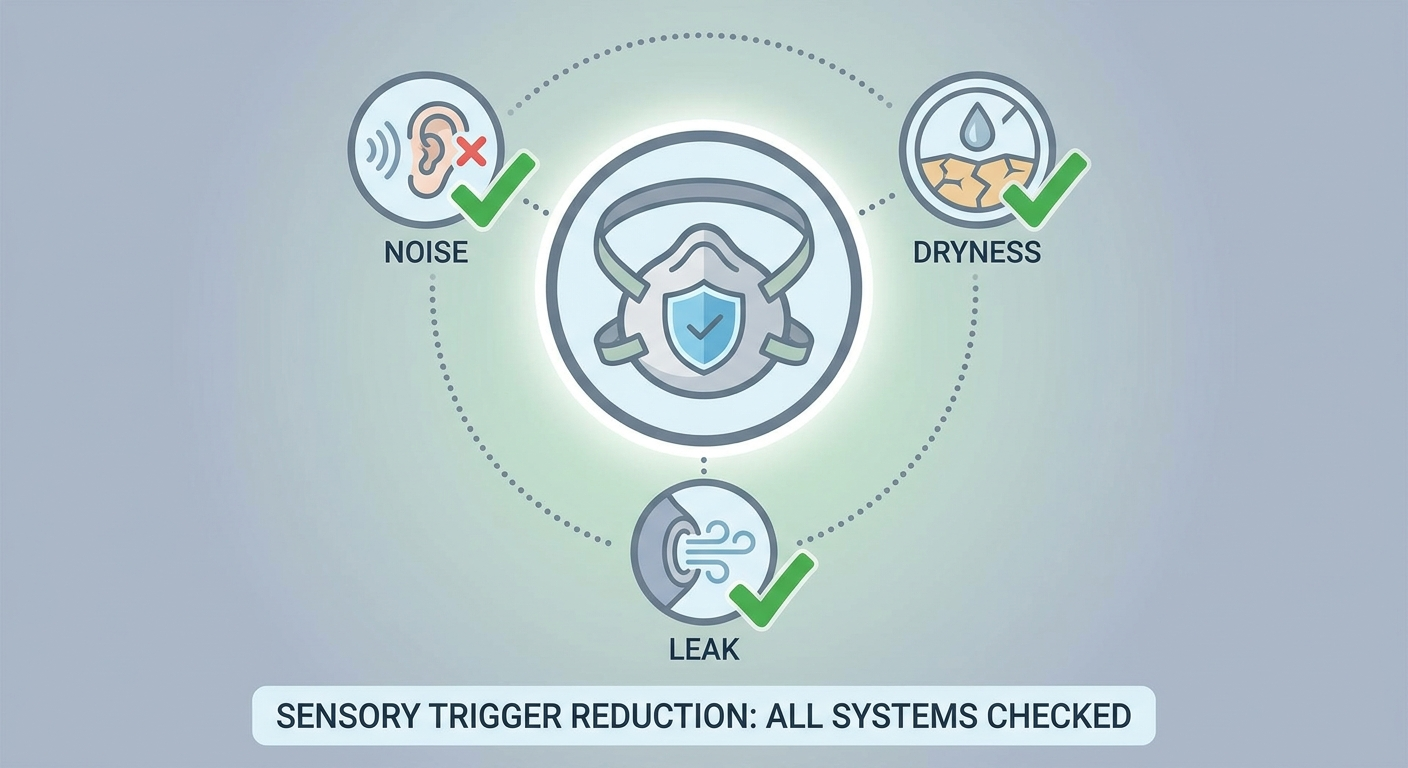
Reduce sensory triggers (noise, leaks, dryness)
Small sensory issues can provoke big anxiety—especially at bedtime. Troubleshoot leaks that startle you awake, hose positioning that tugs, and dryness that can mimic “not enough air.” [1]
CPAP humidifier settings guide
https://sleepandsinuscenters.com/blog/cpap-humidifier-settings-guide-for-optimal-therapy-comfort
Mask leak solutions: quick fixes to stop air leaks
https://sleepandsinuscenters.com/blog/mask-leak-solutions-quick-fixes-to-stop-air-leaks
Fixing CPAP mouth leaks
https://sleepandsinuscenters.com/blog/effective-cpap-mouth-leak-fixes-top-solutions-for-better-therapy
- Small comfort tweaks can make the mask feel safer and more tolerable. -

Gradual desensitization: the step-by-step method that retrains your brain
The goal is simple: teach your nervous system that the mask and airflow are safe. Short daytime practice sessions (often 10–20 minutes) paired with neutral or pleasant activities help your brain file “mask on = safe, normal.” [2][3]
An example framework: a 7–14 day “CPAP acclimation plan” (personalize with your clinician)
• Days 1–3: Hold the mask to your face while breathing calmly. Then wear it with straps on (machine off).
• Days 4–6: Wear the mask with the machine on while sitting up for 10–20 minutes.
• Days 7–10: Wear it lying down with the machine on for 20–40 minutes.
• Days 10–14: Try it for the first segment of sleep, then gradually increase time.
Evidence-supported clinical approaches: For persistent claustrophobia, structured exposure (in vivo desensitization) can help patients tolerate nasal CPAP. [5]
- Gentle, repeatable practice teaches your brain that mask time is safe. -
Psychological strategies that may reduce CPAP-related panic symptoms
Combine calming skills with equipment comfort and clinician guidance for best results.

Breathing techniques you can do with the mask on
Use slow, steady breathing (gentle inhale, longer exhale) while relaxing jaw, shoulders, and hands. If exhaling feels difficult, ask your clinician about comfort settings like ramp or exhalation relief. [1]
Mindfulness or meditation for bedtime mask anxiety
A brief body scan or guided relaxation can reduce reactivity to airflow, strap pressure, or machine sound—especially when paired with comfort improvements. [2][3]
Cognitive Behavioral Therapy (CBT) or talk therapy
CBT helps challenge catastrophic thoughts (“I’ll suffocate,” “I’ll lose control”) and replace them with more accurate, calming statements. [2]
If you have panic disorder, trauma history, or severe insomnia
Many people do best with combined support—sleep medicine plus mental health tools—rather than trying to push through alone.
- Calming skills work best alongside equipment comfort and clinician guidance. -
Lifestyle and comfort tips to make CPAP feel safer at night
• Keep lighting low and the room comfortably cool
• Use a predictable pre-sleep routine (same steps, same order)
• Consider white noise if sound sensitivity keeps you on edge
If sound is a major trigger: Why CPAP noise keeps me awake (and what to do)
https://sleepandsinuscenters.com/blog/why-cpap-noise-keeps-me-awake-happens--and-how-ent-can-help
Don’t start CPAP when you’re already revved up: Build in 5–10 minutes of wind-down time to reduce panic spikes.
Address nasal breathing barriers early: Improving nasal airflow can reduce “trapped” sensations and improve comfort. [1]
Blocked Nose During CPAP: ENT Strategies
https://sleepandsinuscenters.com/blog/blocked-nose-during-cpap-ent-strategies
- A calmer body and clearer nose make CPAP feel less threatening. -
When to talk to your sleep team (instead of pushing through)
Red flags that deserve follow-up
• Repeated panic symptoms or repeatedly removing the mask
• Feeling like you can’t exhale comfortably
• Severe dryness, nosebleeds, or mask pain
• Feeling more sleepy (or not improving) despite attempting CPAP

What your clinician may adjust
Common adjustments include ramp settings, exhalation comfort features, mask type, humidification, pressure range (for APAP), and evaluation for nasal obstruction. [1] At Sleep and Sinus Centers of Georgia, these follow-ups often uncover the “missing piece” that makes CPAP feel doable.
- If problems persist, partner with your sleep team to fine-tune therapy. -
FAQs about CPAP claustrophobia and mask anxiety
“Why do I feel like I can’t breathe with CPAP when it’s giving me air?”
This is often a sensation mismatch plus a fight-or-flight response. Comfort settings (like ramp/exhalation relief) and gradual practice usually help. [1][2]
“What’s the best CPAP mask for claustrophobia?”
Often a minimal-contact option—especially nasal pillows—because there’s less facial coverage. It must still match your breathing pattern and nasal airflow. [3][4]
“How long does it take to get used to CPAP?”
Some people improve within 1–2 weeks with consistent daytime practice; others need more time.
“Should I force myself to wear it all night?”
For many, forcing increases anxiety. A gradual approach (calm, partial-night use building up) is often more sustainable.
“Can therapy help if my anxiety is severe?”
Yes. CBT and exposure-based approaches can improve tolerance and reduce CPAP-related panic symptoms, especially when paired with equipment optimization. [2][5]
Conclusion: A practical next step you can take tonight
If CPAP claustrophobia is getting in the way, aim for one small, concrete step—rather than trying to solve everything at once:
• Pick one equipment change (for example, ask about a minimal-contact mask style)
• Pick one skill: do a 10–20 minute daytime wear session to build tolerance
If you’re not seeing improvement—or you’re experiencing repeated panic episodes related to CPAP—schedule a follow-up so your settings, mask, and nasal airflow can be reviewed.
Ready for help troubleshooting your mask, settings, or nasal breathing? Book an appointment here:
https://sleepandsinuscenters.com/appointments
- One small step tonight can make tomorrow’s CPAP use easier. -
References
[1] Mayo Clinic. CPAP overview and troubleshooting/comfort tips (2024). https://www.mayoclinic.org/diseases-conditions/obstructive-sleep-apnea/in-depth/cpap/art-20044164
[2] Apria Healthcare. CPAP claustrophobia strategies (desensitization + relaxation). https://www.apria.com/home-healthcare-insights/cpap-claustrophobia
[3] Mayo Clinic. CPAP mask types and selection considerations. https://www.mayoclinic.org/diseases-conditions/sleep-apnea/in-depth/cpap-masks/art-20546828
[4] Healthgrades. Mask options for people with claustrophobia. https://resources.healthgrades.com/right-care/sleep-disorders/best-cpap-masks-for-people-with-claustrophobia
[5] PubMed. Desensitization helping claustrophobic patients tolerate CPAP. https://pubmed.ncbi.nlm.nih.gov/7904770/
This article is for educational purposes only and is not medical advice. Please consult a qualified healthcare provider for diagnosis and treatment.
Don’t let allergies slow you down. Schedule a comprehensive ENT and allergy evaluation at Sleep and Sinus Centers of Georgia. We’re here to find your triggers and guide you toward lasting relief.