Common Cold Virus Name: What It’s Called and Why It Matters
Quick summary
- The “common cold” is not one virus—it’s an umbrella term for infections caused by more than 200 different viruses or viral types. [CDC] [NIH/PMC]
- Rhinoviruses are the most frequent cause (especially in the U.S.). [CDC] [NIH/PMC]
- Many colds are caused by non-rhinovirus viruses such as seasonal human coronaviruses, adenoviruses, parainfluenza viruses, and human metapneumovirus. [NIH/PMC] [CDC]

What Is the “Common Cold,” Exactly?
A symptom label—not a single germ. When people say “I have a cold,” they’re usually describing a familiar cluster of upper respiratory tract symptoms—like a runny or stuffy nose, sore throat, sneezing, and cough. The key point is that “common cold” describes the illness pattern, not one specific virus.
An easy way to think about it: “cold” is like saying “upset stomach” or “sprained ankle.” It tells you what it feels like, but not necessarily what caused it. Different viruses can irritate the lining of the nose and throat in similar ways, which is why two people can feel nearly identical even if they caught different viruses. [CDC] [NIH/PMC]
Why people search “common cold virus name”: It’s completely understandable to want a clear label—especially when symptoms overlap with flu, COVID-19, allergies, or sinus infections. Common questions include: “Is this rhinovirus?” “Could this be coronavirus?” “How do I know it’s not the flu?” In real life, a household may share similar symptoms even if the exact virus differs. Names can matter in specific situations (like outbreaks, high-risk household members, or when testing is needed to rule out other infections). [CDC] [NIH/PMC]
In short, “cold” describes a symptom pattern, not a single germ—and that’s why so many different viruses can feel the same.
Common Cold Virus Name(s): The Main Viruses That Cause Colds
Instead of one “cold virus,” scientists group cold-causing viruses into families. Even though the viruses are different, the symptoms can look very similar—especially early on. A clinician might put it this way: your nose and throat can only respond in so many ways—swelling, mucus, irritation—so lots of viruses end up looking like the same illness.

Rhinovirus (the most common cold virus in the U.S.)
If you’re looking for the most likely common cold virus name, rhinovirus is at the top of the list. Rhinoviruses spread efficiently, especially in places where people share air and surfaces—schools, workplaces, gyms, and households.
They’re also one reason colds feel so common: there are many types, and immunity isn’t universal or permanent across them. So even if you’ve had a rhinovirus cold before, a different rhinovirus type can still cause a new infection later. Rhinovirus is widely cited as the most frequent cause of the common cold. [CDC] [NIH/PMC]
Seasonal human coronaviruses (not the same as COVID-19)
Some common colds are caused by seasonal human coronaviruses that circulate regularly. These are not the same as SARS‑CoV‑2 (the virus that causes COVID-19). From a symptom standpoint, seasonal coronaviruses can feel like many other colds—congestion, sore throat, cough—so you generally can’t tell which virus it is by feel alone. Testing decisions often depend on exposure, local trends, and personal risk factors. [CDC] [NIH/PMC]
Adenoviruses
Adenoviruses can also cause cold-like illness and sometimes come with a more intense sore throat, fever, or longer-lasting symptoms in some people. Someone might start with typical congestion but then feel unusually wiped out with a persistent sore throat for several days. [CDC—Adenoviruses] [NIH/PMC]
Parainfluenza viruses
Parainfluenza viruses are associated with a range of respiratory illnesses. Depending on the person and timing, infection can resemble a typical cold—especially early on, when it’s just a runny nose and cough. Clinicians often focus on severity and trajectory (getting better vs. worse), not just the initial symptom list. [CDC—HPIV] [NIH/PMC]
Human metapneumovirus (hMPV)
Human metapneumovirus (hMPV) can start like a cold and may be more significant for young children, older adults, and people with certain health risks. The same early symptoms can represent infections with different levels of risk in different people. [CDC—hMPV] [NIH/PMC]
Why “nearly half” of colds aren’t rhinovirus
Even though rhinovirus is the #1 cause, research shows a substantial portion of cold symptoms come from other viruses. Practically, that means symptoms alone usually can’t pinpoint the exact common cold virus name—and in many everyday cases, identifying the exact virus doesn’t change typical care. [NIH/PMC] [CDC]
A practical takeaway: the same cold symptoms can come from many viruses, which is why testing isn’t always necessary in routine cases.
Why the Common Cold Virus Name Matters (More Than You’d Think)
It explains why there’s no single cold vaccine: With more than 200 viral types implicated, a one-size-fits-all solution is extremely challenging, even within a single family like rhinoviruses. [CDC] [NIH/PMC]
It helps set expectations for treatment: Colds are viral, so antibiotics don’t treat the underlying cause of a routine cold and can cause side effects and resistance. For most people, the best approach is symptom relief plus time. [CDC]
It affects when testing is helpful: Testing is considered when symptoms are severe, a person is higher risk, there’s concern for influenza/COVID-19/RSV based on season and community spread, or there’s an outbreak setting. [CDC]
It reduces confusion with flu, COVID-19, allergies, and sinus infections: If you’re sorting through facial pressure, persistent congestion, and lingering symptoms, see this guide on sinus infection vs. cold: https://sleepandsinuscenters.com/blog/sinus-infection-vs-cold-how-to-tell-the-difference
Bottom line: knowing that many viruses cause colds helps explain why prevention, symptom care, and context-driven testing matter most.
Common Cold Symptoms (What Most People Feel)
Typical symptoms often include:
- Runny or stuffy nose
- Sneezing
- Sore throat
- Cough
- Mild fatigue
- Watery eyes
- Sometimes a low-grade fever (more common in children than adults)
A classic cold day example is waking up with a scratchy throat, spending the afternoon sneezing, and then noticing thicker congestion by evening.
Symptoms that can be more common in children:
- Higher fevers than adults (often still viral)
- Fussiness, reduced appetite
- Sleep disruption
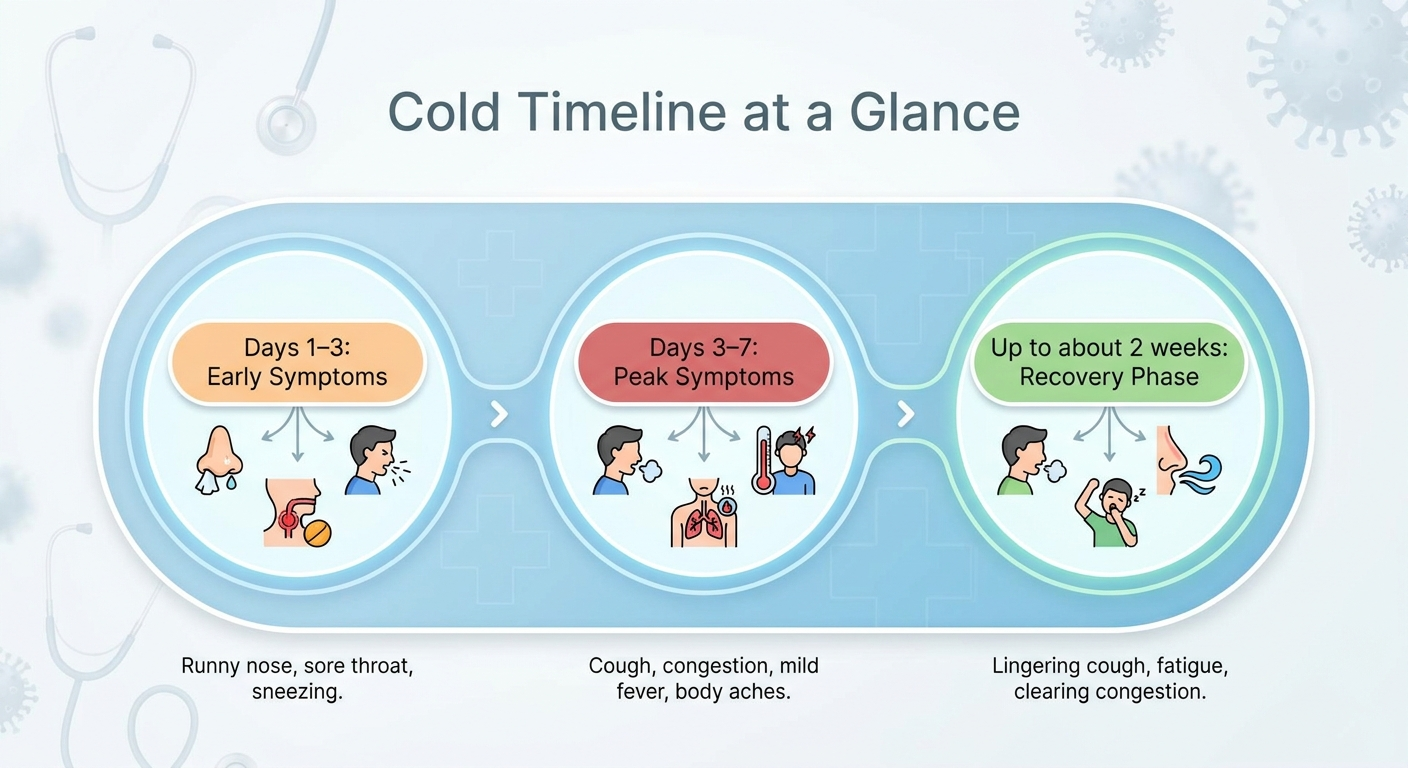
How long do symptoms last? General patterns:
- Days 1–3: sore throat, sneezing, runny nose often begin
- Days 3–7: congestion and cough become more noticeable
- Up to ~2 weeks: cough can linger for some people
Most uncomplicated colds improve within 1–2 weeks, with cough sometimes lingering a bit longer. [CDC]
Causes & Spread: How Cold Viruses Get Into Your Nose and Throat
Person-to-person transmission: Cold viruses commonly spread through close contact and respiratory droplets when someone coughs, sneezes, or talks at close range. [CDC]
Hands + surfaces still matter: Touching contaminated surfaces and then your eyes, nose, or mouth can also spread cold viruses, although close contact and respiratory spread are generally more important. [CDC]
Why you can catch colds repeatedly: Many different viruses—and many types within those viruses—can cause cold symptoms, and immunity varies over time. More on recurrent colds: https://sleepandsinuscenters.com/blog/what-are-recurrent-colds-causes-symptoms-and-when-to-see-a-doctor
Multiple viruses and changing immunity explain why most people get several colds over a year, especially during peak seasons.
Treatments for the Common Cold (What Helps, What Doesn’t)
This section is for educational purposes and does not replace individualized medical advice. Individuals—especially children, older adults, pregnant patients, and those with chronic conditions—may need tailored guidance. [CDC]
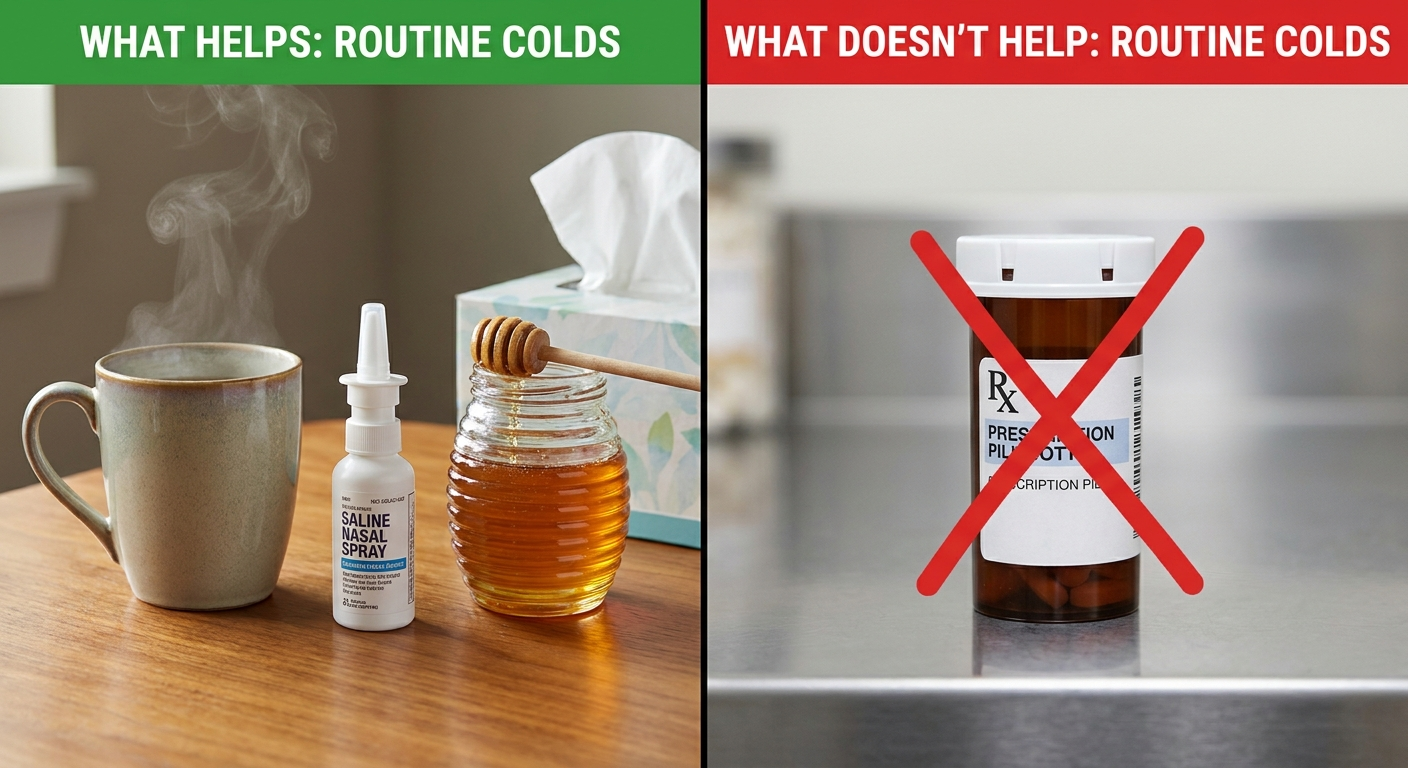
What you can do at home (supportive care):
- Rest and hydration
- Warm fluids; honey for cough in age-appropriate situations (not for children under 1 year)
- Saline spray or rinse for congestion
- Humidifier or steam for comfort (use safely and clean regularly)
Over-the-counter options (symptom-based):
- Pain and fever reducers for aches or fever (follow labels; children need special caution)
- Decongestants (may not be appropriate for everyone)
- Antihistamines (may reduce runny nose in some cases; can cause drowsiness)
What usually does not help:
- Antibiotics for routine viral colds
- Using leftover antibiotics
- Taking multiple combination cold medicines at once (risk of doubling ingredients)
When you might need medical care:
- Trouble breathing, chest pain, severe weakness, or signs of dehydration
- A high fever, a fever that persists, or a fever that returns after improving
- Symptoms that worsen after initial improvement
- Symptoms lasting longer than expected, especially with significant facial pain/pressure or thick nasal drainage
Special situation—using CPAP with a cold: Practical steps like humidity adjustments, mask-fit troubleshooting, and nasal hygiene can help. Tips: https://sleepandsinuscenters.com/blog/cpap-tips-for-using-your-machine-during-a-cold
For most people, time and targeted symptom relief are the mainstays—antibiotics aren’t useful for routine viral colds.

Lifestyle Tips to Prevent Colds (and Reduce Spread at Home)
Hand hygiene that works: Wash with soap and water or use alcohol-based sanitizer when appropriate—especially after blowing your nose, coughing/sneezing, or being in public spaces. [CDC—Handwashing]
Reduce household spread:
- Avoid sharing cups/utensils when someone is sick
- Clean high-touch surfaces (doorknobs, remote controls, faucets)
- Improve ventilation when possible
A simple sick-day setup helps: tissues nearby, a dedicated cup, and quick wipe-downs of most-touched surfaces.
Sleep, stress, and general support: Consistent sleep, balanced nutrition, hydration, and stress management support overall health. Be cautious with products marketed as “immune boosters.”
Simple habits—clean hands, cleaner air, and good sleep—lower your risk and limit household spread.
When It’s Not “Just a Cold”: Red Flags and Look-Alikes
Cold vs. flu vs. COVID-19 (simple comparison):
- Flu: often sudden onset, higher fever, prominent body aches
- COVID-19: can resemble a cold or flu; testing may be appropriate depending on symptoms/exposure/community levels
- Cold: symptoms often develop more gradually, though patterns vary
(Community trends and season matter.) [CDC—Colds vs. Flu]
Cold vs. allergies: Allergies often include itching (eyes/nose), recurrent seasonal patterns, and typically no fever.
Cold vs. sinus infection: Persistent or worsening symptoms may need an evaluation. Guide: https://sleepandsinuscenters.com/blog/sinus-infection-vs-cold-how-to-tell-the-difference
“Beyond the common cold” symptoms that deserve an ENT visit: If blockage, facial pressure, or “cold-like” symptoms keep returning—or never fully resolve—learn more: https://sleepandsinuscenters.com/blog/beyond-common-cold-ent
Trust your timeline and severity: if symptoms are severe, unusual, or not improving, get checked.
FAQs
What is the common cold virus name? There isn’t one single name. The most common cause is rhinovirus, but many other viruses can cause the same symptoms. [CDC] [NIH/PMC]
Is the common cold caused by coronavirus? Sometimes. Seasonal human coronaviruses can cause cold symptoms, but many colds are caused by other viruses. Seasonal coronaviruses are different from SARS‑CoV‑2 (COVID-19). [NIH/PMC] [CDC]
Why can’t we cure the common cold? Because the cold is caused by many viruses and types, and most infections resolve on their own—making a single cure difficult and often unnecessary for routine cases. [NIH/PMC] [CDC]
How many viruses cause the common cold? Over 200 different viruses or viral types have been implicated. [NIH/PMC] [CDC]
When should I see a doctor for a cold? Seek care for severe symptoms (like breathing difficulty), a high or persistent fever, a fever that returns, worsening after initial improvement, or symptoms lasting longer than expected—especially in higher-risk individuals. [CDC]
Conclusion: The Takeaway on “Common Cold Virus Name”
There isn’t just one common cold virus name. The common cold is a category of viral infections, and rhinovirus is the most frequent cause—while many other viruses can produce the same symptoms. Focus on prevention habits, symptom relief, and knowing when to seek evaluation if symptoms are severe, persistent, or frequently recurring.
CTA: If you’re dealing with frequent colds, lingering congestion, or sinus pressure, book an appointment with Sleep and Sinus Centers of Georgia.
References
- CDC — Common Cold overview: https://www.cdc.gov/common-cold/about/index.html
- NIH / PubMed Central — Heikkinen & Järvinen, The Common Cold: https://pmc.ncbi.nlm.nih.gov/articles/PMC104573/
- CDC — Adenoviruses: https://www.cdc.gov/adenovirus/index.html
- CDC — Human Parainfluenza Viruses (HPIV): https://www.cdc.gov/parainfluenza/index.html
- CDC — Human Metapneumovirus (hMPV): https://www.cdc.gov/human-metapneumovirus/
- CDC — Handwashing: https://www.cdc.gov/handwashing/
- CDC — Cold vs. Flu: https://www.cdc.gov/flu/symptoms/coldflu.htm
This article is for educational purposes only and is not medical advice. Please consult a qualified healthcare provider for diagnosis and treatment.
Don’t let allergies slow you down. Schedule a comprehensive ENT and allergy evaluation at Sleep and Sinus Centers of Georgia. We’re here to find your triggers and guide you toward lasting relief.