Common Cold Contagious Period: How Long Are You Contagious?
If you’ve ever had a cold, you’ve probably asked yourself: Am I still contagious? It’s a common worry—especially if you live with family, share a workspace, or spend time around people at higher risk for complications, such as infants, older adults, or immunocompromised individuals.
The reassuring news is that the common cold is usually most contagious early in the illness, and the chance of spreading the virus generally declines as days pass. The tricky part is that cold viruses can spread before you feel sick, which is one reason colds move so quickly through households, schools, and offices. Source: https://my.clevelandclinic.org/health/diseases/12342-common-cold
Think of it like a lit match: the flame of contagiousness often burns hottest at the beginning, then fades—even if some symptoms linger.
Quick Answer (TL;DR)
- Most contagious: typically the first 2–3 days of illness, when symptoms like sneezing, runny nose, and coughing often peak.
- Contagious before symptoms: you can sometimes spread a cold about 1–2 days before symptoms appear.
- How long it can last: risk generally drops after the first week, though viral shedding and some transmission risk may persist longer in some cases (often at a lower level).
- Practical takeaway: consider being especially cautious during the first several days after symptoms begin, when spread risk is often highest. Sources: https://www.citymd.com/health-and-wellness/spreading-sneeze-how-long-is-cold-contagious, https://www.cdc.gov/respiratory-viruses/prevention/precautions-when-sick.html
A quick real-life example: if your throat feels a little scratchy on Monday and you’re fully congested by Tuesday, Monday may have already been part of the contagious window.
If you’re also trying to compare illnesses, you may find this helpful: sinus infection contagious period https://sleepandsinuscenters.com/blog/sinus-infection-contagious-period-how-long-are-you-contagious
In short: be most careful early on—and remember you might be contagious just before symptoms start.
What Is the Common Cold?
What causes a cold? The common cold isn’t one single virus. Many viruses can cause cold symptoms—rhinoviruses are a frequent culprit, but they’re not the only ones. Because there are many different viruses (and many variants), it’s possible to catch multiple colds in the same season, even if you recently recovered from one. Sources: https://www.pennmedicine.org/conditions/common-cold, https://my.clevelandclinic.org/health/diseases/12342-common-cold
This also helps explain why the contagious period can feel confusing: two people can both say I have a cold, but their symptoms, severity, and timelines may differ.
Common cold vs. flu vs. COVID—why it matters for isolation
Colds can overlap with flu and COVID symptoms, especially early on (congestion, cough, sore throat, fatigue). Flu and COVID often cause fever, stronger body aches, and more pronounced fatigue, though symptoms can vary. In many communities, testing is a practical way to clarify what you’re dealing with—particularly after a known exposure or if symptoms feel more severe than a typical cold. Sources: https://www.pennmedicine.org/conditions/common-cold, https://my.clevelandclinic.org/health/diseases/12342-common-cold
If you’re unsure, a simple severity check can help: if you’re suddenly wiped out, running a higher fever, or symptoms feel out of proportion to your usual colds, it’s reasonable to consider flu or COVID as possibilities.
For a deeper comparison, see sinus infection vs. cold https://sleepandsinuscenters.com/blog/sinus-infection-vs-cold-how-to-tell-the-difference
Bottom line: lots of viruses cause cold symptoms—testing and severity cues can help you tell them apart.
How the Common Cold Spreads (And Why Early Days Matter)
Main transmission routes. Cold viruses can spread through close contact and respiratory secretions:
- Respiratory droplets and small particles when someone coughs, sneezes, or talks at close range
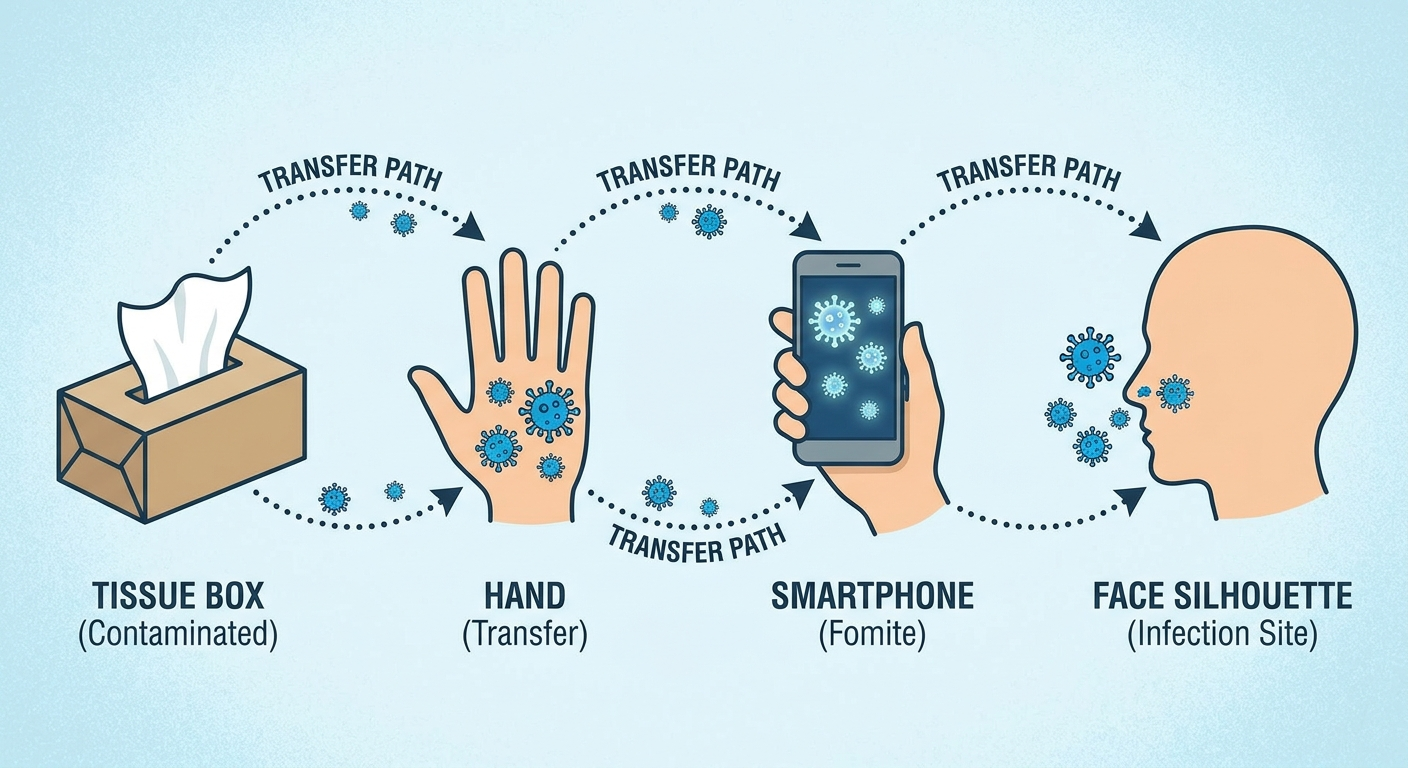
- Hands and surfaces, when virus gets onto fingers (from tissues, doorknobs, shared devices) and then reaches the eyes, nose, or mouth
Source: https://www.cdc.gov/respiratory-viruses/prevention/precautions-when-sick.html
A practical example: someone wipes their nose, taps a shared phone or door handle, and another person later touches that surface and then rubs their eye—an easy chain of events, especially in busy homes or offices.
Why early symptoms increase spread. The first few days often include the symptoms that move the most virus out of the body—frequent sneezing, runny nose, and coughing. Another factor is behavior: people are often still attending work, school, or social events early on because they’re not sure it’s a cold yet—or they feel not that sick. That combination helps explain why the common cold contagious period can feel so disruptive in group settings. Source: https://www.cdc.gov/respiratory-viruses/prevention/precautions-when-sick.html
Key idea: early sneezing, runny nose, and coughing—plus regular activities—often drive the most spread.
Common Cold Contagious Timeline (Day-by-Day Guide)
Below is a patient-friendly cold contagious timeline. Individual experiences vary, but this framework helps answer when you are most contagious with a cold.
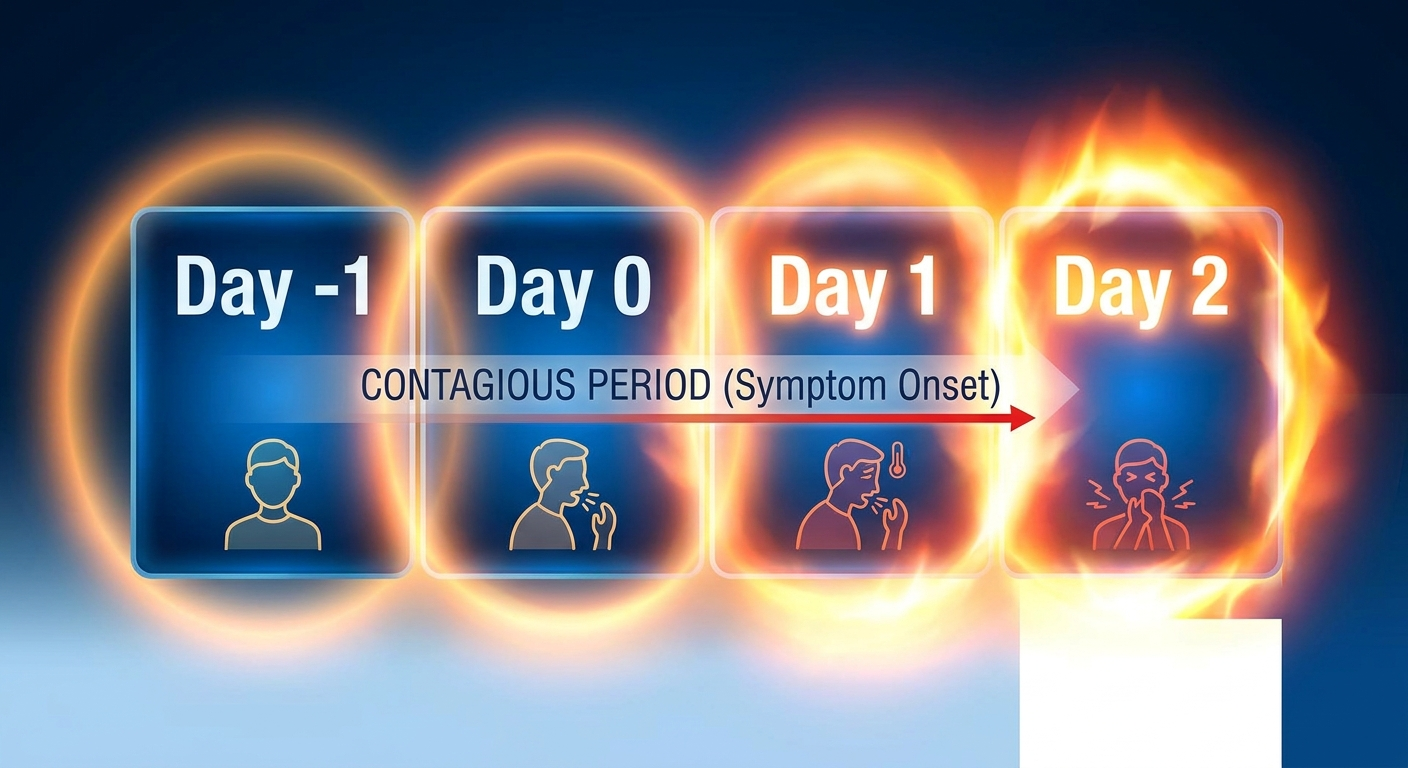
Day -2 to Day 0 (Before symptoms)
Yes, it’s possible to be contagious before symptoms. You can sometimes spread a cold about 1–2 days before you notice you’re sick. This is especially important in households with infants, older adults, or people with chronic health conditions—extra hand hygiene, ventilation, and avoiding close face-to-face contact may reduce risk after a known exposure. Source: https://www.citymd.com/health-and-wellness/spreading-sneeze-how-long-is-cold-contagious
Helpful mindset: if someone in your home has a cold, treat the next couple of days like a caution window, even if you feel fine.
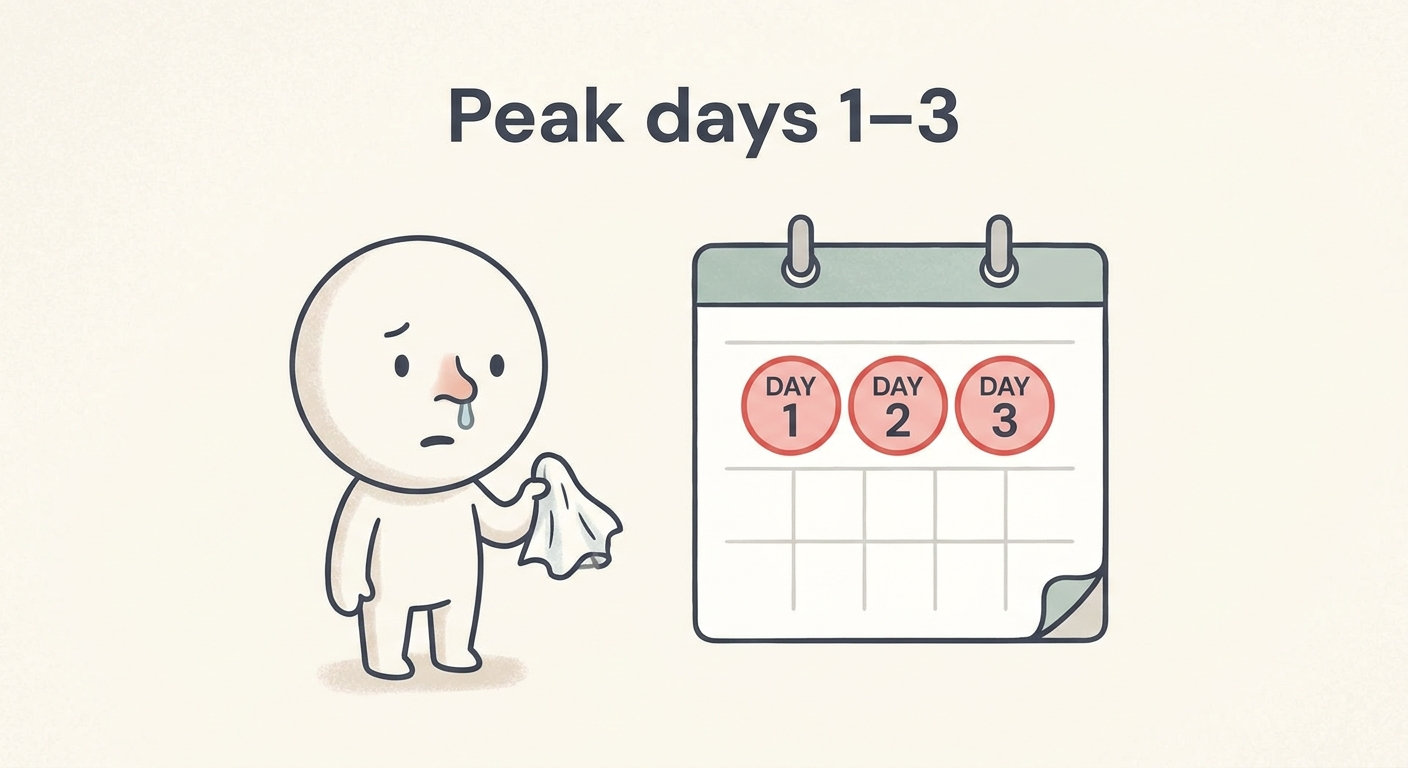
Days 1–3 (Peak contagious period)
This is typically the highest-risk window. Many people are most contagious during the first 2–3 days, when symptoms such as:
- sneezing
- runny or stuffy nose
- coughing
are most active and more likely to spread virus to others. Source: https://www.citymd.com/health-and-wellness/spreading-sneeze-how-long-is-cold-contagious
Days 4–7 (Still contagious, but risk is dropping)
During this stage, some symptoms shift—congestion may improve while postnasal drip and cough become more noticeable. Many people are starting to feel better, and overall spread risk often declines, but close contact can still lead to transmission (especially indoors with poor airflow). Source: https://my.clevelandclinic.org/health/diseases/12342-common-cold
Days 8–14 (Lower risk—sometimes still contagious)
By week two, many people are no longer spreading much virus. Some may remain contagious up to about two weeks, but levels are usually lower by this point. A lingering cough doesn’t automatically mean you’re highly contagious—it may reflect airway irritation that persists after the main infection—but keeping basic precautions in mind around others is still reasonable. Source: https://www.citymd.com/health-and-wellness/spreading-sneeze-how-long-is-cold-contagious
Takeaway: expect the highest spread risk early, with a steady decline after the first few days.
Symptoms to Watch For (And What They Mean for Contagiousness)
Typical common cold symptoms often include:
- runny or stuffy nose
- sneezing
- sore throat
- cough
- mild fatigue (sometimes)
- mild body aches (varies)
Sources: https://my.clevelandclinic.org/health/diseases/12342-common-cold, https://www.pennmedicine.org/conditions/common-cold
These symptoms—especially sneezing, coughing, and lots of nasal secretions—help explain why the early phase is usually the most important time to be careful. Even if your symptoms feel mild, frequent sneezing in a shared space can still spread virus efficiently.
Symptoms that may mean it’s not just a cold
- high fever
- severe body aches
- shortness of breath
- chest pain
- symptoms that worsen after initial improvement
Sources: https://my.clevelandclinic.org/health/diseases/12342-common-cold, https://www.pennmedicine.org/conditions/common-cold
If you want more context on when to take symptoms more seriously, see when symptoms may be more than a cold https://sleepandsinuscenters.com/blog/beyond-common-cold-ent
If symptoms feel unusually severe or out of pattern, consider testing or medical advice.
What Affects How Long You’re Contagious?
Individual factors:
- People with weakened immune systems may shed virus longer.
- Children may spread colds more easily because of close contact and hygiene challenges.
If it feels like you’re getting sick repeatedly, this overview of recurrent colds can help: https://sleepandsinuscenters.com/blog/what-are-recurrent-colds-causes-symptoms-and-when-to-see-a-doctor
Close-contact settings: daycare classrooms, schools, open-plan offices, shared bedrooms, and crowded indoor events all increase opportunities for spread—especially during the peak phase.
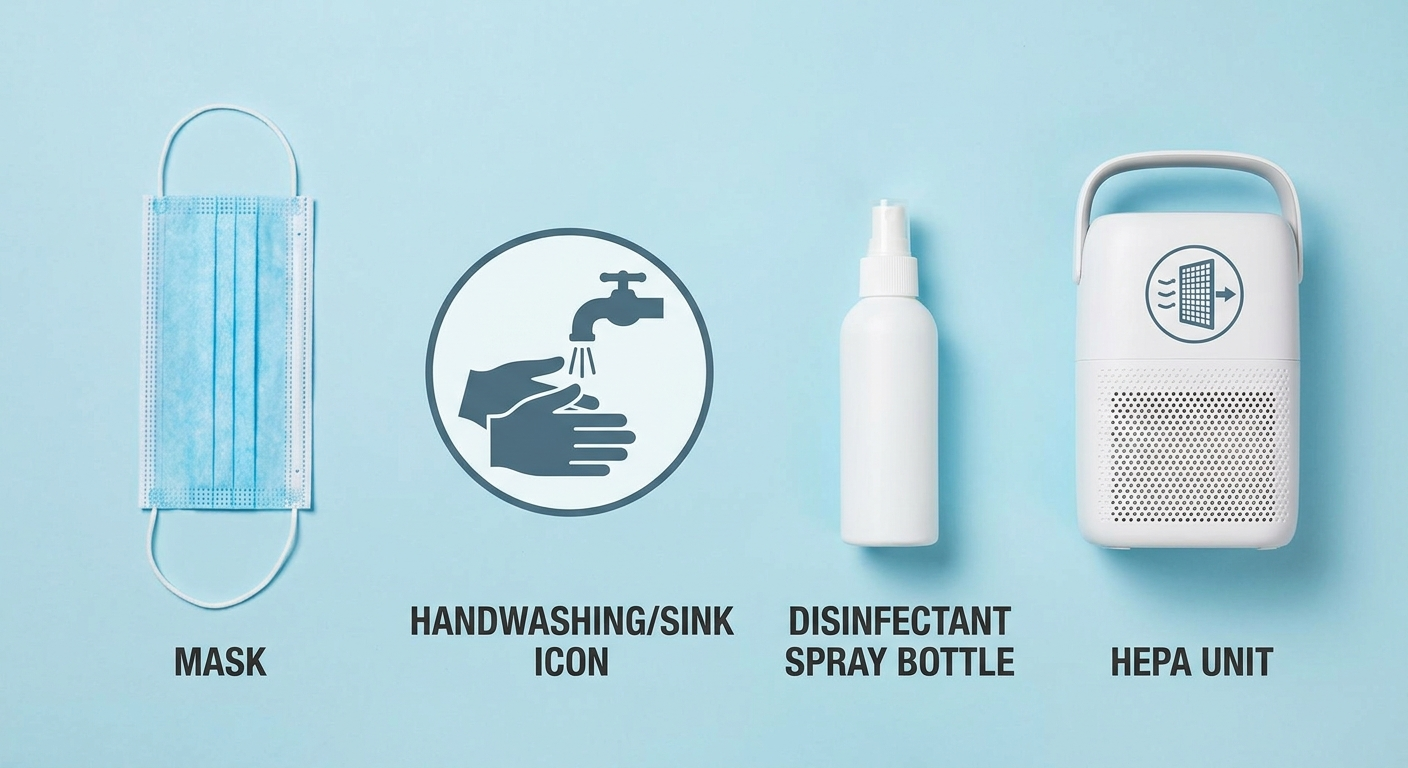
Hygiene and viral dose exposure. Layered precautions (hand hygiene, masking, ventilation) can reduce how much virus reaches other people—even if you’re still mildly contagious. Source: https://www.cdc.gov/respiratory-viruses/prevention/precautions-when-sick.html
You can’t eliminate risk entirely, but you can meaningfully reduce it—especially in the first few days.
How to Stop Spreading a Cold (Home, Work, and Public)
The first several days rule of thumb: because the earliest days tend to be the most contagious, consider being especially cautious during the first several days after symptoms begin. Source: https://www.cdc.gov/respiratory-viruses/prevention/precautions-when-sick.html
Practical hygiene checklist
- Wash hands often (especially after blowing your nose or coughing)
- Avoid touching your eyes, nose, and mouth
- Cover coughs and sneezes and discard tissues promptly
- Clean high-touch items (phones, remotes, doorknobs, keyboards)
Source: https://www.cdc.gov/respiratory-viruses/prevention/precautions-when-sick.html
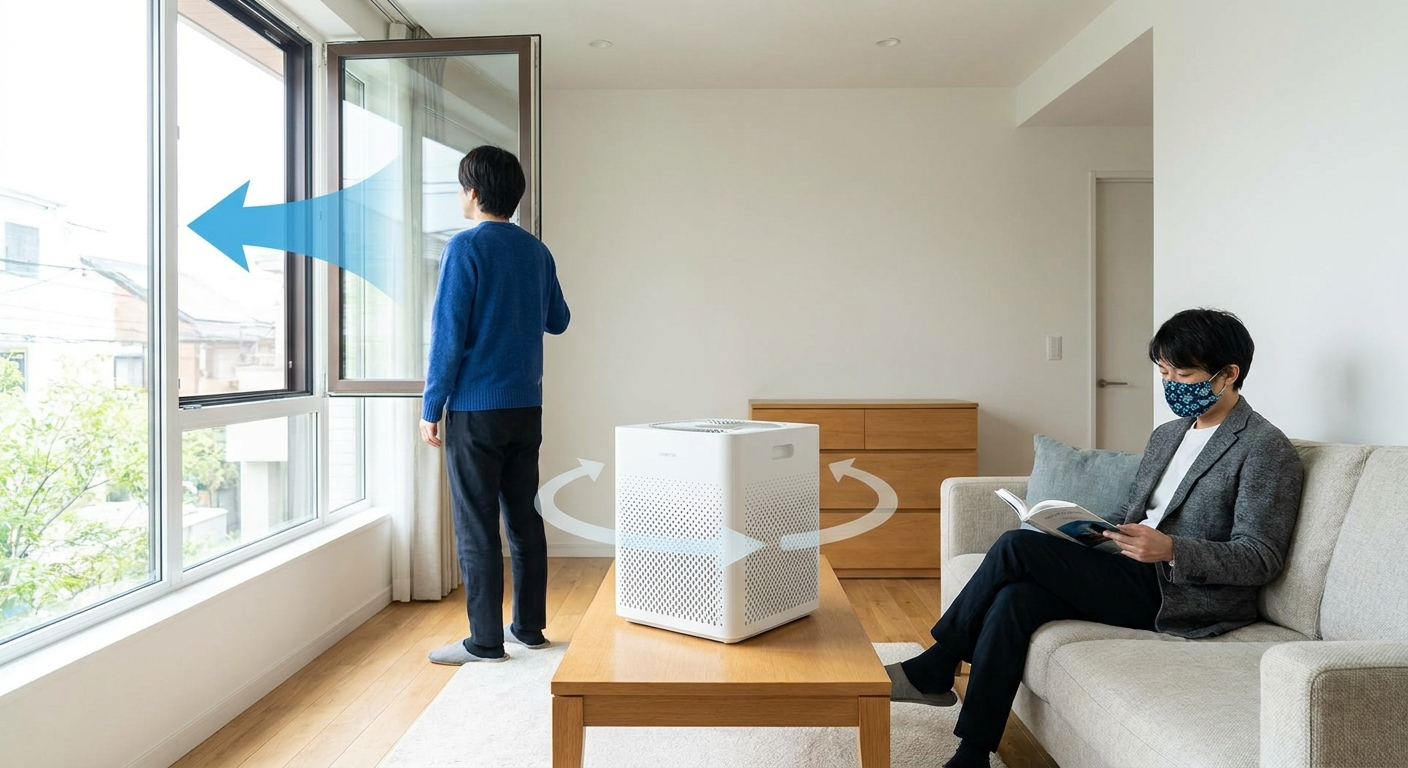
Masking and ventilation tips (especially around high-risk people)
- Wear a well-fitting mask when you must be close to others indoors
- Improve airflow: open windows when possible, use fans to move air, and consider HEPA filtration in shared spaces
Source: https://www.cdc.gov/respiratory-viruses/prevention/precautions-when-sick.html
When should you stay home from work or school?
Policies and job roles vary, but many people consider staying home (or working remotely) when symptoms are hard to control (frequent coughing or sneezing), when symptoms are intense, or when the environment involves close contact—particularly during days 1–3, when you’re typically at the most contagious point.
If staying home isn’t possible, try to reduce risk as much as possible: use a mask, avoid close face-to-face conversations, and take breaks in well-ventilated areas.
Focus your strongest precautions early; then taper as symptoms and risk decline.
Treatment (What Helps You Feel Better While You Recover)
Treatment doesn’t cure the virus, but it can support comfort and rest while your immune system does the work. Sources: https://my.clevelandclinic.org/health/diseases/12342-common-cold, https://www.pennmedicine.org/conditions/common-cold
Home care basics
- Rest and fluids
- Warm tea or broth for comfort
- Honey for cough (age-appropriate)
- Saline sprays or rinses for congestion
OTC options (general guidance)
Depending on your health history and label directions, people commonly consider:
- pain relievers or fever reducers
- decongestants (not ideal for everyone, including some people with high blood pressure)
- throat lozenges or sprays
What to avoid
Antibiotics don’t treat typical viral colds. They may be used only when a clinician suspects a bacterial complication. Sources: https://my.clevelandclinic.org/health/diseases/12342-common-cold, https://www.pennmedicine.org/conditions/common-cold
Aim for comfort and rest; your immune system does the heavy lifting.
When to See a Doctor (Red Flags)
This is educational information, not a personal medical determination. If you’re unsure, getting evaluated can add clarity—especially when symptoms don’t follow a typical cold pattern.
Seek care urgently if you have
- trouble breathing
- chest pain
- confusion
- signs of dehydration
- blue or gray lips or face, or severe weakness
Source: https://www.cdc.gov/respiratory-viruses/prevention/precautions-when-sick.html
Make an appointment if
- symptoms last more than about 10 days without improvement
- symptoms improve and then suddenly worsen
- colds keep recurring and you’re not sure why
Sources: https://my.clevelandclinic.org/health/diseases/12342-common-cold, https://www.cdc.gov/respiratory-viruses/prevention/precautions-when-sick.html
If you’re local and want ENT-focused guidance, you can explore resources or book an appointment with Sleep and Sinus Centers of Georgia: https://www.sleepandsinuscenters.com/
FAQs
Can I be contagious before I feel sick? Yes. You can sometimes spread a cold 1–2 days before symptoms appear. Source: https://www.citymd.com/health-and-wellness/spreading-sneeze-how-long-is-cold-contagious
When is a cold most contagious? Usually during the first 2–3 days, when symptoms often peak. Source: https://www.citymd.com/health-and-wellness/spreading-sneeze-how-long-is-cold-contagious
How long is a cold contagious overall? For many people, the highest-risk window is within the first week. Risk generally drops after that, though viral shedding and some transmission risk may persist longer in some cases. Source: https://www.citymd.com/health-and-wellness/spreading-sneeze-how-long-is-cold-contagious
Am I contagious if I still have a lingering cough? Sometimes. A lingering cough can happen even after you’re mostly over the infection, but it can still spread droplets—so basic precautions (especially indoors around others) remain helpful.
Do I need to isolate like I would for COVID? Not usually in the same way, but staying home when you feel significantly ill and following CDC precautions when sick can reduce spread in the community. Source: https://www.cdc.gov/respiratory-viruses/prevention/precautions-when-sick.html
Key Takeaways / Conclusion
- The common cold is usually most contagious early, especially days 1–3.
- You can sometimes be contagious before symptoms, which helps explain rapid household spread.
- Risk generally drops after the first week, though low-level transmission can sometimes continue longer.
- To prevent spreading a cold, focus your biggest efforts during the first several days after symptoms begin—hand hygiene, masking, and ventilation can make a real difference.
If symptoms aren’t improving, keep recurring, or you suspect something beyond a routine cold, consider scheduling a visit. You can book an appointment at https://www.sleepandsinuscenters.com/
Sources
- https://my.clevelandclinic.org/health/diseases/12342-common-cold
- https://www.pennmedicine.org/conditions/common-cold
- https://www.citymd.com/health-and-wellness/spreading-sneeze-how-long-is-cold-contagious
- https://www.cdc.gov/respiratory-viruses/prevention/precautions-when-sick.html
This article is for educational purposes only and is not medical advice. Please consult a qualified healthcare provider for diagnosis and treatment.
Don’t let allergies slow you down. Schedule a comprehensive ENT and allergy evaluation at Sleep and Sinus Centers of Georgia. We’re here to find your triggers and guide you toward lasting relief.