Cold and Flu Symptoms: Key Signs, Differences, and When to Seek Care
Use pattern and intensity to tell these illnesses apart quickly, treat the symptoms you have, and seek care sooner if you’re higher risk or symptoms are severe.
Introduction: Why Cold and Flu Symptoms Get Confused
Colds and influenza are both respiratory viral infections and share cough, sore throat, and congestion, which makes the first couple of days confusing—especially when busy or overtired. A helpful frame: colds tend to move in slowly; flu often starts abruptly and feels more “whole‑body.” This guide highlights patterns, comfort tips, and when to escalate care.
Resources: CDC cold vs flu: https://www.cdc.gov/flu/about/coldflu.html | CDC signs & symptoms: https://www.cdc.gov/flu/signs-symptoms/index.html | Mayo Clinic common cold: https://www.mayoclinic.org/diseases-conditions/common-cold/symptoms-causes/syc-20351605
Summary: In the first 1–2 days, watch speed and severity more than any one symptom.
Cold vs. Flu at a Glance (Quick Comparison)
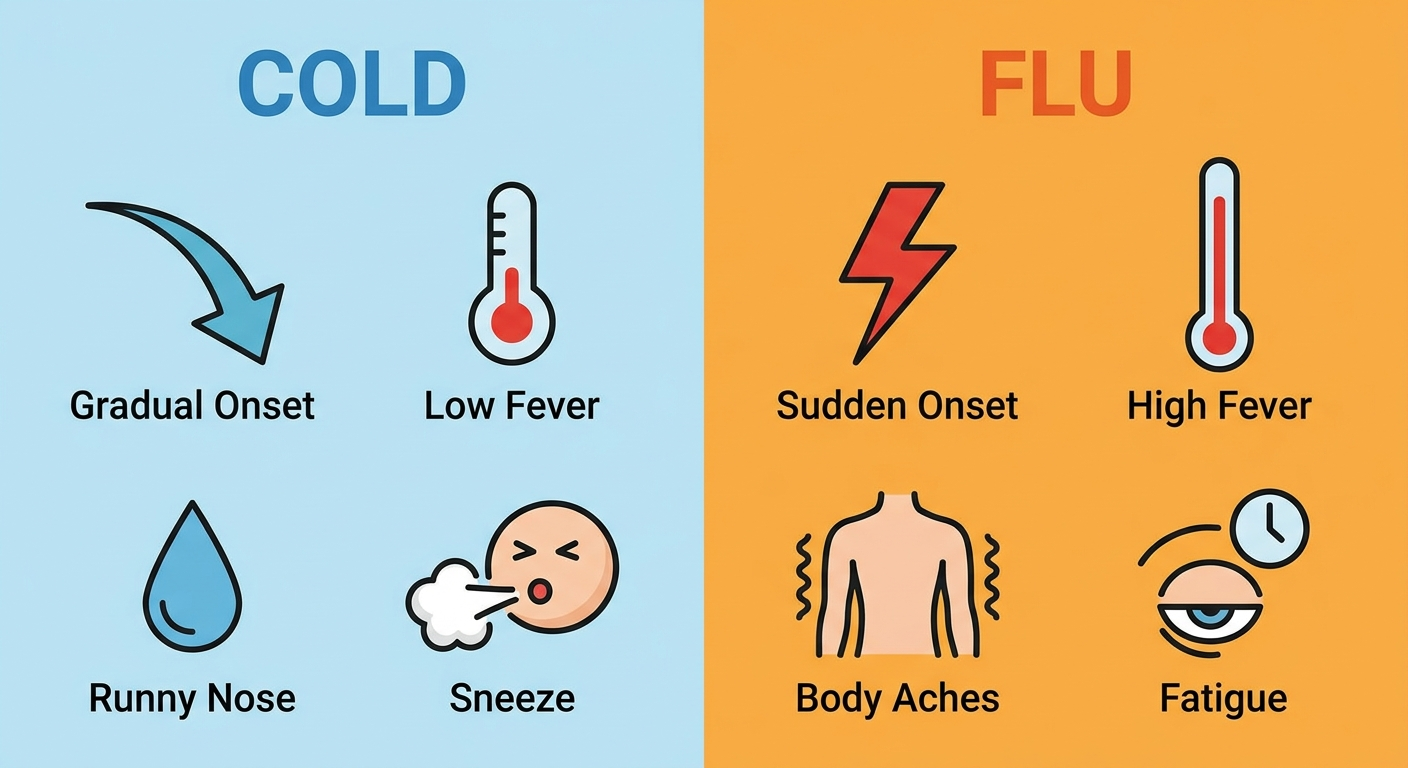
Quick clues: Flu usually has an abrupt onset with more severe, whole‑body symptoms; colds more often build gradually with milder, nasal‑first symptoms. Source: CDC: https://www.cdc.gov/flu/about/coldflu.html
Onset: Cold—gradual over 1–3 days; Flu—abrupt, sometimes within hours. Fever: Cold—uncommon in adults/low‑grade possible; Flu—more common, often higher. Body aches: Cold—mild/uncommon; Flu—common and significant. Fatigue: Cold—mild to moderate; Flu—prominent, can be extreme. Sneezing/runny nose: Cold—very common; Flu—can occur but often less prominent. Complication risk: Cold—usually lower; Flu—higher, especially for high‑risk groups.
Fast self‑check: Did symptoms hit suddenly or build? Are fatigue and aches out of proportion to a usual cold? Is fever with chills and sudden exhaustion present? “A little stuffy yesterday and worse today” leans cold; “fine at breakfast, wiped out by lunch with aches/chills” leans flu.
Summary: Speed and severity are your quickest clues.
Common Cold Symptoms (Typical Signs)
Many viruses cause “the common cold,” usually with upper‑airway, nasal‑first symptoms. Mayo Clinic: https://www.mayoclinic.org/diseases-conditions/common-cold/symptoms-causes/syc-20351605
Typical signs: Sneezing; runny or stuffy nose; sore throat (often early); mild to moderate cough; mild fatigue or headache. Many people describe colds as annoying but manageable—you may still do basic tasks, albeit uncomfortably.
Fever with a cold: Less common in adults, though low‑grade fever can occur; children get fevers more often. High or persistent fever with marked aches and exhaustion is more flu‑like. CDC: https://www.cdc.gov/flu/about/coldflu.html
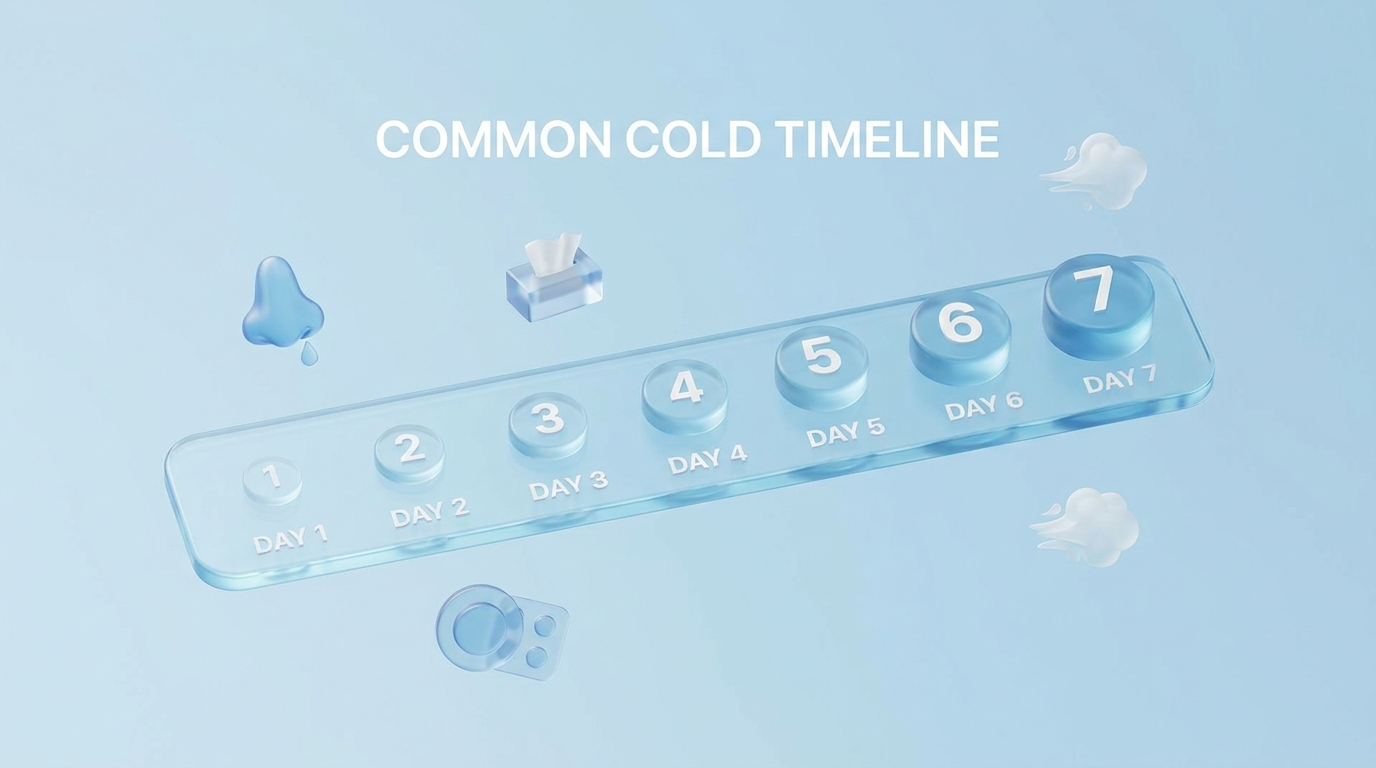
Usual timeline: Days 1–3 scratchy throat, sneezing, congestion begins; Days 4–7 congestion continues, cough may increase; 1–2+ weeks cough can linger as drainage resolves. If your “cold” lingers or keeps returning, consider evaluation. ENT resources: When to see an ENT: https://sleepandsinuscenters.com/blog/when-should-i-see-an-ent | Recurrent colds: https://sleepandsinuscenters.com/blog/what-are-recurrent-colds-causes-symptoms-and-when-to-see-a-doctor | Beyond the common cold: https://sleepandsinuscenters.com/blog/beyond-common-cold-ent
Summary: Most colds are nasal‑first, milder, and resolve within 1–2 weeks.
Flu (Influenza) Symptoms: Key Signs That Point to the Flu
Influenza is a specific respiratory virus with symptoms that are typically more intense and systemic. CDC: https://www.cdc.gov/flu/signs-symptoms/index.html
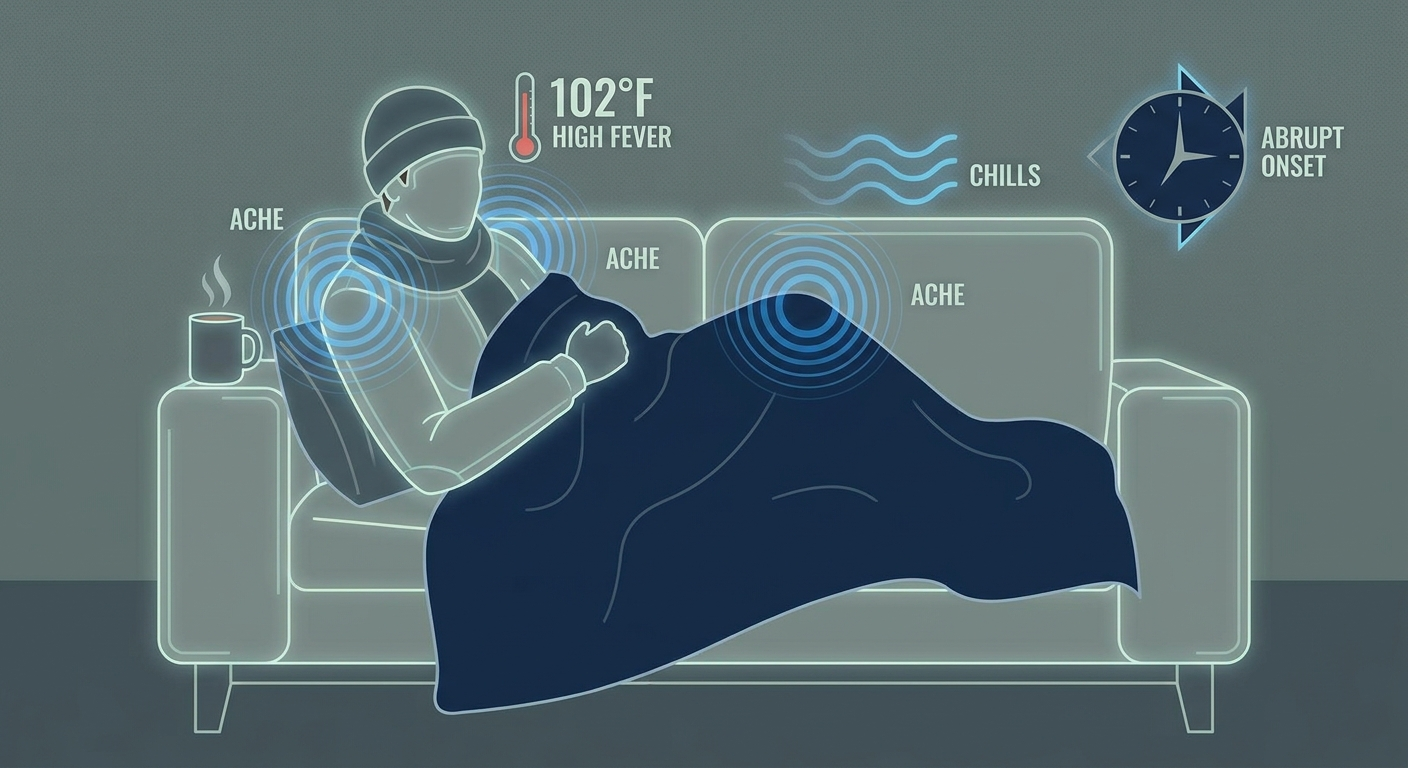
Hallmarks: Fever, chills, significant muscle/body aches, extreme fatigue, headache. People often describe flu fatigue as heavy and unavoidable.
Respiratory symptoms can still occur: cough (often dry early), sore throat, runny or stuffy nose—congestion doesn’t rule out flu. Consider whether nasal symptoms are the main event (cold) or one part of a severe whole‑body illness (flu).
Onset pattern: Flu commonly feels like it “hits all at once” with abrupt fever, aches, and exhaustion. CDC: https://www.cdc.gov/flu/about/coldflu.html
Summary: Abrupt onset with whole‑body symptoms points toward flu.
Overlapping Symptoms (Why It’s Hard to Tell)
Shared symptoms: cough, sore throat, congestion, mild headache, tiredness. Because these overlap, pattern, severity, and timing are more useful than any single symptom.
Why overlap happens: Both infect the airways and trigger inflammation; where the virus is most active and how your immune system responds shape whether symptoms feel nasal‑focused or systemic.
Summary: When symptoms overlap, the overall pattern and timing matter most.
What Causes Colds and Flu (and How They Spread)
Causes: Colds—many viruses (often rhinoviruses and others); Flu—influenza A or B. Both spread via close contact and respiratory droplets; hands and surfaces also contribute when you touch your nose, mouth, or eyes.
Contagiousness: Many respiratory viruses are most contagious early. Limiting close contact—especially if feverish or significantly unwell—helps reduce spread at home and work.
Summary: Reduce close contact and practice hand hygiene to lower spread.
When to Seek Care (Urgent vs. Same-Day vs. Routine)
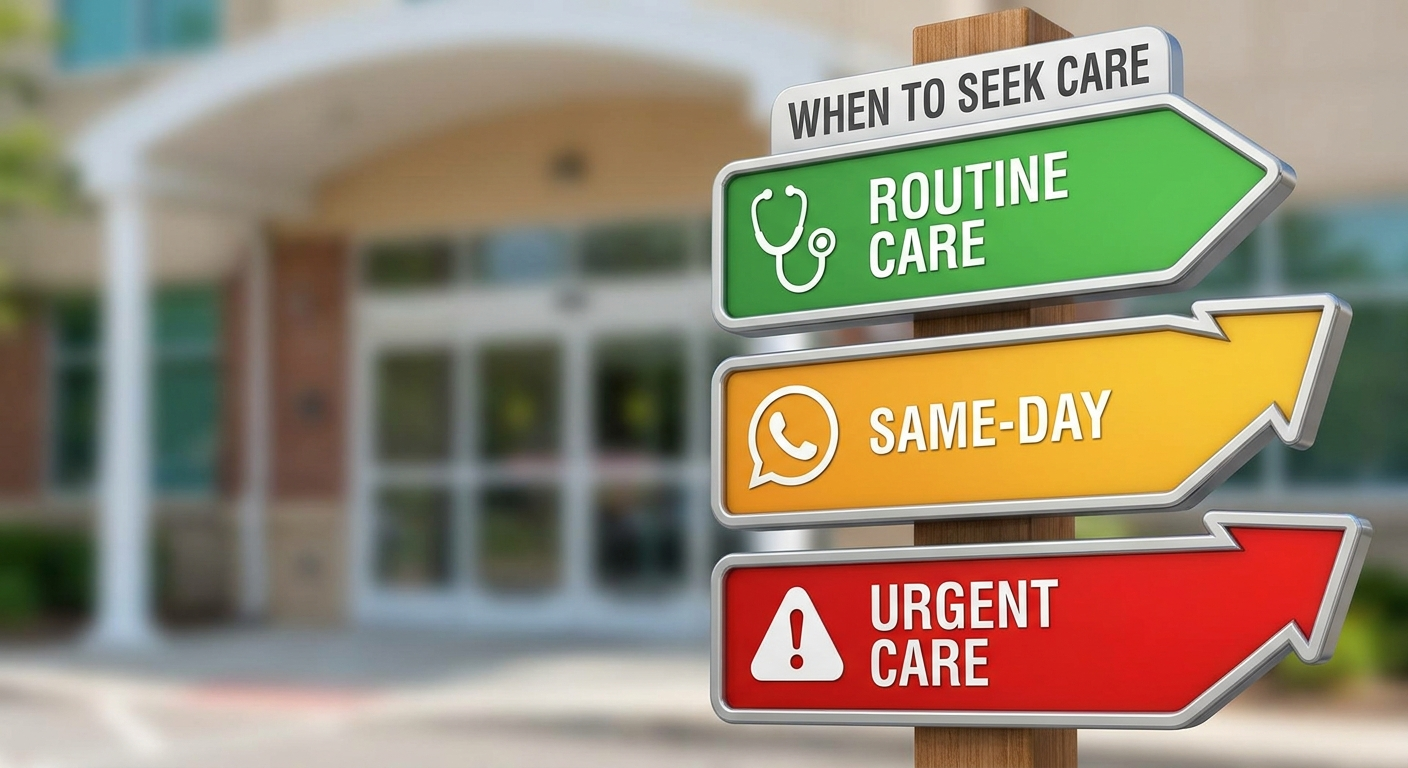
Red flags—seek urgent/emergency care: trouble breathing or shortness of breath; chest pain or pressure; confusion, severe drowsiness, fainting; bluish lips/face; severe dehydration; symptoms that improve then suddenly worsen. CDC: https://www.cdc.gov/flu/signs-symptoms/index.html
Higher‑risk groups—contact a clinician promptly: older adults; young children; pregnancy and postpartum; chronic lung disease/asthma, heart disease, diabetes; immunocompromised conditions.
Lingering nasal/sinus issues—when to see an ENT: persistent blockage, facial pressure, thick drainage, or recurrent “colds.” Resources: When to see an ENT: https://sleepandsinuscenters.com/blog/when-should-i-see-an-ent | Recurrent colds: https://sleepandsinuscenters.com/blog/what-are-recurrent-colds-causes-symptoms-and-when-to-see-a-doctor | When a “cold” is something more: https://sleepandsinuscenters.com/blog/beyond-common-cold-ent
Summary: If symptoms are severe or you’re higher risk, seek care sooner.
Diagnosis: How Clinicians Confirm Cold vs. Flu
Clinicians consider onset speed, fatigue/aches severity, fever presence, and local activity/season. Your illness “story” often points strongly toward cold vs flu.
Testing: Flu tests may be used when results change decisions (timing, community flu activity, individual risk). Early presentation and higher‑risk status often guide testing.
Summary: Your history and timing often guide testing choices.
Treatment Options (What Helps and What Doesn’t)
Supportive care for both: rest, hydration, warm fluids, humidified air or steam for comfort, saline sprays or nasal rinses used safely. Nasal irrigation resources: How often to rinse: https://sleepandsinuscenters.com/blog/nasal-rinses-how-often-should-you-use-them | Neti pot safety (use sterile/distilled or properly boiled/cooled water): https://sleepandsinuscenters.com/blog/neti-pot-safety-tips-essential-steps-for-safe-nasal-irrigation | NeilMed resource: https://sleepandsinuscenters.com/patient-resources/neilmed-nasal-rinse
OTC relief (general): fever/aches—acetaminophen or ibuprofen as appropriate; cough/throat—lozenges, warm fluids, honey for adults and children over 1 year; congestion—start with saline; some decongestants help select people but are not for everyone (check labels and ask a clinician if needed). Match medicine to symptom and skip what you don’t need.
Antibiotics: Usually not helpful for viral colds or flu and can cause side effects and resistance. More on sinus infections: https://sleepandsinuscenters.com/blog/do-i-always-need-antibiotics-for-a-sinus-infection
Summary: Treat specific symptoms; viruses don’t respond to antibiotics.
Flu-Specific Treatment: Antivirals and Timing
Antivirals: May help most when started early (often within 48 hours), commonly for higher‑risk or more severe cases. CDC: https://www.cdc.gov/flu/signs-symptoms/index.html
If you suspect flu today: limit close contact, prioritize rest and hydration, and consider prompt clinician contact—especially if higher risk or symptoms feel severe.
Summary: Early contact can widen treatment options, particularly for higher‑risk individuals.
Prevention & Lifestyle Tips (Reduce Risk and Spread)
Flu vaccine: Yearly vaccination reduces risk and can lessen severity. CDC: https://www.cdc.gov/flu/about/coldflu.html
Everyday habits: wash hands often; avoid touching your face; improve indoor airflow when feasible; consider masking when symptomatic or around high‑risk individuals, especially in crowded indoor spaces.
Protect your household: separate towels/cups when someone is sick; clean high‑touch surfaces; follow local return policies such as being fever‑free without medicine.
Summary: Layered habits reduce risk for you and those around you.

FAQs
How can I tell in the first 24 hours? Focus on pattern: abrupt onset with prominent fatigue, fever, and body aches points more toward flu; slower build with sneezing/runny nose points toward a cold. CDC: https://www.cdc.gov/flu/about/coldflu.html
Is sneezing more likely a cold or flu? Sneezing and runny nose are generally more prominent with colds, though they can occur in both. CDC: https://www.cdc.gov/flu/about/coldflu.html
Can I have the flu without a fever? Yes—fever may be absent depending on age and immune response. Pattern and overall severity still matter; testing sometimes clarifies. CDC: https://www.cdc.gov/flu/signs-symptoms/index.html
How long should I wait before seeing a doctor? Seek evaluation sooner if symptoms worsen, red flags appear, or you are higher risk.
When does a cold turn into something more serious? Persistent or worsening facial pressure, thick drainage, or improvement followed by worsening suggests a sinus issue. Comparison guide: https://sleepandsinuscenters.com/blog/sinus-infection-vs-cold-how-to-tell-the-difference
Conclusion: Know the Pattern, Treat Symptoms, Seek Help When Needed
Flu: sudden onset plus more severe symptoms (fever, aches, extreme fatigue). Cold: gradual onset plus more nasal symptoms (sneezing, runny/stuffy nose). If symptoms are severe, prolonged, suddenly worsening, or you’re higher risk, get evaluated. For lingering congestion, sinus pressure, or recurrent “colds,” book with Sleep and Sinus Centers of Georgia: Appointments: https://sleepandsinuscenters.com/appointments
Citations
Centers for Disease Control and Prevention (CDC). Cold vs Flu: https://www.cdc.gov/flu/about/coldflu.html
CDC. Flu Signs & Symptoms: https://www.cdc.gov/flu/signs-symptoms/index.html
Mayo Clinic. Common Cold Symptoms: https://www.mayoclinic.org/diseases-conditions/common-cold/symptoms-causes/syc-20351605
This article is for educational purposes only and is not medical advice. Please consult a qualified healthcare provider for diagnosis and treatment.
Don’t let allergies slow you down. Schedule a comprehensive ENT and allergy evaluation at Sleep and Sinus Centers of Georgia. We’re here to find your triggers and guide you toward lasting relief.