Brain Fog and Sinus Disease: Symptoms, Causes, and the Link Between Them
If you’ve ever felt congested for weeks—and noticed your thinking felt slower, fuzzier, or unusually tiring—you’re not imagining the pattern. Brain fog and sinus disease can overlap, especially when sinus inflammation becomes chronic. For many people, mental clarity improves as sinus inflammation settles down and breathing (especially at night) improves.
Below is a patient-friendly look at what “brain fog” means, what counts as chronic sinusitis, and the most common reasons these issues show up together—without overcomplicating it.
Quick Take (for skimmers)
- Brain fog (characterized by trouble focusing, forgetfulness, and mental fatigue) can occur with chronic sinusitis and sometimes improves when sinus inflammation is treated.
- Research suggests chronic sinus inflammation may be associated with changes in brain activity on imaging. [1]
- Common “why” factors include inflammation, reduced airflow/feeling poorly oxygenated due to congestion, and sleep disruption. [1–3]
— In brief: Persistent sinus inflammation can affect how you think and feel day to day. —

What Is “Brain Fog”?
“Brain fog” isn’t a formal medical diagnosis. It’s a common phrase people use to describe a cluster of cognitive symptoms—often subtle but frustrating.
A helpful way to think about it: brain fog is less like “forgetting everything” and more like your mind is trying to work through static. You can still function, but it takes more effort.
Brain fog symptoms (what patients commonly notice)
Brain fog may include:
- Difficulty concentrating or staying on task
- Slower thinking/processing speed
- Forgetfulness (names, appointments, details)
- Feeling mentally drained or “in a haze”
- Trouble finding words
Concrete examples people describe include rereading the same email three times, losing the thread of conversations, or walking into a room and forgetting why. Many people notice these symptoms fluctuate—worse on some days, better on others.
Brain fog is a symptom, not a diagnosis
Because brain fog can come from many different causes, it’s best thought of as a signal rather than a standalone condition. Stress, medication side effects, thyroid issues, anemia, depression/anxiety, sleep disorders, and post-viral syndromes can all contribute.
That’s one reason it’s important to look at the whole picture—especially when brain fog and sinusitis symptoms appear together and seem to rise and fall with congestion.
— Bottom line: Brain fog is common and nonspecific, so context (like sinus symptoms) matters. —

What Counts as Sinus Disease (and Why Chronic Matters)
Sinusitis is inflammation of the lining of the sinuses. It often overlaps with nasal inflammation, congestion, and drainage issues—so symptoms aren’t always limited to “sinus pressure.”
Acute vs. chronic sinusitis (simple definition)
- Acute sinusitis: short-term symptoms, often after a cold
- Chronic sinusitis: inflammation and symptoms that persist, don’t fully resolve, or keep recurring
If you want a deeper breakdown, this guide on acute vs. chronic sinusitis can help you recognize patterns that may warrant further evaluation: https://sleepandsinuscenters.com/blog/acute-vs-chronic-sinusitis-key-differences-and-treatment-options
Common chronic sinusitis symptoms
Chronic sinusitis commonly includes:
- Nasal congestion or blockage
- Facial pressure/pain
- Thick nasal drainage or post-nasal drip
- Reduced sense of smell
- Headache, ear pressure, cough
If you’ve been congested for weeks and also feel mentally “off,” the two may be connected—making brain fog and sinus disease an important combination to recognize and treat thoughtfully.
— Key point: Ongoing sinus inflammation can affect much more than your nose. —
Can Sinus Problems Cause Brain Fog?
The short answer
Yes—brain fog can be linked to chronic sinusitis, and in some people it may even be a prominent symptom. [2–3]
What research suggests
In research discussed by UW Medicine, studies using brain imaging (including functional MRI) report that chronic sinus inflammation is associated with altered brain activity, including networks involved in attention and cognitive function. [1]
This doesn’t mean every stuffy day changes your brain—or that brain fog always equals sinus disease. But it does support what many patients report: persistent sinus inflammation can affect how you feel and function day to day, including focus and mental stamina.
— Takeaway: Evidence and patient experience both support a sinus–brain fog connection. —

The Link Explained: 3 Main Mechanisms
When people talk about chronic sinusitis–related brain fog, it often helps to break the connection into a few practical pathways.
1) Systemic inflammation (“inflammation spillover”)
Chronic inflammation in the sinuses isn’t always confined to the nose. Inflammatory signaling in the body can influence energy, mood, and mental sharpness. Research and clinical education materials commonly discuss inflammation as a reason chronic sinus inflammation may impact brain function. [1–3]
A simple analogy: if your immune system is “running in the background” all day, it can feel like you have fewer mental resources left for work, school, or parenting—even if you’re pushing through.
2) Nasal congestion and reduced oxygenation/airflow
When your nose is chronically blocked, breathing can feel harder—especially at night or with activity. Even if your measured oxygen levels remain normal, the extra work of breathing and feeling under-ventilated can leave you unrefreshed and mentally tired. In people with conditions like obstructive sleep apnea, congestion can worsen airflow limitations and contribute to oxygen drops during sleep.
In plain terms: breathing through a chronically congested nose can be like trying to get a full breath through a narrow straw. Your body can compensate, but it’s not efficient—and the “low battery” feeling can show up as fatigue and fuzzy thinking.
3) Sleep disruption (often the biggest day-to-day driver)
For many people, sleep is the “bridge” between sinus trouble and brain fog. When sleep quality drops, cognition tends to follow—often immediately.
- Congestion can cause mouth breathing, snoring, and frequent waking
- Post-nasal drip can trigger coughing or throat irritation
- Facial pressure can make it hard to fall asleep or stay asleep
Patients often describe it as: “I slept eight hours, but it didn’t count.” This pattern—sleep disruption caused by sinusitis—is strongly associated with next-day issues like reduced attention, slower memory recall, and mental fatigue. [3]
For a deeper dive, see: https://sleepandsinuscenters.com/blog/how-sinus-issues-affect-sleep-quality-and-ent-solutions
— In short: Inflammation, airflow limits, and poor sleep often work together to create brain fog. —
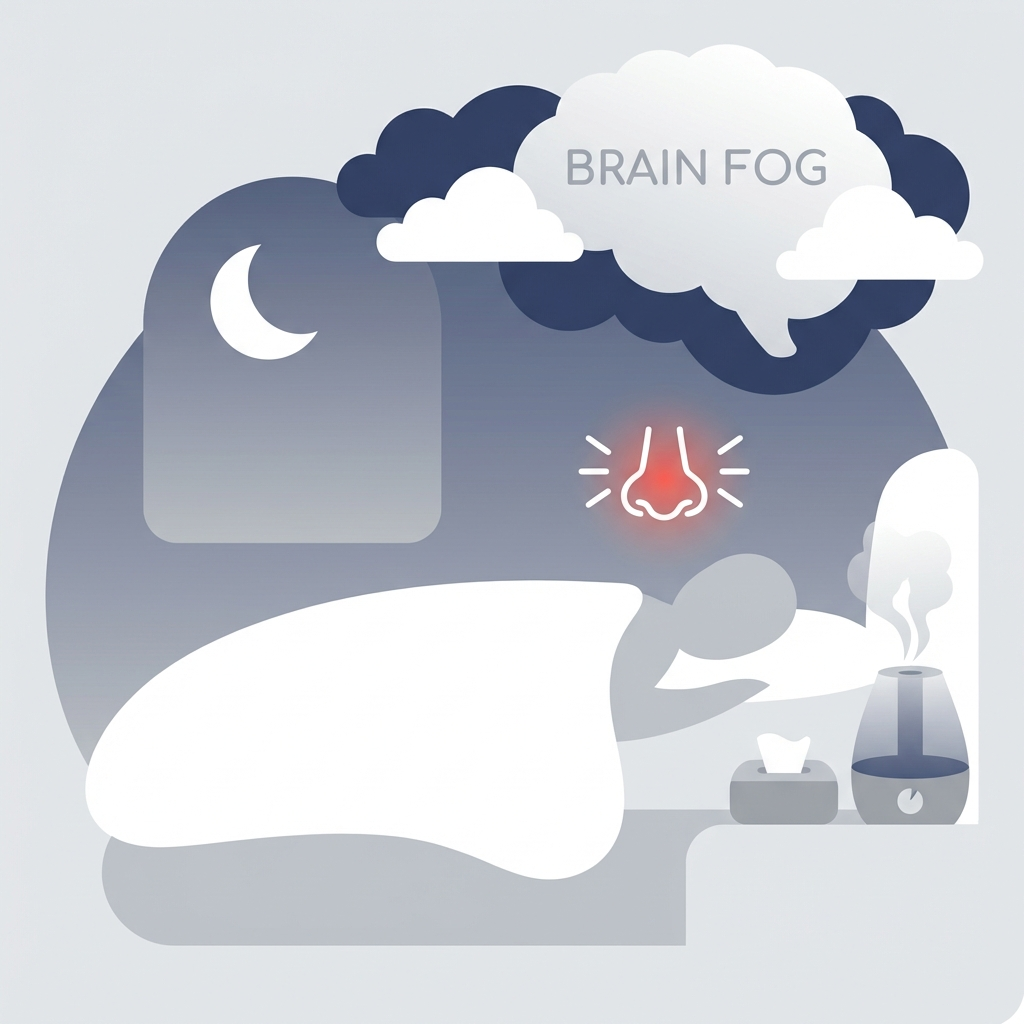
Brain Fog + Sinus Disease: Symptom Patterns That Suggest a Connection
Clues your brain fog may be sinus-related
People often suspect a connection when:
- Brain fog worsens during flare-ups of congestion/pressure
- Morning fogginess improves after clearing mucus, showering, or using humidified air
- Brain fog occurs with frequent headaches/facial pressure
- Brain fog shows up alongside snoring, mouth breathing, or waking up unrefreshed
These patterns don’t prove sinusitis is the only cause—but they can support the idea that brain fog and sinus disease are interacting.
Clues it may be something else (or also something else)
It may be worth broadening the evaluation if you notice:
- Brain fog without any nasal symptoms
- New brain fog soon after starting a medication
- Sudden, severe confusion or neurological symptoms (this is a reason to seek urgent evaluation)
It’s also possible to have both sinus disease and another contributor at the same time. That’s common—and it’s why coordinated care can matter.
— Practical tip: Track when fog worsens or improves alongside sinus symptoms to spot patterns. —
Causes and Risk Factors: Why Some People Get Both
Common drivers of chronic sinus inflammation
Chronic sinus issues often have more than one contributing factor, such as:
- Allergies and allergic rhinitis
- Structural blockage (deviated septum, narrow drainage pathways)
- Nasal polyps
- Environmental irritants (smoke, pollution)
- Recurrent infections or immune factors
If allergies may be a driver, learning about allergy testing can be a helpful next step in understanding triggers: https://sleepandsinuscenters.com/allergy-testing
Why “treating the nose” can help “the brain”
When inflammation and obstruction improve, many patients notice improvements not just in congestion and pressure, but also in energy, sleep quality, and clarity. Sleep and Sinus Centers of Georgia discusses this overlap in more detail here: https://sleepandsinuscenters.com/blog/chronic-sinus-inflammation-effects-on-cognitive-function-and-concentration-for-ent-patients
— Big idea: Calming sinus inflammation often pays dividends in sleep and mental clarity. —
How Doctors Evaluate Brain Fog When Sinus Disease Is Suspected
History and symptom timeline
Common topics include:
- How long symptoms have lasted; whether they’re seasonal or persistent
- Triggers (pollen, dust, weather shifts, travel, strong odors)
- Response to allergy medications or nasal sprays
- Sleep quality: snoring, waking up gasping, insomnia, daytime sleepiness
A clinician may also ask what your fog feels like in real life (for example, “Can you read a page and retain it?” or “Is driving or work harder than usual?”). Those details help connect symptoms to patterns like sleep disruption.
ENT evaluation (what to expect)
An ENT visit may include:
- A focused nasal exam and sometimes a nasal endoscopy
- Discussion of allergy triggers and next steps (including testing when relevant)
Imaging and additional workup (when appropriate)
- A CT scan of the sinuses may be considered if symptoms persist or to guide treatment planning.
- If brain fog is significant, it’s common to coordinate with primary care to rule out other contributors (for example, lab work, medication review, or sleep evaluation).
— Summary: A good evaluation checks the nose, your sleep, and other common causes of fog. —

Treatment Options That May Improve Both Sinus Symptoms and Brain Fog
Goal: reduce sinus inflammation, improve nasal airflow, and protect sleep quality—three factors that commonly influence brain fog.
1) At-home and over-the-counter basics
Common foundational strategies include:
- Saline rinses/irrigation (using safe water and clean technique)
- Humidification strategies if dry air worsens symptoms
- Trigger reduction (smoke, strong fragrances, heavy dust)
Consistency often matters more than intensity. Many people do nasal care only on “bad days,” but chronic symptoms usually respond better to a steady routine.
2) Prescription medical therapy (ENT-guided)
Depending on symptoms and findings, an ENT may discuss:
- Intranasal corticosteroids to reduce inflammation
- A targeted allergy management plan (which may include antihistamines or immunotherapy for appropriate candidates)
- Antibiotics only when bacterial infection is likely—because unnecessary antibiotics can create avoidable risks
3) Sleep-focused support (because sleep affects cognition)
Because sleep disruption driven by sinusitis can cause next-day brain fog, sleep support often matters as much as daytime symptom control:
- Nasal hygiene before bed
- Head elevation and positional adjustments
- Screening for sleep apnea if symptoms fit (snoring, witnessed pauses, morning headaches, persistent daytime sleepiness)
If you wake up with a dry mouth, morning headaches, or the sense you “never hit deep sleep,” that’s worth mentioning—it can be a useful diagnostic clue.
4) Office procedures / surgery (for persistent blockage)
When medication isn’t enough, procedures that improve sinus drainage and airflow may reduce the chronic inflammation burden. For some patients, balloon sinuplasty may be a less invasive option, depending on anatomy and the pattern of disease: https://sleepandsinuscenters.com/balloon-sinuplasty
Are cognitive symptoms reversible?
Many people find that brain fog improves as chronic sinus inflammation is brought under control—especially when sleep quality improves as well, although individual results may vary. Educational resources and research discussions support the idea that this “fog” can be responsive to effective treatment. [1–3]
— Focus on the fundamentals: calm inflammation, open airflow, and protect your sleep. —
Lifestyle Tips to Reduce Sinus Flares (and Protect Mental Clarity)
Daily habits
- Stay hydrated and keep nasal care consistent (rather than only during flare-ups)
- Allergy-proof the bedroom when relevant (dust control, frequent washing of bedding, filters if needed)
- Avoid rebound congestion from overusing decongestant sprays (a common reason congestion seems to “stick”)
Workday brain-fog coping while you treat the root cause
While you’re addressing the underlying brain fog and sinus disease connection, coping strategies can reduce daily frustration:
- Use short breaks and task batching (one type of task at a time)
- Lean on reminders/checklists during flare-ups
- Add light movement and hydration resets during the day
- Keep expectations realistic when symptoms are active—mental efficiency often returns as breathing and sleep improve
— Small, steady habits can ease fog now while longer-term treatments take effect. —
When to See an ENT (and When to Seek Urgent Care)
See an ENT if:
- Symptoms last more than several weeks, recur frequently, or don’t respond to appropriate treatment
- Brain fog is persistent and paired with ongoing congestion/pressure
- You suspect nasal polyps or structural blockage
You can also learn more about evaluation and options on the Chronic Sinusitis page, or take the sinus symptom quiz to help organize your symptoms before a visit:
- https://sleepandsinuscenters.com/chronic-sinusitis
- https://sleepandsinuscenters.com/sinus-symptom-quiz
Ready for a personalized plan? You can book an appointment with an ENT team at Sleep and Sinus Centers of Georgia here: https://www.sleepandsinuscenters.com/
Seek urgent care now if:
- Severe headache with fever and stiff neck, which can be signs of a serious infection
- Vision changes or swelling around the eyes
- Confusion, fainting, weakness/numbness, or slurred speech
— If in doubt about severe or sudden symptoms, seek urgent care. —
FAQs
Can a sinus infection cause brain fog?
Yes. People may experience brain fog during sinus infections or chronic sinus inflammation, often related to inflammation and poor sleep. [2–3]
Can nasal congestion lower oxygen to the brain?
Nasal blockage can make breathing feel harder and disrupt sleep. Both can worsen fatigue and focus. If you suspect significant oxygen drops at night or have symptoms like loud snoring or excessive daytime sleepiness, a sleep apnea evaluation may be useful. [3]
How long does sinus-related brain fog last?
It often improves as inflammation and congestion improve. Persistent or worsening symptoms are a reason to seek an evaluation to look for ongoing sinus disease and other contributors. [2–3]
Is brain fog a sign of chronic sinusitis?
It can be—especially when it appears alongside classic sinus symptoms like congestion, drainage, facial pressure, and reduced smell. [2]
Will treating chronic sinusitis improve concentration and fatigue?
Many patients report improvement. Research also supports a connection between chronic sinus inflammation and changes in brain activity and cognitive networks, suggesting these symptoms may improve when the underlying inflammation is addressed. [1–2]
References
1. UW Medicine Newsroom (2021). Chronic sinus inflammation appears to alter brain activity. https://newsroom.uw.edu/news-releases/chronic-sinus-inflammation-appears-alter-brain-activity
2. Sleep and Sinus Centers of Georgia. Chronic sinus inflammation effects on cognitive function and concentration for ENT patients. https://sleepandsinuscenters.com/blog/chronic-sinus-inflammation-effects-on-cognitive-function-and-concentration-for-ent-patients
3. Sleep and Sinus Centers of Georgia. How sinus issues affect sleep quality and ENT solutions. https://sleepandsinuscenters.com/blog/how-sinus-issues-affect-sleep-quality-and-ent-solutions
Medical disclaimer
This article is for general education and is not a substitute for medical advice, diagnosis, or treatment. If you have severe or sudden symptoms, seek urgent care. This article is for educational purposes only and is not medical advice. Please consult a qualified healthcare provider for diagnosis and treatment.
Don’t let allergies slow you down. Schedule a comprehensive ENT and allergy evaluation at Sleep and Sinus Centers of Georgia. We’re here to find your triggers and guide you toward lasting relief.