Sinus Symptoms After Water Damage: Causes, Mold Risks, and Treatment Tips
A common story: you had a flood, a roof leak, or a pipe break. The floors look dry, the stains are painted over, and life is “back to normal”—but you’re still congested, getting headaches, or clearing your throat all day.
When sinus symptoms after water damage show up, the connection often looks like this: water damage → damp building materials → mold growth → airborne spores/fragments → sinus inflammation.
The CDC notes that mold after floods can affect health, especially allergy and respiratory symptoms, and that prompt moisture control and cleanup matter for recovery and prevention. CDC: https://www.cdc.gov/natural-disasters/psa-toolkit/mold-can-make-you-sick-after-floods.html
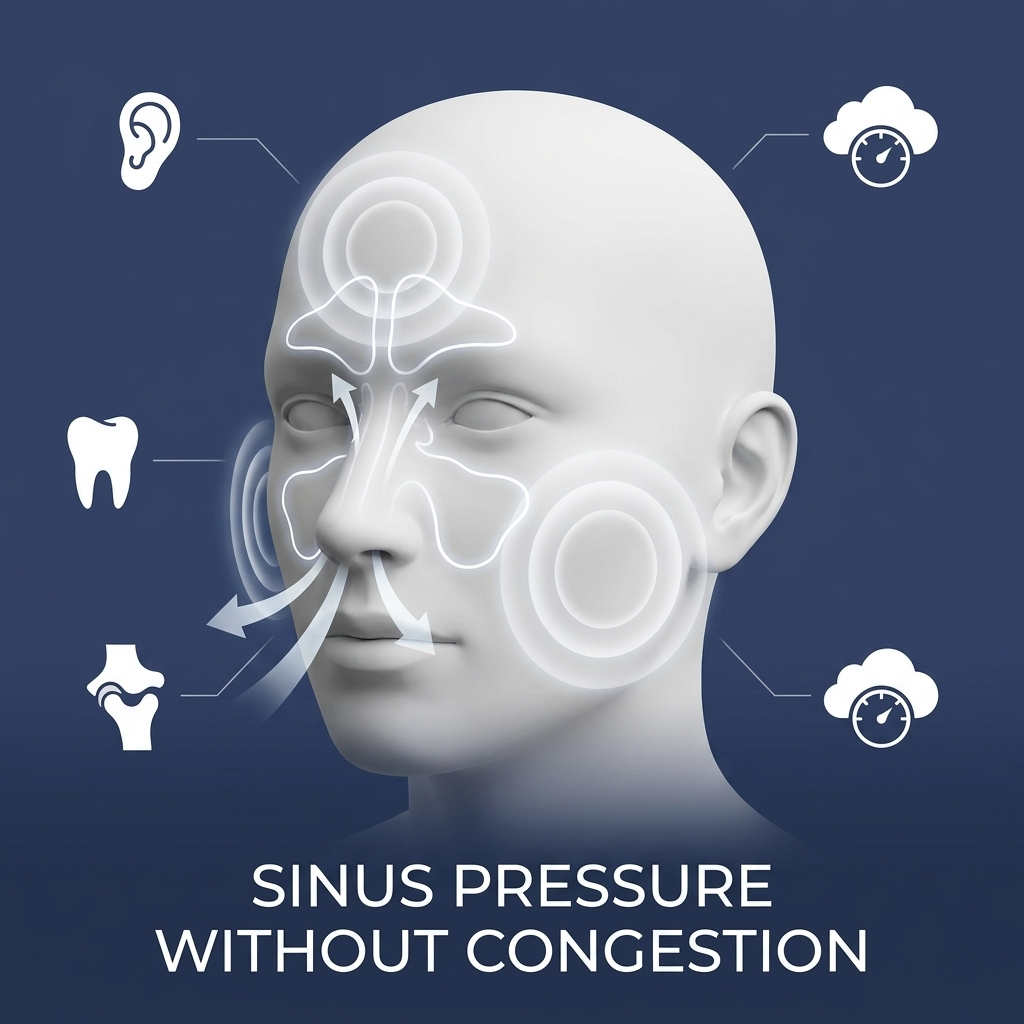
A helpful way to picture it: your nose and sinuses are like a home’s drainage system. When the lining gets irritated and swollen, the “drains” narrow—mucus can’t move normally, pressure builds, and symptoms linger.
The good news: many people improve with a two-part approach—(1) addressing the home environment and (2) calming the inflammation in the nose and sinuses. If symptoms persist, recur, or disrupt sleep and daily life, an evaluation can help clarify what’s driving them.
For additional background on the symptom overlap between mold and sinus inflammation, see how mold exposure can trigger sinusitis: https://sleepandsinuscenters.com/blog/how-mold-exposure-can-trigger-sinusitis
Bottom line: Fix the moisture and calm the inflammation to break the symptom cycle.

Common sinus symptoms after water damage (what patients notice)
Typical symptoms linked to inflammation/sinusitis
• Persistent nasal congestion (a stuffy nose that doesn’t clear) • Facial pain/pressure (cheeks, between the eyes, forehead) • Headaches (often pressure-like) • Post-nasal drip and frequent throat clearing • Fatigue and poorer sleep quality
People often describe it in simple terms: “I can breathe fine outside, but at home I feel stuffed up within an hour,” or “It feels like I’m getting sick—again—but it never turns into a normal cold.”
This pattern can fit mold-exposure–related sinus inflammation (symptoms triggered or worsened by exposure), but it can also overlap with non-mold triggers—another reason the environment and symptoms both matter. Sleep & Sinus Centers of Georgia: https://sleepandsinuscenters.com/blog/how-mold-exposure-can-trigger-sinusitis
Symptoms that may suggest mold sensitivity/allergic response
• Sneezing • Itchy nose or itchy/watery eyes • Symptoms that feel worse at home and noticeably better when away (work, school, travel)
These patterns can show up with post-flood mold symptoms, especially when spores or irritated dust circulate indoors. In practical terms, even a “small” leak under a sink can create a damp pocket that keeps releasing particles into the air you breathe.
Red flags—when to seek urgent medical care
• High fever or rapidly worsening illness • Severe facial swelling, vision changes, confusion • Shortness of breath or wheezing (especially with asthma) • Rapidly escalating symptoms in someone who is immunocompromised
The CDC highlights higher risk for people with asthma/allergies and those with immune compromise in mold-affected environments. CDC: https://www.cdc.gov/natural-disasters/psa-toolkit/mold-can-make-you-sick-after-floods.html
If symptoms clearly track with your environment, consider both the home and your sinuses in the plan.

Causes — What water damage does to your indoor air (and your sinuses)
Moisture creates the perfect conditions for mold growth
• Drywall behind baseboards • Flooring and subflooring • Attics, crawlspaces, and basements • Around windows • HVAC components (including damp ductwork areas)
If materials stay damp, mold can grow and release particles into the air—one of the key water damage mold health risks the CDC warns about after flooding and leaks. CDC: https://www.cdc.gov/natural-disasters/psa-toolkit/mold-can-make-you-sick-after-floods.html
A concrete example: a roof leak that “only” stains a ceiling tile may also dampen insulation above it. If that space never fully dries, it can become a persistent source of irritation—especially when HVAC airflow or fans stir up dust.
How inhaling mold spores can trigger sinus inflammation (sinusitis)
Your nasal passages and sinuses are lined with tissue designed to trap and clear particles. When that lining is repeatedly irritated—by spores, fragments, or other indoor pollutants—it can swell.
Swelling can narrow drainage pathways, leading to mucus buildup and pressure. This is one way sinus symptoms after water damage can develop and linger. Over time, symptoms may look like: • Sinus inflammation with symptoms resembling infection that may be associated with mold exposure • Allergic rhinitis (sneezing/itching) • A flare of underlying chronic sinus problems
Deeper overview: https://sleepandsinuscenters.com/blog/how-mold-exposure-can-trigger-sinusitis — General discussion: https://naenta.com/is-mold-causing-sinus-infection/
Why some cases become chronic (colonization, biofilms, and ongoing exposure)
Sometimes symptoms settle once the environment improves. Other times, they continue—especially when exposure persists (for example, a hidden moisture source keeps feeding mold).
Possible contributors: • Ongoing exposure in the home (continuous irritation) • Chronic sinusitis biofilm (a protective coating that some microbes can form) • Mycotoxins: discussed in some resources but evidence remains limited for most sinus disease
Educational overview: https://drtoddmaderis.com/sinus-colonization-in-mold-illness
Moisture that lingers drives exposure that lingers—drying and remediation are key to lasting relief.
Who is most at risk for sinus problems after water damage?
Higher-risk groups
• People with allergies (including suspected mold allergy) • People with asthma or chronic lung disease • People with a weakened immune system • Those with a history of chronic sinusitis
The CDC notes these groups may be more affected in mold environments. CDC: https://www.cdc.gov/natural-disasters/psa-toolkit/mold-can-make-you-sick-after-floods.html
If you’re in one of these groups, it’s reasonable to take symptoms seriously even when others in the home feel “fine.” People’s immune and allergy responses vary widely.
Why symptoms may feel worse at night
• Lying down can increase the sensation of congestion and post-nasal drip • Bedrooms may trap humidity (especially with closed doors/windows) • HVAC airflow can distribute airborne particles, affecting indoor air quality and sinus health
For practical ways to improve the breathing environment, see indoor air quality and sinus health: https://sleepandsinuscenters.com/blog/air-quality-sinus-health
Sensitivity varies—if you’re higher risk, small exposures can feel like big problems.
What to do at home first (safe, practical steps)
This section is educational (not personalized medical advice). For mold-specific safety and cleanup guidance, the CDC is a helpful baseline resource.
Step 1 — Stop the moisture source
• Plumbing leaks, roof leaks, window intrusion • Basement seepage • Condensation/humidity problems
The CDC emphasizes moisture control as a foundation of mold prevention and cleanup. CDC: https://www.cdc.gov/natural-disasters/psa-toolkit/mold-can-make-you-sick-after-floods.html

Step 2 — Improve ventilation + humidity control
Many indoor air plans focus on keeping humidity in a range that is less mold-friendly (commonly ~30–50%).
General strategies: • Use bathroom/kitchen exhaust fans • Ventilate when outdoor humidity allows • Use a dehumidifier in damp spaces (basements/crawlspaces) • Check a simple hygrometer to spot consistently high humidity
Step 3 — Clean safely (and know when not to DIY)
Small surface areas may be manageable, but larger contamination or repeated regrowth can point to hidden moisture or broader spread. The CDC outlines precautions including protective equipment, avoiding dangerous chemical mixing, and keeping children/pets away during cleanup. People with asthma or immune compromise may want to avoid cleanup activities altogether. CDC: https://www.cdc.gov/natural-disasters/psa-toolkit/mold-can-make-you-sick-after-floods.html

Step 4 — Reduce exposure while symptoms calm down
Supportive steps: • Spend more time in the driest, best-ventilated area of the home • Consider a HEPA air purifier in the bedroom as a supportive measure (not a substitute for fixing moisture)
Think of this as turning down the irritation while the underlying cause is being addressed.
Fix the water first—everything else works better once moisture is under control.

Medical treatment options (when symptoms persist or disrupt life)
Because sinus symptoms after water damage can mimic colds, seasonal allergies, migraine, reflux-related throat symptoms, or non-sinus causes, a clinician visit can help sort out what fits best.
OTC and supportive care (often first-line)
• Saline spray or saline rinses (with safe water practices) • Non-sedating antihistamines when allergy-like symptoms are prominent • Nasal steroid sprays for inflammation (technique and consistency matter)
Goal: calm swelling and restore normal drainage. Many treatments work best when used consistently and correctly, not just “once in a while.”
When an ENT evaluation helps
• Lasting more than 10 days with little improvement • Frequently recurring • Lingering more than 12 weeks (possible chronic sinusitis) • Not responding to basic supportive care
Possible in-office/diagnostic steps
• Nasal exam and/or endoscopy (to check swelling, drainage, polyps) • Imaging such as CT only when indicated (often for chronic/complicated cases) • Considering allergy evaluation when sensitivity is suspected
Allergy testing info: https://sleepandsinuscenters.com/allergy-testing
Prescription options (case-dependent)
Prescription treatment varies based on whether symptoms appear allergic, inflammatory, infectious, or mixed. Options may include prescription nasal sprays or other anti-inflammatory strategies; antibiotics are generally reserved for cases where bacterial sinusitis is suspected rather than used routinely.
More on the overlap between mold exposure and sinus inflammation: https://sleepandsinuscenters.com/blog/how-mold-exposure-can-trigger-sinusitis
If symptoms keep coming back, a focused ENT/allergy plan can help identify the drivers and tailor treatment.
Prevention & lifestyle tips (keeping sinuses calm in a “damp” season)
Make your home less mold-friendly
• Dry wet materials promptly (carpet, drywall, insulation) • Maintain HVAC systems; change filters as recommended • Keep drip pans and drain lines clean • Watch moisture hotspots: bathrooms, basements, under-sink cabinets
Daily habits that support sinus recovery
• Stay hydrated • Use humidification only if the air is truly dry (over-humidifying can worsen dampness) • Use warm showers/steam for temporary relief • Sleep with the head slightly elevated if post-nasal drip is a major complaint
Fast drying and routine maintenance are your best long-term defenses.
FAQs (SEO-focused)
Can water damage make you sick even if you don’t see mold?
Yes. Mold can grow behind walls, under floors, or in other hidden areas, and particles can still circulate indoors. CDC: https://www.cdc.gov/natural-disasters/psa-toolkit/mold-can-make-you-sick-after-floods.html
How long after water damage do sinus symptoms appear?
Timing varies. Symptoms may start within days to weeks, depending on how long materials stayed damp and whether mold growth and airborne exposure developed. Symptoms may persist if exposure continues.
Is this a sinus infection or allergies from mold?
There’s overlap. Allergy-like clues include sneezing, itching, watery eyes, and symptoms that improve away from home. Infection-like patterns can include thicker drainage and facial pressure—yet these aren’t definitive without evaluation. A clinician can help distinguish possibilities, including mold-exposure–related sinus inflammation.
What are “biofilms,” and do they matter in chronic sinusitis?
Biofilms are protective coatings that some microbes can form. In certain people, biofilms may contribute to persistent inflammation and make symptoms harder to fully resolve. Educational resource: https://drtoddmaderis.com/sinus-colonization-in-mold-illness
Should I get allergy testing for mold?
It may be worth discussing when symptoms are recurrent, clearly triggered indoors, or not improving with typical approaches. Learn more: https://sleepandsinuscenters.com/allergy-testing
When should I see a doctor for sinus symptoms after a flood/leak?
Consider evaluation if symptoms are severe, worsening, affecting breathing or sleep, or persisting beyond typical timelines—especially for higher-risk groups (asthma, significant allergies, immune compromise). The CDC also emphasizes added caution for those more vulnerable to mold environments. CDC: https://www.cdc.gov/natural-disasters/psa-toolkit/mold-can-make-you-sick-after-floods.html
When in doubt, get checked—early guidance can shorten a long symptom journey.
Conclusion — The “two-part solution”: fix the environment + treat the inflammation
When sinus symptoms after water damage don’t go away, it often isn’t “just a lingering cold.” Damp materials can degrade indoor air quality, and mold-related irritation can keep the nose and sinuses inflamed.
A practical way to think about recovery is the two-part solution: 1) Address the environment (stop moisture, remediate safely, improve air quality). 2) Address the inflammation (supportive care and, when needed, medical evaluation).
If symptoms are lingering, recurring, or affecting your sleep, consider scheduling a visit with an ENT/allergy team so you can get a clear plan. Book an appointment: https://www.sleepandsinuscenters.com/
Learn more: • Mold exposure can trigger sinusitis: https://sleepandsinuscenters.com/blog/how-mold-exposure-can-trigger-sinusitis • Indoor air quality and sinus health: https://sleepandsinuscenters.com/blog/air-quality-sinus-health • Allergy testing: https://sleepandsinuscenters.com/allergy-testing
Most people do best with a combined plan: improve the home environment and calm the nose and sinuses.
This article is for educational purposes only and is not medical advice. Please consult a qualified healthcare provider for diagnosis and treatment.
Don’t let allergies slow you down. Schedule a comprehensive ENT and allergy evaluation at Sleep and Sinus Centers of Georgia. We’re here to find your triggers and guide you toward lasting relief.