Frontal Sinusitis: Causes, Symptoms, and Treatment for Persistent Forehead Pain and Pressure
Forehead and brow pressure can be miserable—especially when it comes with a stuffy nose, thick drainage, or that heavy feeling that gets worse when you lean forward. One common reason is frontal sinusitis, which is inflammation (and sometimes infection) involving the frontal sinuses. Understanding what it is—and what timelines matter—can help you make sense of symptoms and know when it’s time to get evaluated. (CDC, 2024; AAO-HNS, 2025; Mayo Clinic, 2023)
A helpful way to picture it: your sinuses are like small, air-filled “rooms” with narrow doorways. When the lining swells, those doorways can narrow, mucus doesn’t drain as easily, and pressure builds—often right where you can feel it most: the forehead and brow.
Quick Overview (What you’ll learn)
- What frontal sinusitis is and why it can cause forehead/brow pressure
- How to tell typical viral illness from possible bacterial sinusitis (timelines that matter)
- Safe, evidence-based comfort options—and when antibiotics may help
- When imaging is (and isn’t) recommended
- Warning signs that require urgent medical evaluation
(References: CDC, 2024; AAO-HNS, 2025; Mayo Clinic, 2023)
What Is Frontal Sinusitis?
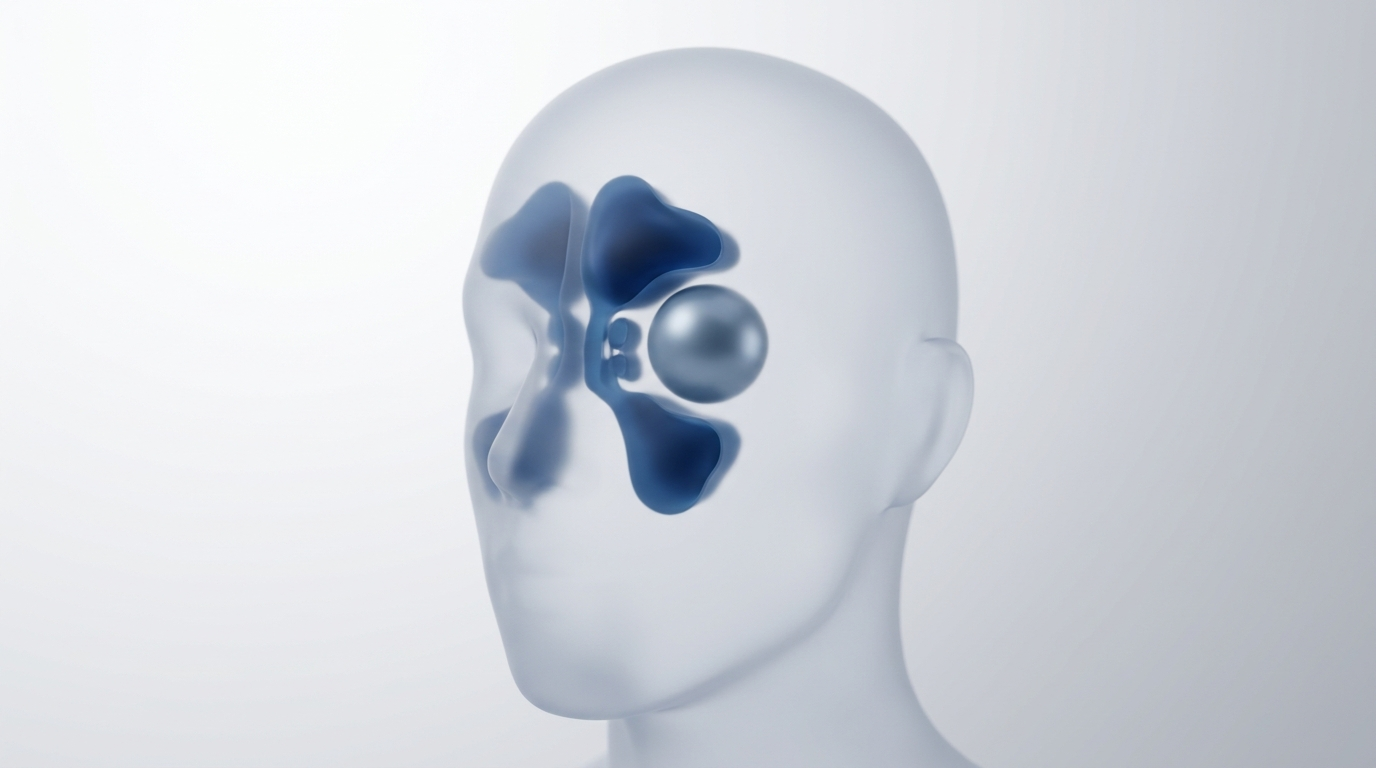
Where the frontal sinuses are located: Your frontal sinuses are air-filled spaces behind the forehead, roughly around the brow ridge area. When the lining inside these spaces becomes inflamed, swelling and mucus buildup can create localized tenderness and pressure—often felt right above the eyes or in the center of the forehead. (Mayo Clinic, 2023)
Some people notice they can “point with one finger” to where it hurts most (for example, the middle of the forehead or just above one eyebrow). That focused tenderness can fit sinus inflammation—but it’s not the only cause of forehead pain, which is why the overall symptom pattern matters.
Why frontal sinusitis can feel worse when you bend forward: Many people notice that forehead sinus pressure increases when bending over. That’s common with sinus inflammation: changes in pressure and shifts in mucus drainage can make discomfort more noticeable in positions like leaning forward or lowering the head. That said, positional discomfort is not specific to sinus disease and can occur with other headache types as well. (Mayo Clinic, 2023; CDC, 2024)
A concrete example: if you feel “okay-ish” sitting upright but get a sudden, heavier throb when tying your shoes or picking something up, that positional pressure change is a common sinus clue—just not diagnostic on its own.
– In short: inflammation narrows drainage pathways in small air-filled pockets behind your forehead, which can create pressure you feel across the brow. –

Frontal Sinusitis Symptoms (Patient-Friendly Checklist)
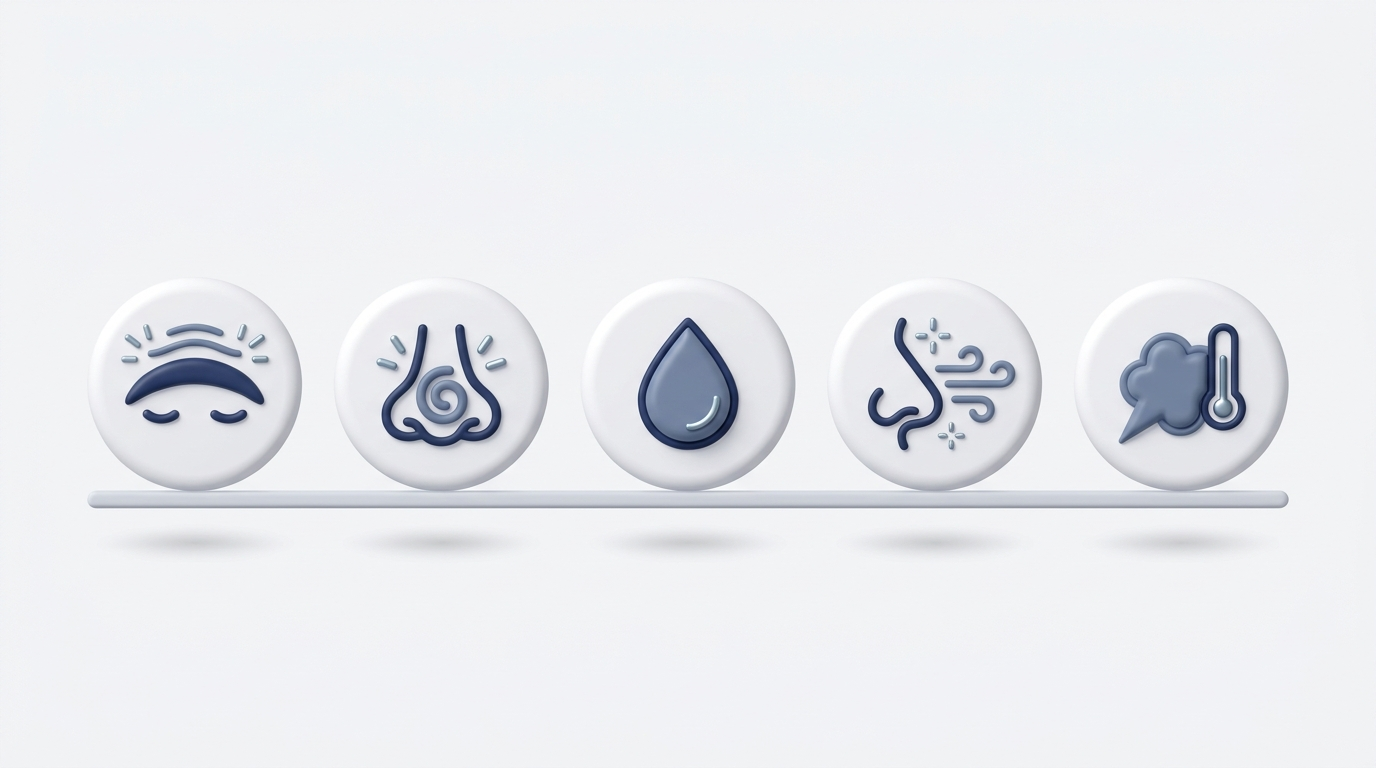
Common symptoms
- Forehead/brow pain or pressure (may be tender to touch)
- Nasal congestion (stuffy nose)
- Thick nasal drainage and/or postnasal drip
- Reduced sense of smell
- Cough (often worse at night), fatigue
- Fever (sometimes)
(Mayo Clinic, 2023; CDC, 2024)
In day-to-day terms, this can look like: you wake up congested, blow out thick mucus, feel a “band” of pressure across the brow, and notice a nighttime cough from postnasal drip.
Symptoms that suggest it may not be sinusitis
- Forehead pain without nasal congestion or drainage
- Headache patterns that fit migraine or tension-type headache (for example, light sensitivity, nausea, or a recurring headache history)
(AAO-HNS, 2025)
A common clinical clue is that sinus-related discomfort usually travels with nasal symptoms like congestion and drainage, but this is not a rule; only a clinician can sort this out. For a deeper comparison, see: migraine vs sinus headache: https://sleepandsinuscenters.com/blog/migraine-vs-sinus-headache-key-differences-and-symptoms-explained
– Bottom line: sinus-related forehead pressure typically appears with nasal symptoms, but location alone can’t diagnose the cause. –
Causes of Frontal Sinusitis (And Who’s at Higher Risk)
Most acute cases start viral: Most cases of acute sinus symptoms begin with a viral upper respiratory infection (a typical cold). In many people, symptoms peak and then improve within about 7–10 days, and antibiotics are not needed for viral illness. (CDC, 2024; Mayo Clinic, 2023)
You may also see this referred to as acute rhinosinusitis—“rhino” meaning the nose, since nasal inflammation and sinus inflammation often occur together.
What this can feel like on a timeline:
- Days 1–3: sore throat, runny nose, congestion ramps up
- Days 4–7: pressure/fullness and thicker drainage may show up
- Days 7–10: gradual improvement is typical in viral illness
(CDC, 2024; Mayo Clinic, 2023)
When bacterial rhinosinusitis becomes more likely: Bacterial infection is more likely when symptom timing follows certain patterns. Clinical guidelines highlight two key scenarios:
- Symptoms lasting 10 days or more without improvement
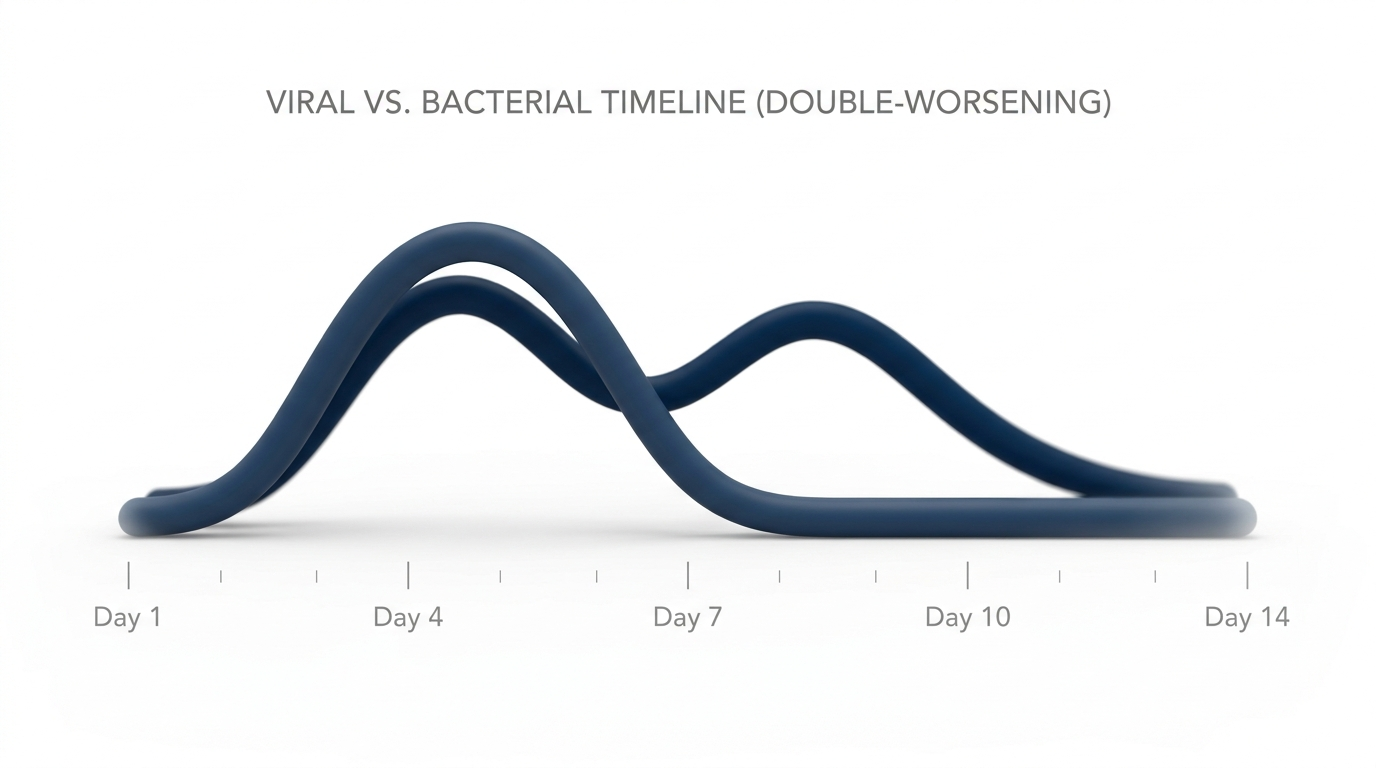
- Symptoms that worsen after initial improvement (“double-worsening”)
(AAO-HNS, 2025; Patel et al., 2018; CDC, 2024)
A practical example of “double-worsening”: you start to feel better around day 5 or 6, then around day 8 you suddenly get worse again—more pressure, thicker drainage, or fever returning. Clinicians often describe this pattern as a reason to take a closer look. (AAO-HNS, 2025)
Common triggers and contributors
- Allergic rhinitis (seasonal or environmental allergies)
- Irritant exposure (smoke, strong odors, pollution)
- Nasal anatomy issues that affect drainage (such as a deviated septum or turbinate swelling)
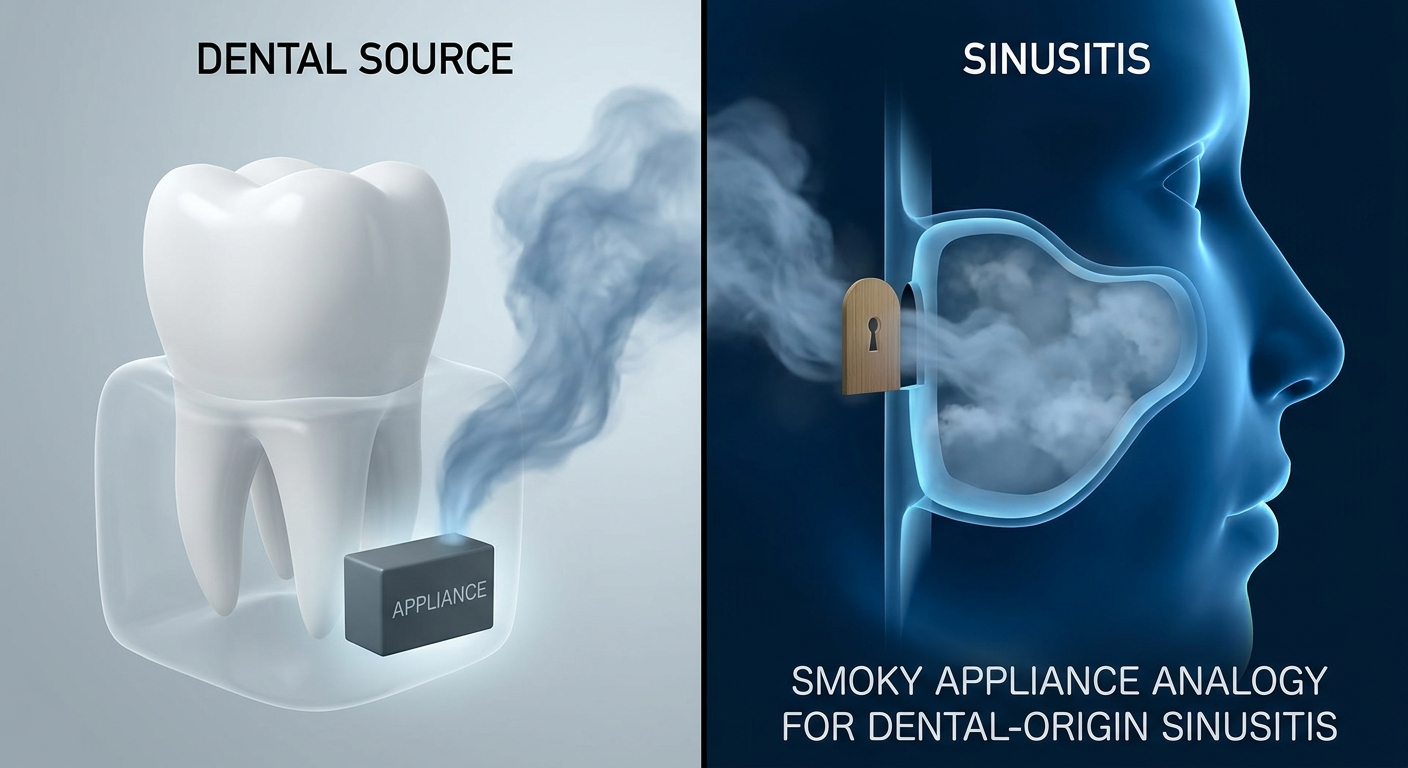
- Dental disease (more commonly contributes to maxillary sinus disease or facial pain mimics; frontal involvement is less typical)
(AAO-HNS, 2025; Mayo Clinic, 2023)
Think of it like a sink drain: if the drain is already narrow (swelling, irritation, anatomy), even normal mucus can back up more easily during a cold.
– Most acute cases start viral; timing and overall pattern help separate viral irritation from possible bacterial infection. –
Frontal Sinusitis vs. “Sinus Headache” — Conditions That Mimic It
Why forehead pain alone doesn’t prove a sinus problem: Forehead pressure can occur in multiple conditions—so pain location alone doesn’t confirm frontal sinusitis. Migraine and tension headaches can create facial pressure sensations, and allergies can cause congestion and a “full” feeling without infection. (AAO-HNS, 2025)
One practical check: sinus-related symptoms are often accompanied by nasal congestion and/or drainage. If forehead pain is the main symptom and your nose is otherwise clear, consider other possibilities with a clinician’s help. (AAO-HNS, 2025)
Other look-alikes to consider (especially if symptoms keep recurring)
- Migraine
- Tension-type headache
- Allergies
- TMJ or dental sources
- Other nasal/sinus disorders
(AAO-HNS, 2025)
– If congestion and drainage are absent or the pattern is atypical, consider other causes and get clinical guidance. –
When to See a Clinician (Timelines and Red Flags)
Make an appointment if:
- Symptoms persist more than 10 days
- Symptoms worsen after seeming to improve (“double-worsening”)
- There is persistent fever, significant facial pain/pressure, or symptoms that disrupt sleep/work
(AAO-HNS, 2025; CDC, 2024; Mayo Clinic, 2023)
If it helps, bring a quick “symptom log” to your visit (start date, whether symptoms improved then worsened, presence/absence of fever). That timeline is often as useful as any single symptom when deciding next steps. (AAO-HNS, 2025)
If you’re deciding when to see an ENT, this guide may help: https://sleepandsinuscenters.com/blog/when-should-i-see-an-ent
Seek urgent/immediate evaluation for warning signs
- Swelling/redness around an eye, eyelid swelling
- Double vision or vision changes
- Confusion, severe headache, stiff neck
- High fever
- Rapidly worsening forehead swelling
Why it matters: in rare cases, infection can spread to areas around the eye (orbit), the brain/meninges, or even the frontal bone. (AAO-HNS, 2025; Hong et al., 2017; Mayo Clinic, 2023)
– If symptoms persist beyond expected timelines or red flags appear, get prompt professional care. –
How Frontal Sinusitis Is Diagnosed
What a clinician typically checks
- Symptom pattern and duration (viral vs. possible bacterial)
- Nasal examination for inflammation and drainage
- Careful consideration of alternatives (migraine, allergies, etc.)
(AAO-HNS, 2025)
You may hear clinicians ask: “When did this start?” “Did it ever get better?” and “What’s the drainage like?” Those details help distinguish a typical viral course from patterns that raise suspicion for bacterial rhinosinusitis. (AAO-HNS, 2025)
Do you need a CT scan or imaging? For uncomplicated acute cases, routine imaging is not recommended. Imaging (like a CT scan) may be considered when complications are suspected, symptoms are severe or atypical, or another diagnosis needs to be ruled out. (AAO-HNS, 2025)
In other words: a CT scan isn’t the default for forehead pressure—it’s reserved for “something doesn’t fit” situations or when clinicians need a clearer map to guide next steps. (AAO-HNS, 2025)
When chronic rhinosinusitis may be the issue: If symptoms last more than 12 weeks, the concern may shift toward chronic rhinosinusitis. Guidelines note that chronic rhinosinusitis requires both persistent symptoms and objective evidence of inflammation—found on an exam, nasal endoscopy, or CT. (AAO-HNS, 2025)
– Diagnosis relies on timelines, patterns, and exam findings; imaging is usually reserved for atypical or complicated cases. –
Treatment for Frontal Sinusitis (Evidence-Based, Patient-Friendly)
At-home care for most acute (viral) cases
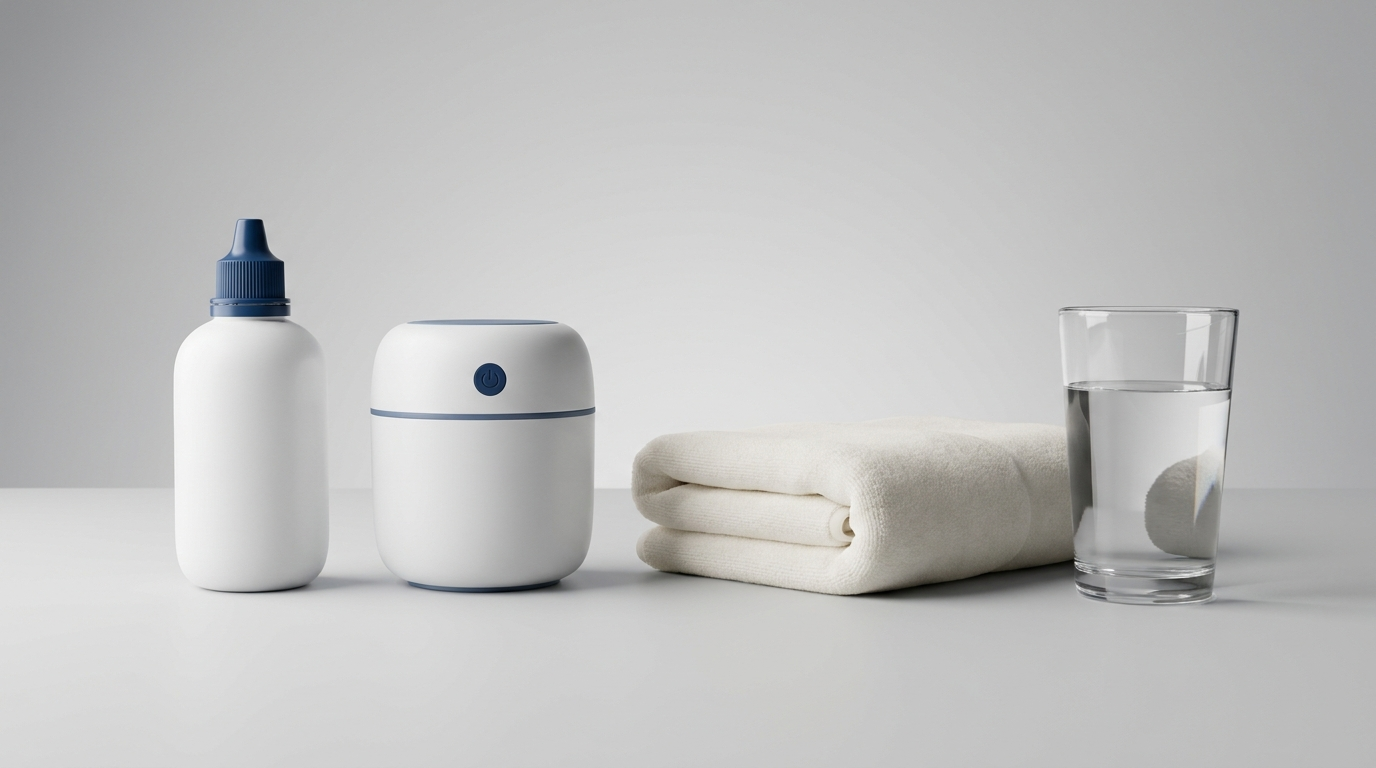
- Saline nasal spray or saline irrigation (with proper water safety)
- Adequate fluids and rest
- Humidified air/steam for comfort
- Warm compresses for facial discomfort
Many people find a warm compress over the brow for 5–10 minutes helps “take the edge off” pressure—especially before bed. If you use rinses (e.g., a neti pot or squeeze bottle), water safety matters. Technique and hygiene tips: https://sleepandsinuscenters.com/blog/neti-pot-safety-tips-essential-steps-for-safe-nasal-irrigation
OTC medication options (what may help)
- Pain relievers/fever reducers (as appropriate for your health history)
- Short-term decongestant strategies when appropriate
- Intranasal corticosteroid sprays to reduce inflammation (especially if allergies contribute)
(CDC, 2024; AAO-HNS, 2025)
Important: Ask a pharmacist or clinician what is appropriate for you—especially if you have chronic conditions, take other medications, are pregnant, or are choosing products for a child. A key caution: topical decongestant sprays can cause rebound congestion if overused. Learn more: https://sleepandsinuscenters.com/blog/afrin-rebound-how-long-does-nasal-congestion-last-after-use
Watchful waiting vs antibiotics (what current guidelines support): For uncomplicated acute bacterial rhinosinusitis, guidelines support watchful waiting with reliable follow-up as an option—meaning symptoms are monitored closely rather than starting antibiotics immediately in every case. If watchful waiting is chosen, antibiotics may be considered if symptoms worsen or don’t improve after a short observation window (often about 3–5 days). (AAO-HNS, 2025)
If symptoms become chronic or recurrent: When symptoms keep returning—or never fully resolve—evaluation may focus on drivers like allergies, ongoing inflammation, or structural issues affecting drainage. Management of chronic rhinosinusitis often involves longer-term medical strategies, and procedures may be considered for selected patients when appropriate. (AAO-HNS, 2025)
Related reading:
Acute Rhinosinusitis: Symptoms, Causes, and Treatment Options — https://sleepandsinuscenters.com/blog/acute-rhinosinusitis-symptoms-causes-and-treatment-options
Viral vs. Bacterial Sinus Infections: Key Differences — https://sleepandsinuscenters.com/blog/viral-vs-bacterial-sinus-infections-key-differences
Acute vs. Chronic Sinusitis: Key Differences and Treatment Options — https://sleepandsinuscenters.com/blog/acute-vs-chronic-sinusitis-key-differences-and-treatment-options
Lifestyle Tips to Reduce Recurrences (Prevention)
Reduce triggers that inflame nasal tissues
- Allergy management (avoidance plus clinician-guided treatment plans)
- Avoiding smoke and strong irritants
- Improving indoor air quality (balanced humidity, filtration when appropriate)
If you notice a seasonal pattern (for example, symptoms predictably flaring in spring or fall), that’s another clue to discuss allergies and long-term inflammation control with a clinician. (AAO-HNS, 2025)
Support healthy sinus drainage during colds
p>- Gentle saline use early in illness- Hydration and sleep
- Hand hygiene to reduce viral spread
(CDC, 2024)
– Reducing triggers and supporting drainage can lower the frequency and intensity of future flares. –
FAQs About Frontal Sinusitis
Q: How long does frontal sinusitis last?
A: Many acute, viral cases improve within 7–10 days. (Mayo Clinic, 2023; CDC, 2024)
Q: How can I tell if it’s bacterial?
A: Suspicion increases with symptoms that last 10 days or more without improvement or worsen after improving. Only a clinician can confirm. (AAO-HNS, 2025; Patel et al., 2018)
Q: Do I need antibiotics right away?
A: Not always. Watchful waiting with follow-up is supported for uncomplicated cases; antibiotics may be started if no improvement or worsening after a short window. (AAO-HNS, 2025)
Q: Why does it hurt more when I bend over?
A: Pressure changes and drainage shifts can intensify sinus discomfort when leaning forward, but this isn’t specific to sinus disease. (Mayo Clinic, 2023)
Q: Should I get a CT scan for forehead sinus pressure?
A: Not routinely for uncomplicated acute symptoms; imaging is typically reserved for concern about complications or alternative diagnoses. (AAO-HNS, 2025)
Q: When is it considered chronic sinusitis?
A: Symptoms lasting more than 12 weeks plus objective evidence of inflammation on exam, endoscopy, or CT. (AAO-HNS, 2025)
Q: What are the emergency warning signs?
A: Eye swelling/redness, vision changes, confusion, stiff neck, high fever, severe headache, or rapidly worsening forehead swelling warrant urgent evaluation. (AAO-HNS, 2025; Hong et al., 2017)
Conclusion (Clear next steps)
Forehead and brow pressure with congestion often fits a pattern of frontal sinusitis, especially when it follows a cold and comes with nasal drainage or postnasal drip. Many acute cases improve within a week to 10 days with supportive care. (CDC, 2024; Mayo Clinic, 2023)
If symptoms last beyond 10 days, worsen after initial improvement, or interfere significantly with daily life, a clinical evaluation can help clarify whether this is still viral illness, possible bacterial rhinosinusitis, allergy-driven inflammation, or something else. Persistent symptoms beyond 12 weeks may warrant workup for chronic rhinosinusitis. (AAO-HNS, 2025)
Call to action: If you’d like help sorting out persistent forehead pressure, recurring “sinus infections,” or chronic congestion, you can book an appointment with Sleep and Sinus Centers of Georgia here: https://www.sleepandsinuscenters.com/
Medical Disclaimer
This article is for educational purposes only and is not medical advice. Please consult a qualified healthcare provider for diagnosis and treatment.
This article is for general education and is not a substitute for personalized medical advice, diagnosis, or treatment. Seek urgent care right away if you have warning signs such as eye swelling/redness, vision changes, confusion, stiff neck, high fever, severe headache, or rapidly worsening forehead swelling. (AAO-HNS, 2025; Mayo Clinic, 2023)
Sources
CDC (2024); Mayo Clinic (2023); AAO-HNS Adult Sinusitis Guideline Update (2025); Patel et al. (2018); Hong et al. (2017).
https://www.mayoclinic.org/diseases-conditions/acute-sinusitis/symptoms-causes/syc-20351671
https://www.cdc.gov/sinus-infection/about/index.html
https://aao-hnsfjournals.onlinelibrary.wiley.com/doi/10.1002/ohn.1344
https://pmc.ncbi.nlm.nih.gov/articles/PMC7122468/
https://pmc.ncbi.nlm.nih.gov/articles/PMC5253506/
Don’t let allergies slow you down. Schedule a comprehensive ENT and allergy evaluation at Sleep and Sinus Centers of Georgia. We’re here to find your triggers and guide you toward lasting relief.