COVID vs Cold Symptoms: Key Differences and What to Watch For
Runny nose? Sore throat? Congestion? It’s frustratingly common for respiratory infections to feel the same at first—especially when you’re trying to decide whether to test, stay home, or protect vulnerable family members. This guide from Sleep and Sinus Centers of Georgia breaks down COVID vs cold symptoms, typical timing after exposure, and practical “watch-fors” that matter.
This article is for general education only and isn’t a substitute for medical care or personalized advice.
Quick Answer—Can You Tell COVID From a Cold Without Testing?
In most cases, no. COVID vs cold symptoms overlap heavily—especially early on—so testing is the most reliable way to confirm which one you have. The Mayo Clinic notes that many people experience similar upper respiratory symptoms with COVID-19 and colds, and symptom lists alone can’t reliably separate them.
Source: Mayo Clinic (2026) – https://www.mayoclinic.org/diseases-conditions/coronavirus/in-depth/covid-19-cold-flu-and-allergies-differences/art-20503981
A helpful way to think about it: early symptoms can be like two nearly identical keys—they look and feel similar until you “try the lock” (test) and confirm which one fits.
Why it matters:
- Reducing spread to high-risk household members
- Return-to-work/school decisions
- Timely access to COVID-19–specific treatment options for people who qualify (when clinically appropriate)
If symptoms resemble seasonal allergies rather than infection, it may also help to understand allergic rhinitis (hay fever): https://sleepandsinuscenters.com/blog/what-is-allergic-rhinitis-hay-fever
Testing decisions can still be affected by timing, test type, and specimen quality—if early tests are negative but suspicion remains high, retesting can be helpful.
When in doubt, test—especially if results would change what you do next.

COVID vs Cold Symptoms (Side-by-Side Comparison)
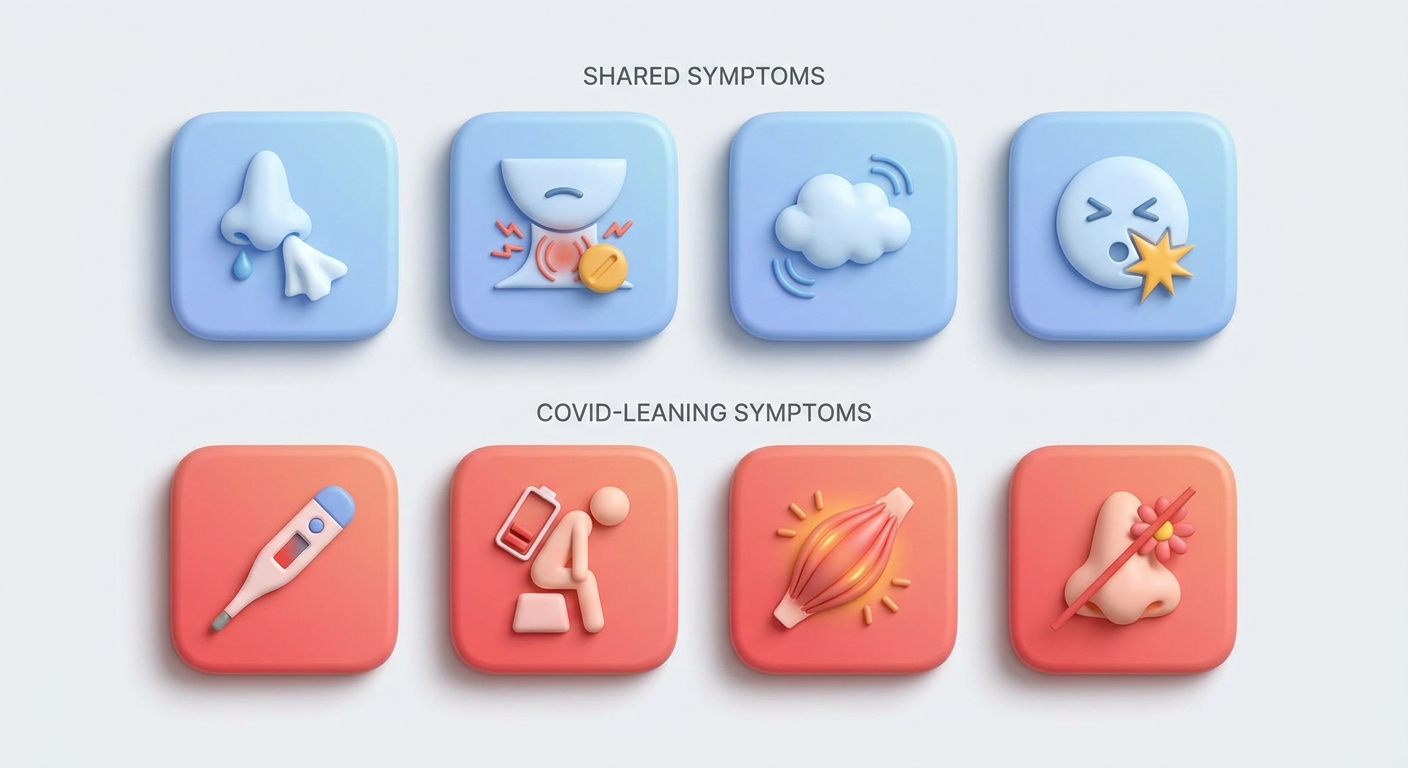
Symptoms they commonly share
Both COVID-19 and the common cold may include:
- Runny or stuffy nose
- Sore throat
- Cough (often mild early)
- Sneezing (more commonly associated with colds, but can occur with COVID-19)
- Mild body aches and/or headache or facial pressure
Source: Mayo Clinic (2026) – https://www.mayoclinic.org/diseases-conditions/coronavirus/in-depth/covid-19-cold-flu-and-allergies-differences/art-20503981
Because these symptoms overlap with sinus problems too, you may also find this helpful: sinus infection vs cold symptoms: https://sleepandsinuscenters.com/blog/sinus-infection-vs-cold-how-to-tell-the-difference
Symptoms more suggestive of COVID-19
While not “proof,” these are more commonly associated with COVID-19:
- Fever or chills
- Marked fatigue or exhaustion
- Muscle aches (myalgias)
- Headache
- New loss of taste or smell (still can occur)
- Shortness of breath can occur with COVID-19, but treat any new or worsening breathing problems as a red flag (see below)
Source: Mayo Clinic (2026) – https://www.mayoclinic.org/diseases-conditions/coronavirus/in-depth/covid-19-cold-flu-and-allergies-differences/art-20503981
Concrete example: someone might start with a scratchy throat and mild congestion—then notice fever and unusually heavy fatigue later that day or the next. That combination is one reason many people choose to test even if the symptoms began “like a cold.” If smell changes are part of your symptoms, you may find this useful: will my sense of smell come back after COVID: https://sleepandsinuscenters.com/blog/will-my-sense-of-smell-come-back-after-covid
Symptoms more typical of the common cold
Colds often:
- Stay more “above the neck” (congestion, runny nose, mild sore throat)
- Cause fever less often, and tend to be milder overall for many healthy adults
Source: Mayo Clinic (2026) – https://www.mayoclinic.org/diseases-conditions/coronavirus/in-depth/covid-19-cold-flu-and-allergies-differences/art-20503981
A “classic” cold pattern for many people is two to three days of prominent nasal symptoms, then gradual improvement—though a cough and postnasal drip can hang on longer.
Quick comparison highlights
- Runny/stuffy nose and sore throat: common in both—testing is often needed if you’re unsure.
- Sneezing: more “cold-like,” but still possible with COVID-19.
- Fever, marked fatigue, and muscle aches: tilt more toward COVID-19, especially in combination.
- Loss of taste/smell: can still occur with COVID-19—testing recommended if present.
- New shortness of breath: take seriously and seek medical guidance.
Symptom lists can guide your suspicion, but they rarely settle COVID vs cold without a test.
Incubation Period—How Soon Symptoms Start After Exposure
Timing can offer clues, though it still doesn’t confirm the cause.
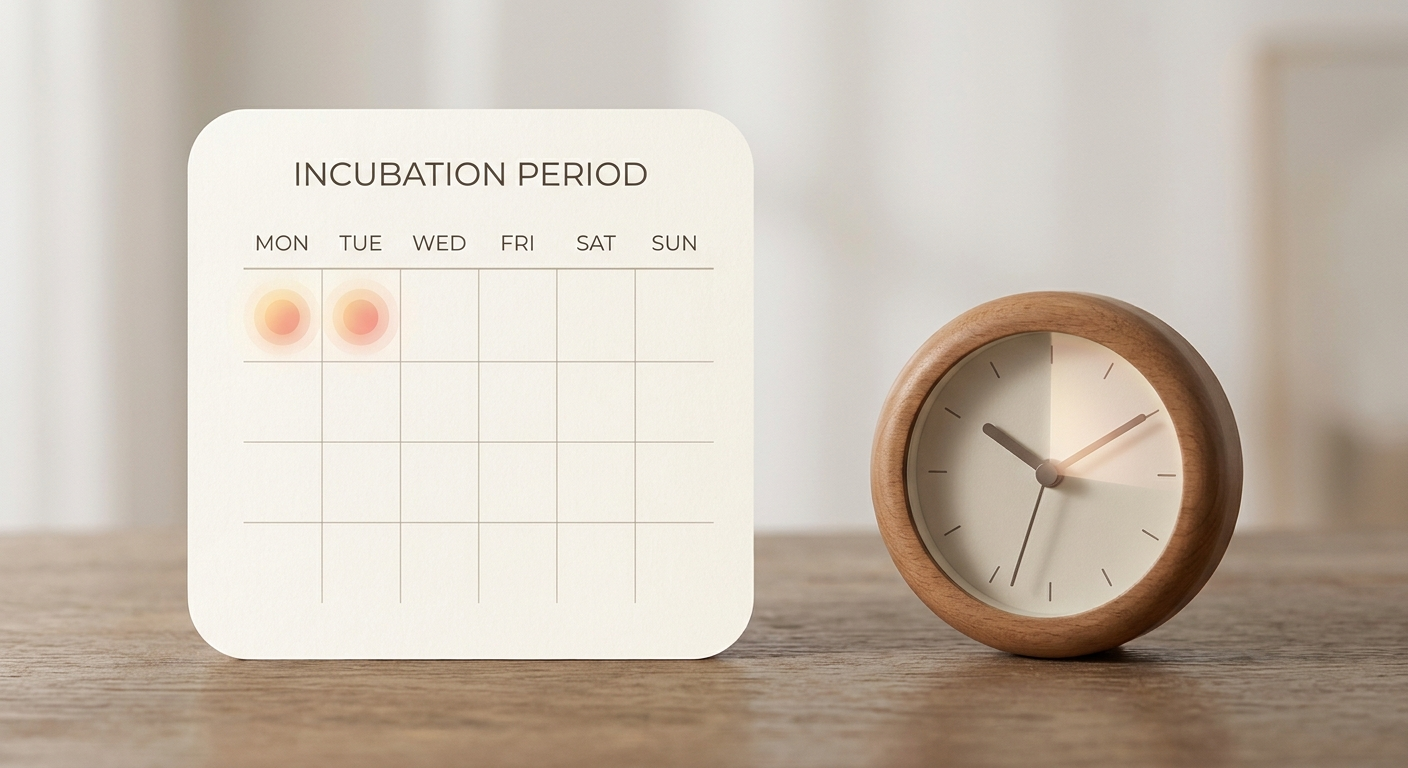
Common cold incubation period (typical)
- Usually 1–3 days after exposure
COVID-19 timing
- Symptoms often appear within a few days after exposure, but can sometimes take longer; timing varies by variant and person. Historically, the incubation period has been reported as up to 14 days.
Source: Mayo Clinic (2026) – https://www.mayoclinic.org/diseases-conditions/coronavirus/in-depth/covid-19-cold-flu-and-allergies-differences/art-20503981
A quick real-life timing example
If you had close contact with someone sick on Saturday:
- Cold symptoms might show up as early as Sunday or Monday.
- COVID-19 symptoms could also begin early but may not appear until later in the week.
Because the ranges overlap, use timing as a clue, not a conclusion—especially if you’ll be around older adults or medically fragile family members.
Let timing inform your judgment, but let testing confirm it.
Newer Variants—Why Symptoms Keep Changing
If it feels like the “typical” symptom checklist keeps shifting, that’s because it does.
What’s circulating now
Reported circulating Omicron subvariants vary by region and time.
Source: Nebraska Medicine – https://www.nebraskamed.com/COVID/what-covid-19-variants-are-going-around
“Nimbus” and the “stabbing sore throat” trend
Some reports have associated the term “Nimbus” with a more intense or “stabbing” sore throat, but this is not a diagnostic feature and is not unique to COVID-19.
Source: Stony Brook Medicine (2026) – https://health.stonybrookmedicine.edu/understanding-covid-nimbus-symptoms-and-key-facts/
Why variant evolution changes the “classic” symptom checklist
- Virus changes: variants can behave differently in the airways.
- Immune history: vaccines and prior infections can change symptom severity and which symptoms stand out.
- Seasonality and co-circulating viruses: colds, flu, and allergies can blur the picture.
For a deeper look at upper-airway changes, you may also like nasal sound changes in COVID-19: https://sleepandsinuscenters.com/blog/nasal-sound-changes-in-covid-19-key-symptoms-explained
Because variants and immunity evolve, avoid relying on any single “signature” symptom.
Causes—What Actually Causes a Cold vs COVID?
What causes the common cold
The common cold is caused by several different viruses, most often rhinoviruses. Colds spread mainly through close contact and respiratory droplets; contaminated hands can also contribute if someone touches their eyes, nose, or mouth.
What causes COVID-19
COVID-19 is caused by SARS‑CoV‑2. Like many respiratory viruses, it spreads primarily through respiratory droplets/aerosols, and contagiousness may begin before someone feels fully sick.
General reference on overlap: Mayo Clinic (2026) – https://www.mayoclinic.org/diseases-conditions/coronavirus/in-depth/covid-19-cold-flu-and-allergies-differences/art-20503981
Different viruses—similar symptoms—similar prevention basics.
When to Test (and Which Test to Use)
Because COVID vs cold symptoms can look nearly identical, testing often becomes the deciding tool—especially when exposure risk is higher.
Situations where testing is strongly recommended
Testing is often especially useful when:
- Symptoms include fever plus fatigue/body aches
- Symptoms follow a known exposure
- You’ll be around someone high-risk (older adults, immunocompromised people, chronic lung disease, etc.)
- Work/school/travel requires confirmation
If you’re debating whether you “really need” to test, ask yourself: “If this is COVID-19, would I do anything differently today?” If the answer is yes (masking, skipping a visit, delaying travel), testing is often worth it.
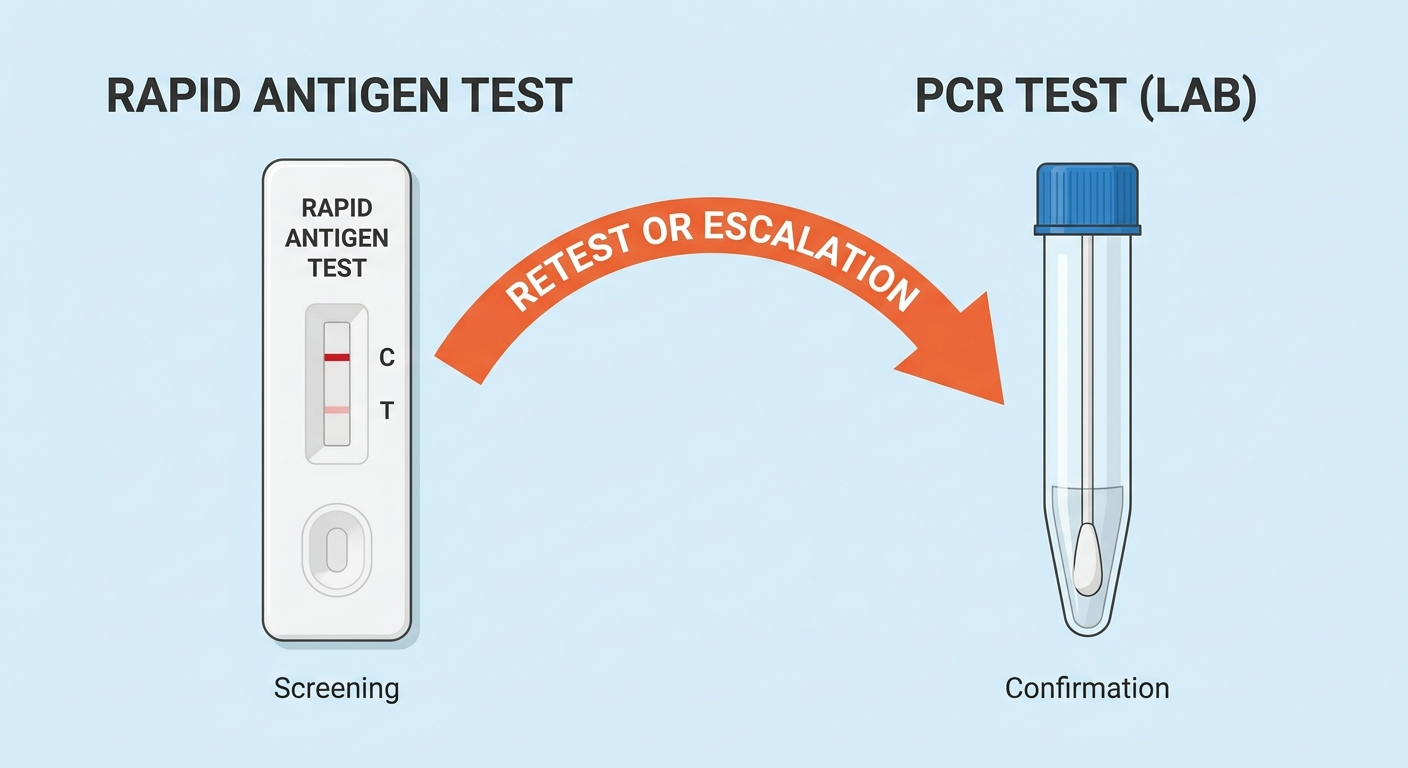
Rapid antigen test vs PCR—patient-friendly guidance
- Rapid antigen tests: convenient and fast, but may miss infections early.
- PCR/NAAT tests: generally more sensitive, but results may take longer.
If suspicion remains high after a negative rapid test, repeat testing or a more sensitive test may be considered (timing and availability vary).
Important bottom line
When symptoms overlap, testing is the most reliable way to confirm whether symptoms are due to COVID-19 or a cold.
Source: Mayo Clinic (2026) – https://www.mayoclinic.org/diseases-conditions/coronavirus/in-depth/covid-19-cold-flu-and-allergies-differences/art-20503981
If your plans or the safety of others would change based on the result, make testing part of your plan.
Treatment—What to Do If You Have Cold or COVID Symptoms
This is general education, not individualized medical advice.
Home care that may help both illnesses
Many people use supportive care such as:
- Rest and fluids
- Saline spray/rinse for congestion
- Honey or throat lozenges (age-appropriate)
- Over-the-counter fever/ache reducers when safe for the individual (labels and health conditions matter)
A practical “day plan” can help: focus on hydration, keep meals simple, and set a reminder to reassess symptoms (and temperature, if relevant) later in the day rather than guessing hour by hour.
COVID-19–specific considerations
- Keep up with current isolation guidance from your local public health authority.
- People at higher risk may benefit from contacting a clinician early to ask about COVID-19–specific treatment options where appropriate (timing can matter).
Cold-specific considerations
- Colds usually improve gradually with symptom-focused care.
- Antibiotics don’t treat most colds because colds are typically viral.
Supportive care helps most mild infections; seek timely guidance if you’re higher risk or symptoms escalate.
What to Watch For—Red Flags That Need Medical Care
Seek urgent/emergency care for:
- Trouble breathing, shortness of breath, or chest pain/pressure
- Blue/gray lips or face, severe weakness, confusion
- Signs of dehydration (can’t keep fluids down, dizziness, very low urine output)
- Symptoms that rapidly worsen after initial improvement
Shortness of breath is also listed among possible COVID-19 symptoms.
Source: Mayo Clinic (2026) – https://www.mayoclinic.org/diseases-conditions/coronavirus/in-depth/covid-19-cold-flu-and-allergies-differences/art-20503981
Call your clinician soon if:
- Fever lasts more than a few days or keeps returning
- You’re immunocompromised, pregnant, or managing significant chronic disease
- Sore throat is severe with inability to swallow, or there’s one-sided throat pain that worsens
Don’t ignore new or worsening breathing problems—err on the side of urgent evaluation.
Preventing Spread at Home (Simple Lifestyle Tips)
If you’re sick (regardless of cause)
- Stay home when possible and reduce close contact.
- Improve ventilation (open windows, use high-quality air filtration if available).
- Hand hygiene and basic cleaning for shared surfaces.
- Consider masking around others when symptomatic, especially with high-risk household members.
A small but meaningful habit: designate one towel for the sick person and avoid sharing drinks/utensils during the first few days of symptoms, when spread risk can be higher.
Reducing your chance of catching viruses
- Vaccination as recommended.
- Avoid close contact with sick people when possible.
- Extra caution in crowded indoor spaces during surges can reduce risk.
Simple steps—good air, good hygiene, and smart masking—meaningfully cut household spread.
FAQs
Can COVID feel exactly like a cold?
Yes—especially early. Overlap is common, and testing is the most reliable way to know.
Source: Mayo Clinic (2026) – https://www.mayoclinic.org/diseases-conditions/coronavirus/in-depth/covid-19-cold-flu-and-allergies-differences/art-20503981
Is a sore throat more COVID or cold?
Either. Some newer variant discussions highlight more intense sore throat for certain strains, but it isn’t diagnostic by itself.
Sources: Stony Brook Medicine (2026) – https://health.stonybrookmedicine.edu/understanding-covid-nimbus-symptoms-and-key-facts/; Mayo Clinic (2026) – https://www.mayoclinic.org/diseases-conditions/coronavirus/in-depth/covid-19-cold-flu-and-allergies-differences/art-20503981
How long after exposure would I get symptoms?
Cold: often 1–3 days. COVID-19: symptoms often appear within a few days but can sometimes take longer; historically reported up to 14 days.
Source: Mayo Clinic (2026) – https://www.mayoclinic.org/diseases-conditions/coronavirus/in-depth/covid-19-cold-flu-and-allergies-differences/art-20503981
If my rapid test is negative, can it still be COVID-19?
Yes, especially early. Repeat testing or a more sensitive test may be considered when symptoms fit or after a known exposure.
When should I worry about shortness of breath?
Any new or worsening breathing difficulty should be taken seriously and evaluated promptly.
Source: Mayo Clinic (2026) – https://www.mayoclinic.org/diseases-conditions/coronavirus/in-depth/covid-19-cold-flu-and-allergies-differences/art-20503981
FAQs change as the virus and guidance evolve—check reputable sources and test when unsure.
Conclusion—The Safest Way to Know (and Protect Others)
Because symptom patterns overlap and variants evolve, guessing based on a checklist is risky. The safest approach to COVID vs cold symptoms is to test when unsure, limit exposure to others when sick, and watch closely for red flags that need medical attention.
Test early, protect others, and seek care promptly if symptoms worsen.
Related Resources
- Sinus infection vs cold symptoms: https://sleepandsinuscenters.com/blog/sinus-infection-vs-cold-how-to-tell-the-difference
- Nasal sound changes in COVID-19: https://sleepandsinuscenters.com/blog/nasal-sound-changes-in-covid-19-key-symptoms-explained
- Will my sense of smell come back after COVID: https://sleepandsinuscenters.com/blog/will-my-sense-of-smell-come-back-after-covid
- Allergic rhinitis (hay fever): https://sleepandsinuscenters.com/blog/what-is-allergic-rhinitis-hay-fever
Appointments
If you’d like help sorting out persistent nasal congestion, post-viral smell changes, or recurrent sinus symptoms, you can book an appointment with Sleep and Sinus Centers of Georgia here: https://www.sleepandsinuscenters.com/
This article is for educational purposes only and is not medical advice. Please consult a qualified healthcare provider for diagnosis and treatment.
Don’t let allergies slow you down. Schedule a comprehensive ENT and allergy evaluation at Sleep and Sinus Centers of Georgia. We’re here to find your triggers and guide you toward lasting relief.