Atlanta Winter Mold Allergies: Symptoms, Causes, and Prevention Tips
If your nose is stuffy, your eyes itch, or you’re waking up congested in December—even when the pollen count is low—you’re not imagining it. For many people, Atlanta winter mold allergies can feel just as frustrating as springtime symptoms.
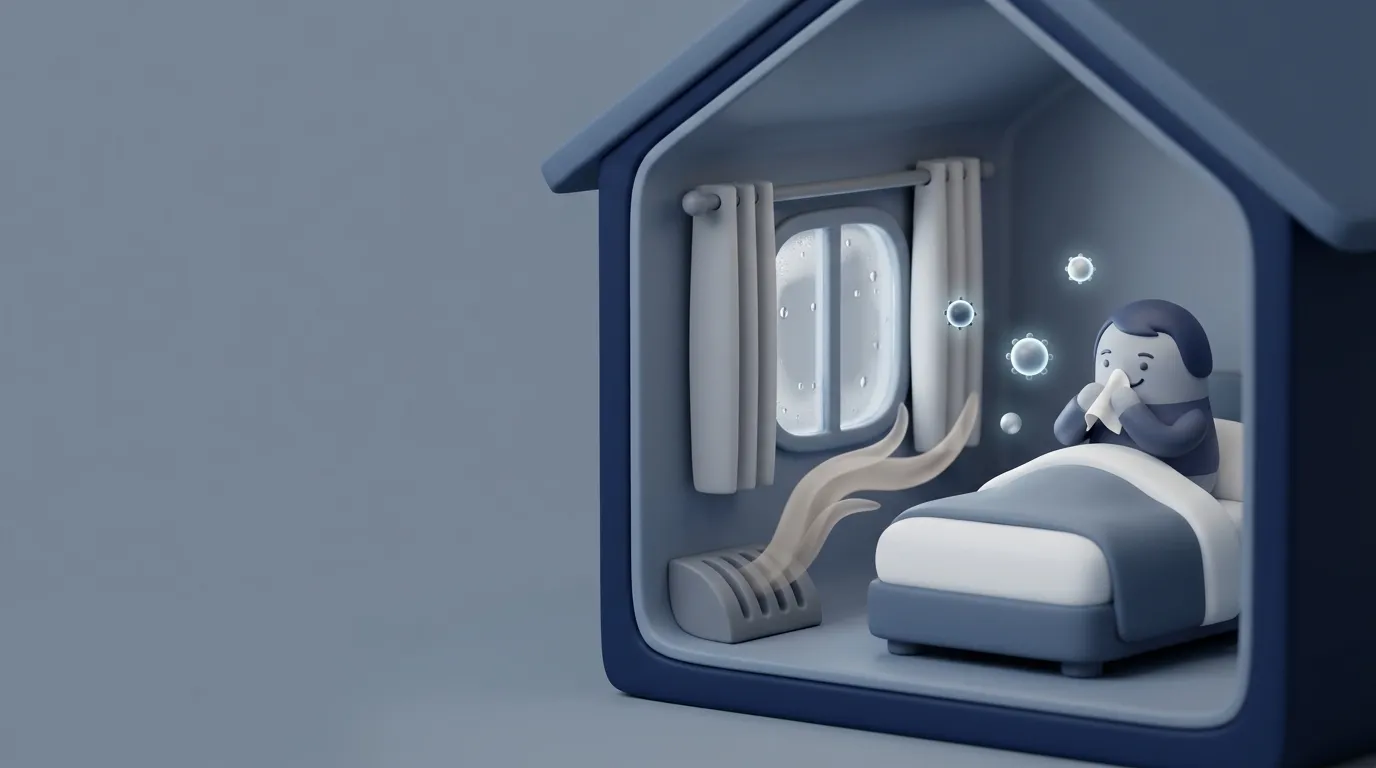
Winter in Atlanta often means more time indoors with windows closed, heaters running, and limited fresh-air circulation. Think of it like putting a lid on a pot: whatever is already in the air (dust, pet dander, and mold spores) has fewer ways to escape, so it becomes easier to notice—especially at night in bedrooms.
And while a hard freeze may reduce some outdoor allergens, mold doesn’t simply disappear. Fungi can persist through colder weather and continue to produce spores that remain allergenic to sensitive individuals (CDC: https://www.cdc.gov/mold/). That’s why “winter allergies” can still be very real in North Georgia.
Below, we’ll break down why winter allergies in Atlanta can spike, the most common molds involved, how symptoms can overlap with a cold, and practical mold prevention tips you can start using at home.
Why Mold Allergies Can Be Worse in Atlanta During Winter
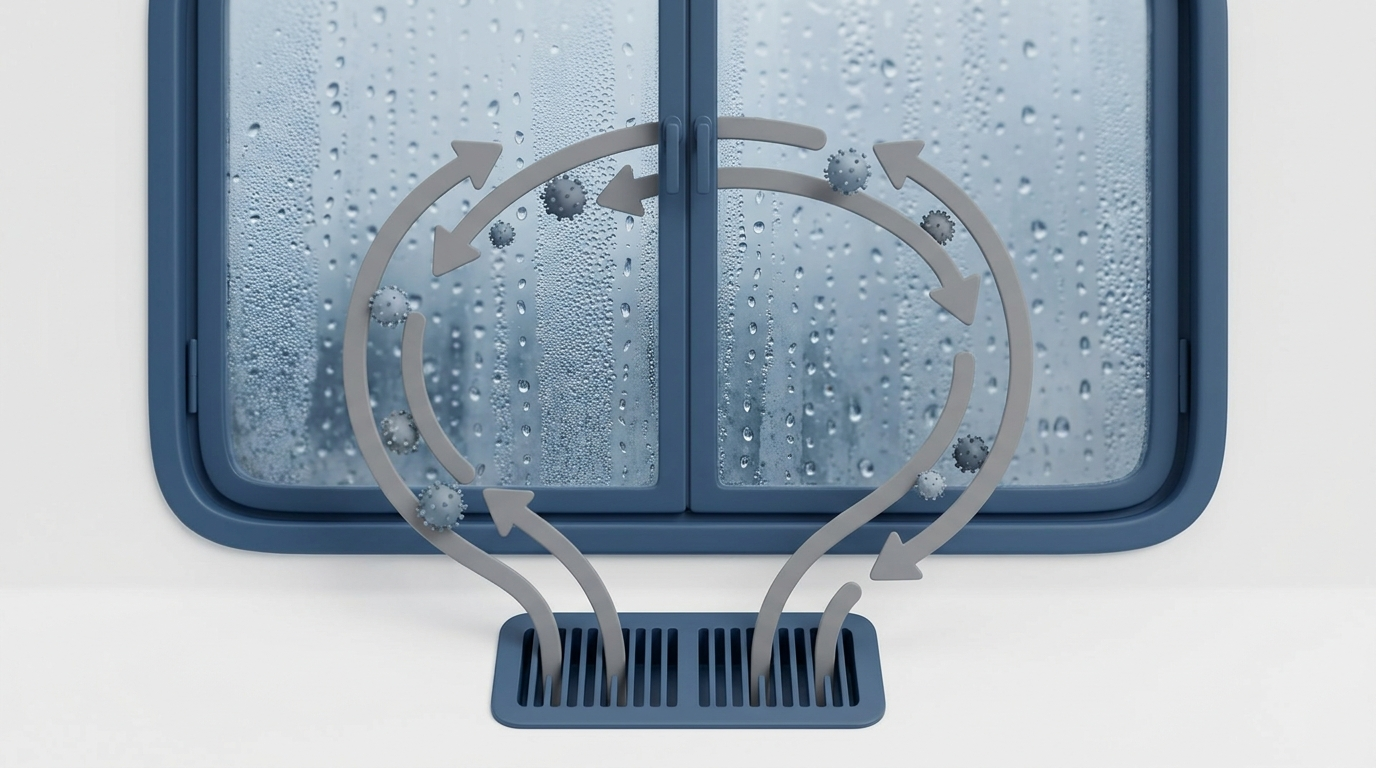
Winter = more indoor exposure: During December and January, many households spend more hours indoors. With windows shut, indoor air can concentrate irritants like dust, pet dander, and mold spores—especially if ventilation is limited (CDC: https://www.cdc.gov/mold/). A common “tell” is timing: people often feel better after being outside or away from home, then get congested again after a few hours back inside—particularly once the heat has been running.
Atlanta’s wet, cold winters create moisture problems: Atlanta winters aren’t just chilly—they’re often wet. Rain combined with cool temperatures can lead to condensation on windows, around frames, and even inside poorly insulated walls. Moisture plus everyday organic materials (drywall, wood, cardboard, dust) creates an environment where mold can grow (CDC: https://www.cdc.gov/mold/). Everyday routines add moisture, too—steamy showers, simmering pots, or drying clothes indoors. When warm, humid air hits a cold surface, it forms droplets—exactly the lingering dampness mold likes.
Mold doesn’t “die” with the first frost: Outdoor pollen often drops in winter (IQAir: https://www.iqair.com/pollen/usa/georgia/atlanta), but mold behaves differently. Mold produces spores that can remain present at low levels and rebound when moisture returns—after rain, plumbing drips, or ongoing indoor humidity. Even dormant mold spores can still trigger reactions in sensitive individuals.
Bottom line: more time indoors plus winter moisture adds up to higher exposure to allergenic mold spores in many Atlanta homes.
Common Winter Mold Types That Trigger Allergies in Georgia Homes
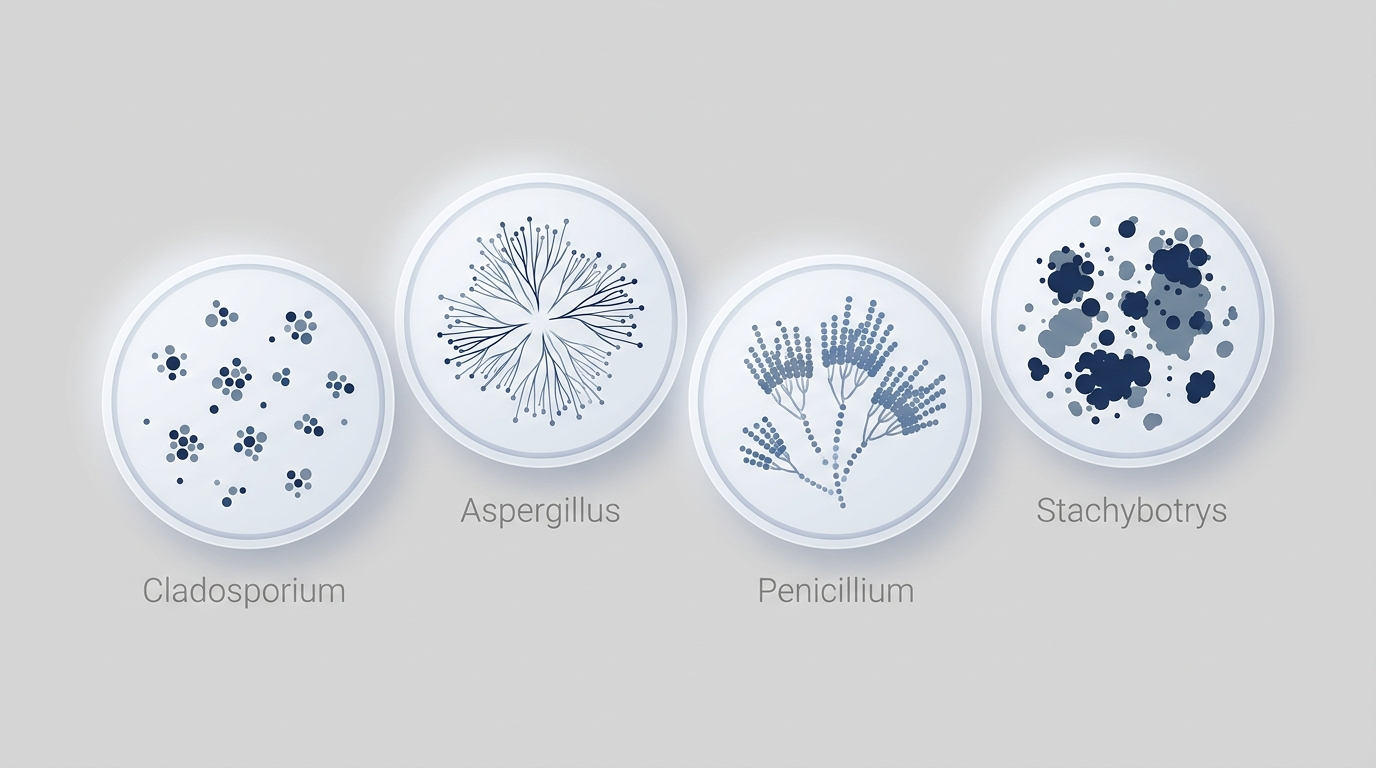
Common allergenic molds you may hear about: Many cases of indoor mold allergies involve molds frequently found in homes (CDC: https://www.cdc.gov/mold/). Examples include:
- Cladosporium (often linked to Cladosporium sensitization)
- Aspergillus (a common indoor spore; some species are allergenic)
- Penicillium
- Stachybotrys chartarum (often called “black mold”)
What matters most at home is usually moisture control rather than the exact species. A practical rule of thumb: you can’t “medicate away” a moisture problem—environmental control is the foundation.
Also keep in mind that it’s the spores molds release that typically act as the primary allergens rather than the mold colony itself.
Where these molds may show up (quick examples): Mold commonly appears where moisture lingers or where leaks have occurred, including:
- Bathrooms (shower grout, under sinks)
- Basements and crawlspaces
- Around windows (especially with regular condensation)
- Behind walls after roof leaks or plumbing problems
- HVAC areas with moisture (around coils/drain pans, vents)
For a room-by-room checklist of where mold tends to hide, see Atlanta home mold hot spots: https://sleepandsinuscenters.com/blog/atlanta-home-mold-hot-spots-common-areas-prone-to-mold-growth
In practice, finding and fixing moisture sources is more impactful than identifying every mold species.

Atlanta Winter Mold Allergy Symptoms (What Patients Commonly Notice)
Mold exposure can cause allergy symptoms and irritation, and people can experience them differently (CDC: https://www.cdc.gov/mold/). Here are common patterns seen with Atlanta winter mold allergies.
Nose and sinus symptoms:
- Sneezing
- Runny nose (often clear drainage)
- Stuffy nose / congestion
- Post-nasal drip
- Sinus pressure or a “full head” sensation
Many people describe congestion as worse first thing in the morning or after being in a closed-up room overnight—when air has been recirculating for hours.
Eye and throat symptoms:
- Itchy, watery eyes
- Scratchy throat
- Frequent throat clearing
- Cough that seems worse indoors or at night
That “dry winter cough” can be confusing, because it may be irritation from post-nasal drip rather than something in the lungs.
Chest symptoms (when allergies affect breathing):
- Wheezing
- Chest tightness
- Shortness of breath
These are more common in people with asthma or reactive airways and should be taken seriously.
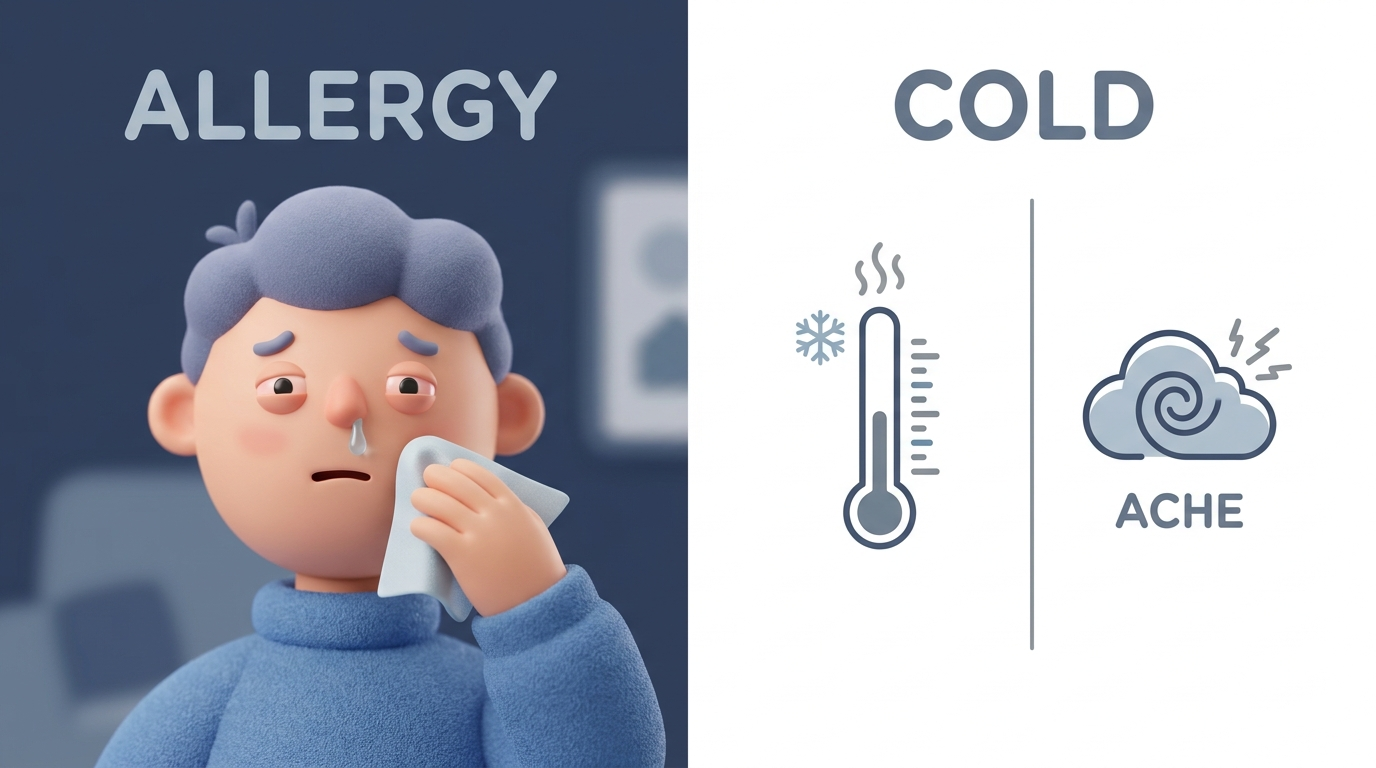
Symptoms that can mimic a cold (and clues it’s allergies): Because of overlap, many people wonder about mold symptoms vs cold. Allergies can include itching (eyes/nose), clear drainage, and symptoms that linger or recur in the same environment (like at home). Colds are more likely to include fever or body aches and often improve within about 7–10 days. These are general patterns—not a diagnostic test—and overlap is common; a clinician can help confirm what’s going on.
If symptoms repeat in the same spaces—especially damp rooms or at night—it’s reasonable to consider indoor mold as part of the picture.
What Causes Winter Mold Allergy Flares in Atlanta Homes
Condensation and poor insulation: Condensation is one of the most overlooked winter moisture sources. When warm indoor air hits cold surfaces (like single-pane windows or uninsulated exterior walls), water can collect—creating the conditions mold needs. If you regularly see water beading on windows, indoor humidity may be too high or the surface may be staying too cold.
HVAC and closed-window living: In winter, homes often have reduced fresh-air exchange, which can allow allergens to build up indoors. HVAC systems themselves don’t produce mold, but moisture buildup within components (e.g., coils, drain pans, ducts) can support growth and spread spores through airflow. Focus on measurable steps—humidity control, filtration, and addressing any known moisture sources.
Hidden water damage: Roof leaks, plumbing drips, and past flooding can lead to mold growth that you can’t immediately see. A musty odor, recurring symptoms in one room, or staining on ceilings/walls can be clues (CDC: https://www.cdc.gov/mold/).
Outdoor mold still matters—especially after rain: Even in winter, rainy stretches can contribute to mold increases. For more Georgia-specific context, see: Mold growth after rain in Georgia: causes and prevention tips https://sleepandsinuscenters.com/blog/after-rain-mold-growth-in-georgia-causes-and-prevention-tips
In short, winter moisture—seen or unseen—often drives winter allergy flares in Atlanta homes.
Prevention Tips (Patient-Friendly “Do This First” Checklist)
These mold prevention tips focus on reducing moisture and allergen buildup—the foundation for minimizing Atlanta winter mold allergies (CDC: https://www.cdc.gov/mold/).
Control indoor humidity (target range):
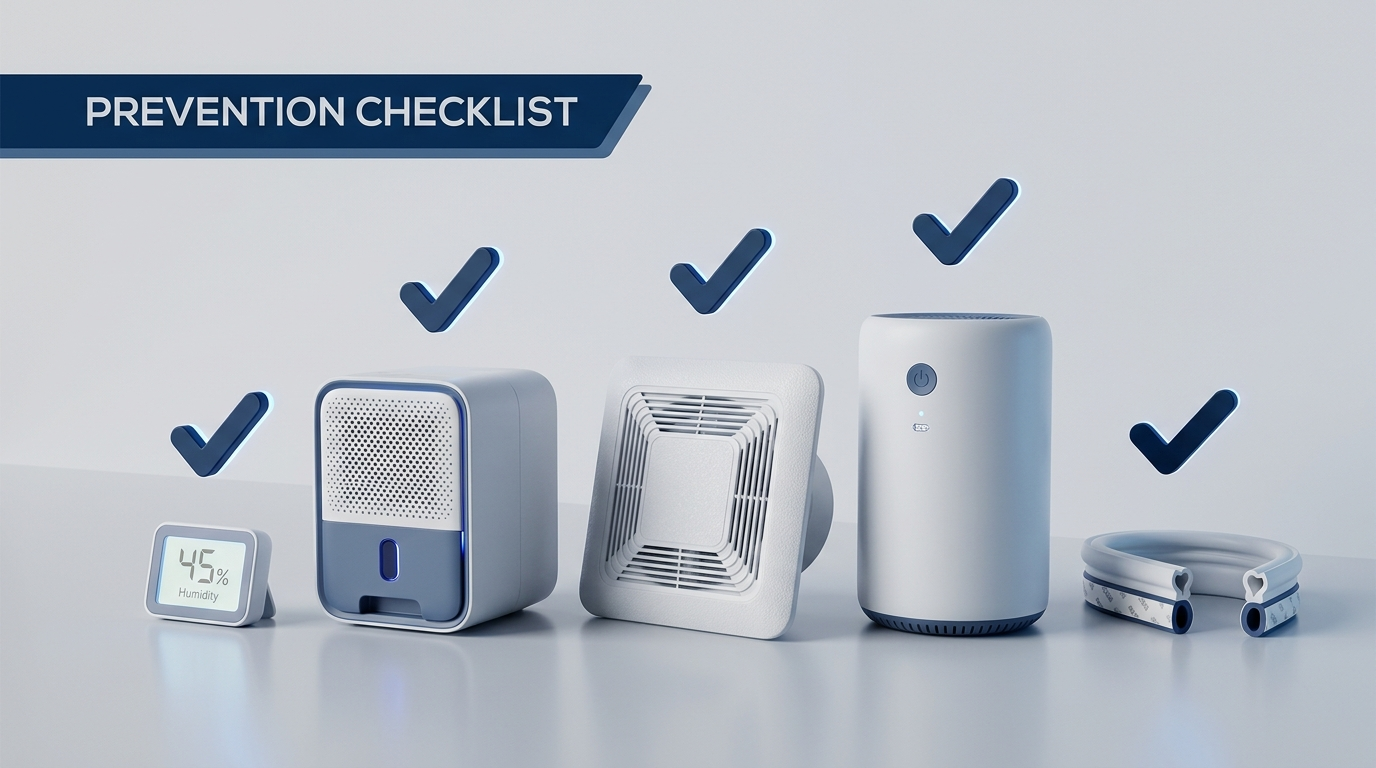
- Aim to keep indoor humidity generally around 30–50% and no higher than 50%, a range commonly recommended by health agencies like CDC and EPA (CDC: https://www.cdc.gov/mold/; EPA: https://www.epa.gov/mold/brief-guide-mold-moisture-and-your-home).
- Use a simple hygrometer to measure (many are inexpensive).
- Consider dehumidifiers in damp areas (basements/crawlspaces).
Tip: measure before you guess. In winter, some rooms can feel “dry” but still be humid enough (like bathrooms or basements) to support mold.
Stop condensation at the source:
- Run bathroom fans during showers and for a bit afterward.
- Use kitchen ventilation when cooking.
- Address weatherstripping and insulation issues around windows/doors.
- Don’t ignore condensation on pipes—persistent moisture can feed mold growth.
Clean safely (small areas) and know when to call a pro: For small, surface-level cleanup, follow CDC guidance: ventilate the area, wear protective gear like gloves, and avoid mixing cleaning chemicals (CDC: https://www.cdc.gov/mold/). If mold covers a large area, keeps returning, or someone in the home has significant breathing issues, professional remediation may be the safer next step.
Reduce allergen buildup:
- HEPA vacuuming (where appropriate) and damp dusting to reduce re-circulating particles
- Wash bedding regularly
- Reduce clutter in damp-prone rooms
- Consider a HEPA air purifier in bedrooms if nighttime symptoms are worse
Start with measurement (humidity), moisture control, and consistent ventilation—then layer on filtration and cleaning for best results.
Diagnosis: How to Confirm It’s Mold (Not “Just Winter Allergies”)
Symptom pattern questions your clinician may ask:
- Do symptoms happen more at home than at work (or vice versa)?
- Do they worsen after rain or in specific rooms?
- Any musty odors or visible water stains?
- Do symptoms flare when the heat turns on?
These questions help narrow whether you’re dealing with mold, another indoor trigger, or a combination (which is very common in winter). For a room-by-room look at potential sources, see: https://sleepandsinuscenters.com/blog/atlanta-home-mold-hot-spots-common-areas-prone-to-mold-growth
Allergy testing options: Testing can help determine whether you’re reacting to molds (and which ones), plus other indoor triggers. If you’re looking into allergy testing in Atlanta, Sleep & Sinus Centers of Georgia outlines options and next steps here: https://sleepandsinuscenters.com/allergy-testing
If your symptoms track with a specific location or weather pattern, targeted testing and an at-home moisture check can clarify next steps quickly.
Treatment Options for Atlanta Winter Mold Allergies
Education-first note: treatment choices depend on your symptoms, medical history, and triggers. A clinician can help you decide what fits your situation. The following are general categories discussed in allergy care—not a recommendation for your specific situation.
Environmental control (first-line foundation): For many people with Atlanta winter mold allergies, the biggest improvement comes from reducing moisture and exposure—fixing leaks, lowering humidity, improving ventilation habits, and addressing any confirmed mold problems.
Over-the-counter symptom relief (common categories):
- Non-drowsy antihistamines for sneezing/itching
- Nasal steroid sprays for congestion/inflammation
- Saline rinses to help clear irritants (use safe water practices)
(General mold health/symptom context: CDC https://www.cdc.gov/mold/)
When prescription treatment may be needed: If you have persistent congestion, recurring sinus infections, or breathing symptoms, an evaluation can help clarify whether this is allergic rhinitis, chronic sinusitis, or another issue contributing to symptoms.
Immunotherapy (long-term strategy for some patients): If testing confirms mold sensitivity (or other triggers) and symptoms are significant, immunotherapy may be discussed as a longer-term approach to reducing reactivity over time.
Environmental control is the cornerstone; medications and, in select cases, immunotherapy can support symptom control when paired with moisture management.
When to See a Doctor (Red Flags)
Consider medical evaluation if you notice (CDC: https://www.cdc.gov/mold/):
- Wheezing, shortness of breath, or worsening asthma symptoms
- Fever, facial swelling, or severe one-sided facial pain (possible infection)
- Symptoms lasting for weeks despite prevention steps
- Frequent sinus infections or sleep disruption due to congestion
If breathing symptoms worsen or you’re not improving, don’t wait—seek care promptly.
FAQs
Can you have mold allergies in winter in Atlanta? Yes. Winter often increases indoor exposure due to closed windows and more time inside, and moisture/condensation can still support mold growth (CDC: https://www.cdc.gov/mold/). This is a common driver of winter allergy flares.
Why are my allergies bad when the pollen count is low? Pollen is often lower in winter (IQAir: https://www.iqair.com/pollen/usa/georgia/atlanta), but indoor triggers—like mold, dust, and pet dander—can become more concentrated when homes are closed up.
What does a mold allergy feel like compared to a cold? Allergies can include itching, clear drainage, and symptoms that recur in the same places. Colds are more likely to include fever/body aches and usually resolve faster. These are helpful clues, but overlap is common—a clinician can confirm what’s causing your symptoms.
Is black mold more dangerous than other molds? Any mold problem should be addressed. Color alone isn’t a reliable indicator—overall risk depends more on exposure level and individual sensitivity. Some studies have explored stronger reactions to certain species like Stachybotrys, but evidence varies; focusing on moisture control and safe cleanup is the most practical approach (CDC: https://www.cdc.gov/mold/).
Should I run a humidifier in winter if I have mold allergies? It depends. Humidity can relieve dryness, but too much indoor humidity can encourage mold. Measuring humidity and keeping it in a controlled range is typically more helpful than guessing (CDC: https://www.cdc.gov/mold/; EPA: https://www.epa.gov/mold/brief-guide-mold-moisture-and-your-home).
Quick “Winter Mold Allergy Action Plan” (Printable-Style Recap)
- Check indoor humidity (goal ~30–50%, and no higher than 50%, per common public health guidance)
- Fix leaks and reduce condensation
- Use bathroom fan/kitchen vent consistently
- HEPA clean (vacuum + damp dust)
- Consider a bedroom air purifier if nighttime symptoms are worse
- If symptoms persist, consider evaluation and allergy testing options in Atlanta: https://sleepandsinuscenters.com/allergy-testing
Aim for moisture control first; most other steps work better once humidity is in check.
References
CDC (2024). Mold—health effects, cleanup, moisture control. https://www.cdc.gov/mold/
EPA (2024). A Brief Guide to Mold, Moisture and Your Home. https://www.epa.gov/mold/brief-guide-mold-moisture-and-your-home
IQAir (2023). Atlanta pollen counts (seasonal context). https://www.iqair.com/pollen/usa/georgia/atlanta
Sleep & Sinus Centers of Georgia. After rain mold growth in Georgia: causes and prevention tips. https://sleepandsinuscenters.com/blog/after-rain-mold-growth-in-georgia-causes-and-prevention-tips
Sleep & Sinus Centers of Georgia. Atlanta home mold hot spots: common areas prone to mold growth. https://sleepandsinuscenters.com/blog/atlanta-home-mold-hot-spots-common-areas-prone-to-mold-growth
CAA Georgia (2017). What causes winter allergies? https://www.caageorgia.com/about-us/blog/2017/october/what-causes-winter-allergies-
Ready for a clearer answer on what’s triggering your symptoms?
If winter congestion keeps returning—or you suspect mold is playing a role—consider a clinical evaluation and allergy testing. You can book an appointment with Sleep & Sinus Centers of Georgia here: https://www.sleepandsinuscenters.com/
This article is for educational purposes only and is not medical advice. Please consult a qualified healthcare provider for diagnosis and treatment. If you have severe symptoms (especially wheezing or shortness of breath), seek medical care promptly.
Don’t let allergies slow you down. Schedule a comprehensive ENT and allergy evaluation at Sleep and Sinus Centers of Georgia. We’re here to find your triggers and guide you toward lasting relief.