
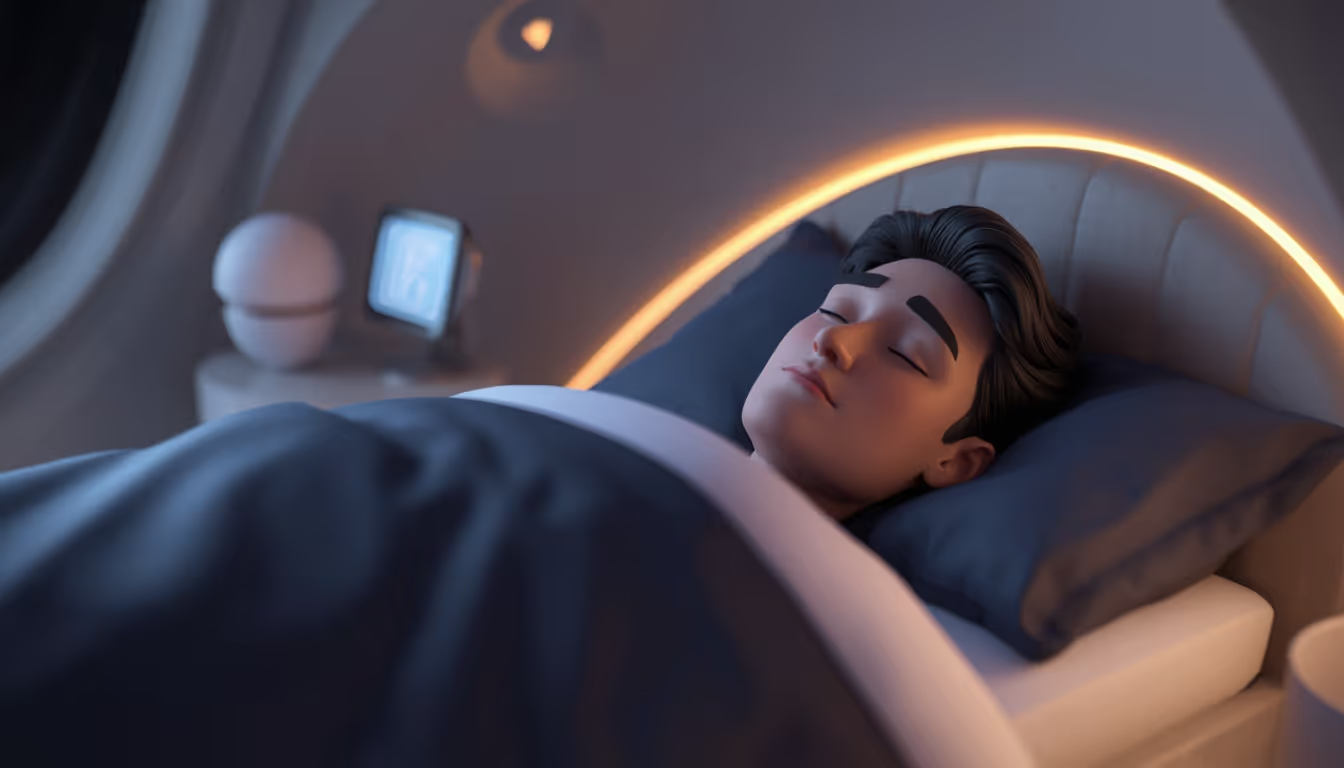
¿Qué es un Estudio del Sueño?
Un estudio del sueño (polisomnografía) es una prueba nocturna que monitorea su cuerpo mientras duerme para ayudar a diagnosticar trastornos del sueño como la apnea obstructiva del sueño, el insomnio, el síndrome de piernas inquietas, el trastorno de movimiento periódico de las extremidades y la narcolepsia. Los estudios del sueño son cómodos, no invasivos y se realizan en una habitación privada diseñada para sentirse lo más parecida posible a su ambiente de sueño en casa.
Nota: Su tecnólogo del sueño no podrá compartir ni comentar los resultados durante el estudio — los resultados serán revisados y comunicados por su médico del sueño en una cita de seguimiento.
Antes de Su Estudio del Sueño — El Día de la Prueba
- Por favor cene antes de llegar al laboratorio del sueño. Evite comidas muy ácidas antes del estudio
- Evite las siestas el día de la prueba — queremos que esté naturalmente cansado a la hora de dormir
- Evite la cafeína y el alcohol después de las 12:00 del mediodía (nada de café, té, bebidas energéticas, refrescos ni alcohol)
- Lávese y séquese el cabello antes de llegar — no aplique acondicionador, gel, spray, champú en seco ni productos de peinado después de lavarlo. El cabello limpio y seco es esencial para la correcta colocación de los electrodos
- No se aplique lociones, aceites, cremas ni humectantes en la cara, el cuero cabelludo, el cuello, el pecho o las piernas
- Tome sus medicamentos habituales según lo recetado, a menos que su médico le haya indicado lo contrario
- Si toma un medicamento recetado para dormir, espere hasta llegar al laboratorio y avise al técnico del sueño antes de tomarlo
Qué Traer
- Puede traer su teléfono celular, pero LOS CELULARES DEBEN ESTAR APAGADOS o EN MODO AVIÓN DURANTE EL ESTUDIO
- NO se pueden usar dispositivos electrónicos portátiles en el laboratorio
- Ropa de dormir cómoda — pijama, pantalones holgados y una camiseta, o lo que normalmente use para dormir
- Cualquier medicamento que tome por la noche o por la mañana
- Artículos de aseo personal para la mañana (cepillo de dientes, pasta dental, desodorante, muda de ropa)
- Un libro, una revista o una actividad tranquila para antes de acostarse
- Su máquina CPAP o BiPAP si ya usa una (incluso si le están repitiendo la prueba)
- Una almohada o cobija de su casa si le ayuda a dormir más cómodamente
Qué Sucede Cuando Llega
Cuando llegue, su tecnólogo del sueño lo recibirá, le mostrará su habitación privada y le explicará el proceso de preparación. Esto normalmente toma de 30 a 45 minutos. El tecnólogo colocará pequeños sensores (electrodos) usando un gel o pasta soluble en agua en las siguientes áreas:
- Cuero cabelludo y frente — para monitorear la actividad cerebral (EEG) y las etapas del sueño
- Cerca de los ojos — para detectar los movimientos oculares (EOG)
- Mentón y mandíbula — para monitorear la actividad muscular (EMG)
- Pecho y abdomen — bandas elásticas para medir el esfuerzo respiratorio
- Piernas — para detectar movimientos de las extremidades
- Pecho o espalda — para monitorear el ritmo cardíaco (EKG)
- Dedo — un pequeño clip para monitorear los niveles de oxígeno en la sangre
Todos los sensores son indoloros. Los cables van agrupados para que pueda moverse libremente, darse vuelta y levantarse para usar el baño durante la noche.
Durante el Estudio
Las luces se apagarán a su hora habitual de dormir. El tecnólogo lo monitorea desde una sala separada durante toda la noche y puede escucharlo y hablar con usted por un intercomunicador si es necesario. Trate de dormir de la forma más natural posible — es normal dormir un poco menos de lo habitual debido al nuevo ambiente. El estudio capturará suficientes datos aunque su sueño no sea perfecto.
Salida por la Mañana
Los estudios normalmente concluyen entre las 6:00 y 6:30 a.m. El tecnólogo retirará todos los sensores, lo cual toma solo unos minutos. Los resultados normalmente son revisados por su médico del sueño dentro de 10 a 12 días, y su cita de seguimiento se programará según corresponda.
No deje que las alergias le frenen. Programe una evaluación integral de otorrinolaringología y alergias en Sleep and Sinus Centers of Georgia. Estamos aquí para identificar sus desencadenantes y guiarle hacia un alivio duradero.